And speak no evil

Do you believe there could be an election campaign held in your country in which the word Afghanistan is not even mentioned (much less the word war), although four thousand of your troops are stationed there (four thousand is considered to be a lot over here)? The Germans can pull that one off in their sleep.

After all, there are more pressing issues (see below).
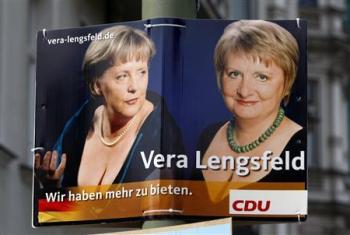
More is more.

Being big fans of semantic exercises, especially when it comes confronting evidence that upsets their sometimes rather dreamlike view of the world (in this case the evidence being that building schools won’t stop the Taliban, bullets will), German politicians on both sides of the grand coalition line are dutifully hiding their heads in the sand when it comes to this non-subject, at least until the coming general election is over, at which point the winners will continue to hide their heads in the sand some more.

 “Germans have this pacifist world view whereby most problems can be solved through dialogue, aid, compromise and not by force.”

“How can you identify a German soldier?”

“He is the corpse clutching the pocket guide.” Or so the joke goes in Afghanistan. This is because, up until recently, German soldiers serving there were obligated by German political directives issued in Berlin to pull out a pocket guide and give the warning, in three languages (English, Pashtu and Dari) “United Nations – stop, or I will fire!” before returning fire when attacked by the Taliban.

You gotta have rules.

This is supposed to reduce misunderstandings and keep anybody from getting hurt, especially the Taliban. But times change and even German politicians are lernfähig (can learn from their mistakes) – just go ask Ulla Schmidt – so now new rules of engagement have been released in which German forces will actually be allowed to shoot back at those shooting at them and shout out warnings later. Not that they will actually do that or anything, we don’t want any misunderstandings here you know, but still.

“The warnings were well intended but not realistic.”

The W Word

“The host was absent when German Defence Minister Franz Josef Jung held a press conference at the Kabul headquarters of the International Security Assistance Force (ISAF) in Afghanistan recently.

ISAF’s commander, General David McKiernan, apparently had something better to do – unusual considering Jung is defence minister of the third-biggest supplier of troops and the fourth biggest donor nation in Afghanistan.

The snub dates back to the last joint press conference held by the two men in the late summer of 2008 when the US general used the ugly word ‘war’ in Afghanistan, much to the annoyance of Jung.

Germany had been studiously avoiding the term when speaking of the unpopular deployment of its troops in the landlocked Asian nation. Since then the two men have avoided each other in public.

McKiernan’s absence could be considered trivial were it not symptomatic of a more general problem: Germany’s influence in Afghanistan and among its allies there has deteriorated markedly.”

What’s in a word?