Who’s your nanny?

A spoonful of sugar helps the government interference go down.

But we’re going to tax it anyway.

Germany’s sugar tax sparks ‘nanny state’ debate – Friedrich Merz’s government has agreed to introduce a sugar levy on soft drinks as part of its health care reforms. Critics have called it disproportionate interference, but dozens of countries already have such a levy.

The German government’s decision to introduce a levy on sugary drinks as part of its health care reform package has triggered a new debate on government interference in diets.

All the news that’s fit to print…

And any flavor you want, simultaneously.

Germany is toast! Germany doing better! Whatever.

German ‌industrial production ‌fell unexpectedly ​in March, decreasing by 0.7% ‌from ⁠the previous month, ⁠the federal ​statistics ​office ​said on ‌Friday.

Analysts polled by Reuters had predicted ‌a ​0.5% ​rise.

German of the day: Realitätsverweigerung

That means denying reality.

A common German problem.

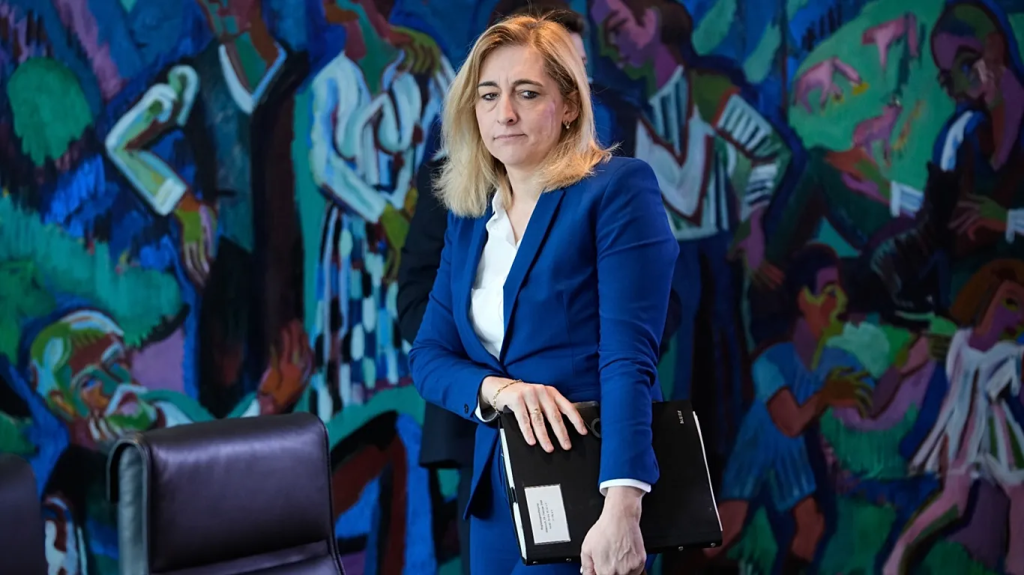
Op-ed on Bärbel Bas: That’s a denial of reality, Minister!

“No foreigners are exploiting our social welfare systems,” claims Labor Minister and SPD Chairwoman Bärbel Bas. Our Labor Minister. The woman who should know the facts and figures better than anyone. I wonder: What country does Ms. Bas live in?

Nearly half of all welfare recipients in Germany are foreigners.

Deeper ties to China?

Smart move, Germany (Schleswig-Holstein).

Reminds me of those deeper ties to Russia right before the war in Ukraine broke out.

German state eyes deeper China cooperation in energy, innovation – Significant potential exists to deepen cooperation between the northern German state of Schleswig-Holstein and east China’s Zhejiang Province, particularly in energy transition, hydrogen and advanced manufacturing, according to Daniel Guenther, minister president of Schleswig-Holstein.

His remarks come as the two regions mark 40 years of partnership, with both sides seeking to expand ties despite an increasingly complex geopolitical and trade environment.

What military?

What service?

Young German men refusing military service – Military service remains voluntary in Germany. However, with the Bundeswehr needing more soldiers, conscription could soon return. But an increasing number of young men are choosing to opt out.

Phil Werring is thinking about refusing to serve in the military. He does not want to join the German army, the Bundeswehr.

“They always say it’s about defense,” the student told DW. “But I don’t see the threat situation and therefore I have no interest in completing compulsory service in the army.”

Military service remains voluntary in Germany, but that could soon change. The army needs at least 60,000 additional soldiers in the next few years.

“A rare rebuke of Trump?”

Coming from a German? In Germany?

I’ve never yet heard a German say anything about Donald Trump that wasn’t a rebuke.

German president calls Iran war a disastrous mistake, in rare rebuke of Trump.

This is, by the way, the same German president who went out of his way to celebrate the Iranian revolution – “For a long time, Germany stood firmly by the Iranian regime.”

The Left is anti-Israel?

No way. Who would have thought that?

And I thought I was a slow learner.

German Antisemitism Commissioner Leaves the Left Party Over Anti-Israel Stance, Lack of Support Amid Death Threats – Andreas Büttner, the commissioner for antisemitism in the state of Brandenburg in northeastern Germany, has resigned from the Left Party, citing a rise in antisemitism within the ranks, relentless personal attacks, and a party climate that has become intolerable.

“I struggled with this decision for a long time, as I have felt a deep connection to the party over many years,” Büttner wrote in a letter to the party leadership, as reported by German media.

“But I have reached a point where I must acknowledge that I can no longer remain a member of this party without betraying my own convictions,” he continued.

War damaging German economy almost as much as Germany is

And that’s saying a lot.

Energy bottleneck in Middle East is damaging German economy – Expensive energy, rising prices and disrupted supply chains are all bad news for economic growth. The German government is alarmed by events in the Middle East.

When the US and Israel attacked Iran, the response was not long in coming. Iran is no longer allowing ships to pass through its coastal waters. The Strait of Hormuz, the bottleneck in the Persian Gulf through which 20% of the global oil trade passes every day, is now effectively blocked.

After the attack, the price of oil immediately rose sharply. Prices for gasoline and diesel also skyrocketed at German gas stations. Depending on the region, premium gasoline even went as high €2.50 ($2.89) per liter. The average price for diesel is currently just over €2, which is €0.30 higher than before the attack on Iran.