Opening on Sunday, the taboo for stores in Germany that the government wants to break.
The coalition of conservatives and social democrats is debating ending a century-old tradition by giving certain establishments greater flexibility on business hours. Half the population supports it.
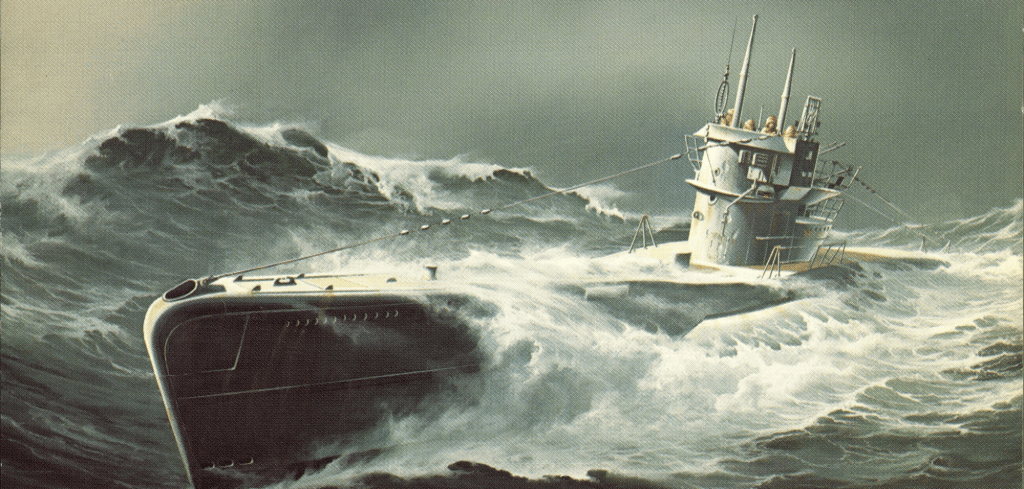
Israel’s new $634M German-built ‘doomsday’ sub gives major boost to Iran deterrence – The Dolphin-class submarine, built by Germany’s ThyssenKrupp, is the largest sub built in Germany since WWII.
Israel has officially received the INS Drakon submarine from Germany, the most advanced and expensive submarine ever delivered to the Israeli Navy…
“Some of them would have to be at sea, on high alert, around the clock, if Iran suddenly attacked Israel in such a way that would cripple the IDF, including its strategic capabilities,” Eilam said.
“In such a drastic scenario, Israel’s submarine/s that would be at sea could respond,” he added.
Trump administration to pay German firm $1.2bn to halt US wind projects – German energy company RWE has said it will abandon its offshore wind projects in the US after reaching a $1.2bn (£892m) payout deal with President Donald Trump’s Department of the Interior (DoI).
RWE said that it will now reinvest the sum into conventional gas projects, including $900m (£669m) in a liquefied natural gas (LNG) export terminal project in Louisiana.
“After careful consideration, it was determined there is no path forward to permit these projects in the US for the foreseeable future,” the company said in a statement.
Berlin clubs struggle as drink sales dry up and costs rise – Berlin’s clubs are still drawing crowds, but shorter nights, fewer alcohol sales and rising costs have changed their business model. Door fees, rather than bar takings, are increasingly their real financial lifeline.
Berlin’s world-famous club scene has remained in high demand, but venues are increasingly struggling to turn packed dancefloors into sustainable businesses.
World War II Bomb Defused in Cologne-Deutz – Road Closures Lifted.
An unexploded bomb from World War II was found in the Rhine in Deutz on Wednesday. The bomb was defused on Thursday.
After an unexploded bomb from World War II was found in Cologne-Deutz on Wednesday, the American five-zentner bomb was successfully defused on Thursday evening…
Low Water Levels: Do Not Touch Suspicious Objects – Although the low water levels in the Rhine are currently causing problems for shipping, they facilitated recovery efforts.
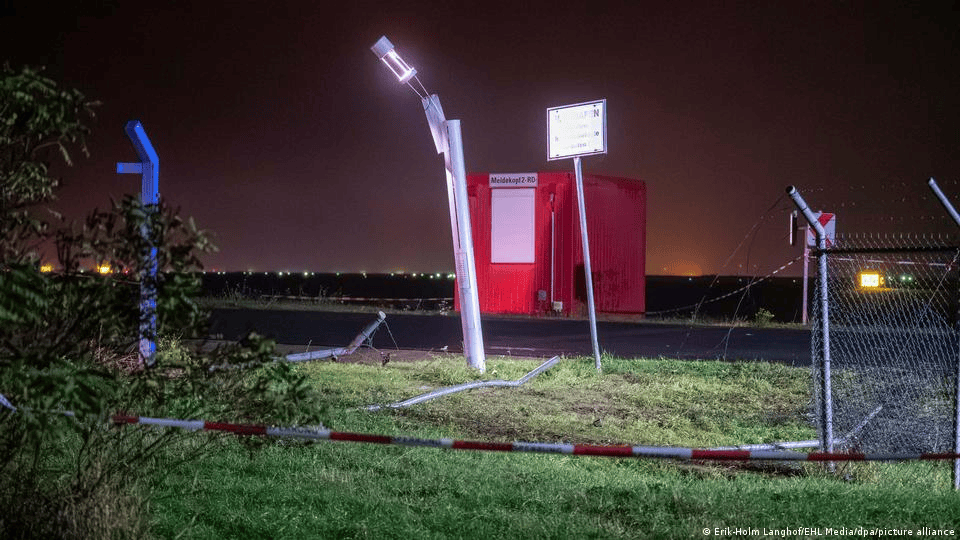
Federal Interior Minister Alexander Dobrindt (CSU) considers the incident involving an explosive-laden drone at Leipzig/Halle Airport to be an attack carried out by highly professional perpetrators. He does not rule out the possibility that “foreign powers” were behind it. It was a “hybrid attack scenario,” Dobrindt said at a press conference in Leipzig.
Such threats must be prepared and carried out with a high degree of professionalism. This requires a high level of technical expertise and experience in handling explosives. Furthermore, it can be assumed that the explosives used were military-grade. “None of this points to an amateurish approach. We are talking here about a professional hybrid threat scenario that we must continue to address,” Dobrindt said.
As the Danube River dries up, World War II shipwrecks and mammoth bones come into view…
The ships, some still laden with weapons, belonged to Nazi Germany’s Black Sea fleet that the Germans deliberately sank as they retreated from Romania and as Soviet forces advanced deeper into Europe near the end of the war.
Germany’s new drug law is a case study in foreign freeloading – U.S. patients will bear even more of the global bill.
At the very moment President Donald J. Trump is demanding that wealthy nations pay their fair share for American medicines, Berlin moved the other way. Its new cost-containment law squeezes more savings from the American companies that discover these medicines and leaves U.S. patients bearing even more of the global bill.
The German parliament passed the law last month. It more than doubles the mandatory rebate that manufacturers pay on brand-name medicines, from 7% to 15.5%. It locks German list prices in place through 2030. And for the first time, it lets German insurers force patented, brand-name medicines into tender-style price competitions — a tactic Germany had reserved for generic drugs until now. Berlin called it a fix for its strained insurance system. In plain terms, it is a wealthy nation balancing its books on the backs of American patients.
Germany: As temperatures rise, so does climate skepticism – Some 98% of active climate scientists say climate change is happening, and is man-made. Nonetheless, a new study shows the number of climate-change skeptics in Germany has increased. Why is that?
Climate skeptics are no longer a small but noisy minority. They are now “a mass phenomenon,” according to researchers at Flensburg University.
In a study published in the scientific journal Global Environmental Change, authors Katharina Gies and Emanuel Deutschmann reported that between 2022 and 2023 there was a big jump in skeptical attitudes to climate change among the majority of the 3,074 people surveyed. Some 59% said they had more doubts about climate change in 2023 than they had had in the previous year.