Roman burial mound style.
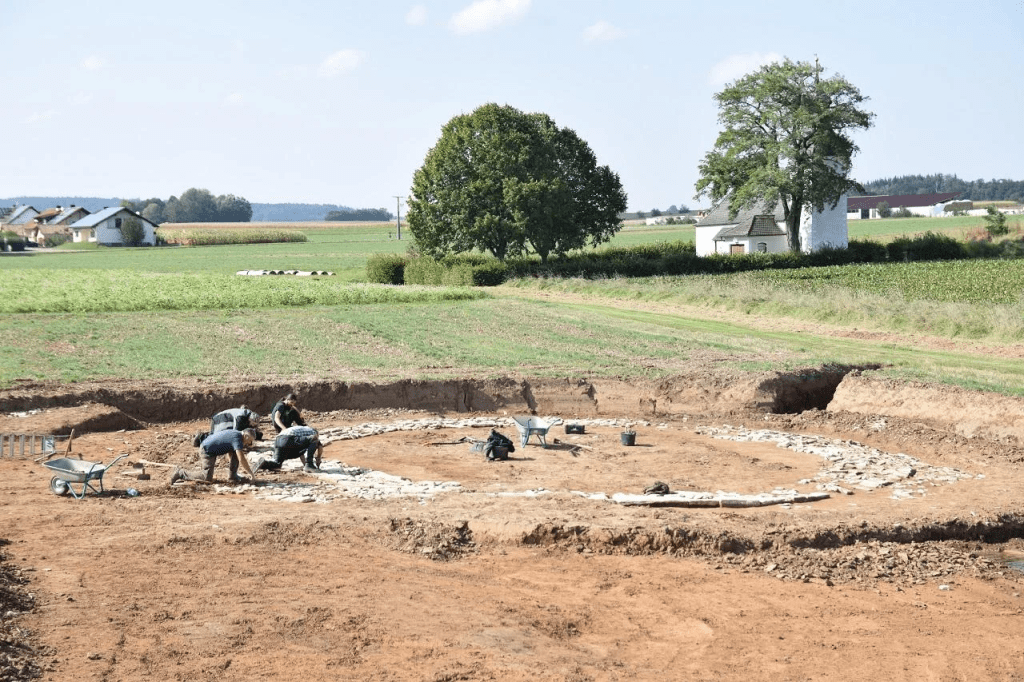
Rare Roman-era circular stone monument unearthed near Nassenfels, Germany…
Burial mounds were an enduring Roman tradition, blending Mediterranean influences with older Central European customs. They appeared in the northwestern provinces from the first century CE. Some newly built tumuli coexisted with the reuse of prehistoric mounds, perhaps as a deliberate link to pre-Roman or Celtic traditions. Such stone tumuli of this size are extremely rare in Raetia, and the Wolkertshofen discovery is therefore particularly significant for understanding local funerary practices.
The absence of bones and grave offerings indicates it is a symbolic tomb rather than a physical burial. Constructing such cenotaphs for those who died far from home allowed family members to perform commemorative rituals in their memory. The precise craftsmanship of the structure and its location along a Roman road both suggest technical skill as well as the social ambitions of the builders.

 Observing Hermann