
Metropolis II
“A full version of Fritz Lang’s 1927 silent expressionist epic was found in Argentina in 2008, and after months of painstaking work, what is possibly Germany’s best-known movie has now been restored to almost its original state.”

“It will be shown at Berlin’s Brandenburg Gate on February 12 as part of the 60th Berlin Film Festival, with simultaneous gala screenings in Berlin and Frankfurt, with an orchestra playing Gottfried Huppertz’s original score.”
Als Fritz Lang 1924 New York besuchte, war er überwältigt. „Allein der Anblick von Neuyork bei Nacht müsste genügen, um dieses Fanal der Schönheit zum Kernpunkt eines Films zu machen“, schrieb er nach seiner Rückkehr enthusiasmiert in einem Berliner Film-Magazin.
Es kommt immer anders als man denkt
It always comes about differently than you expected.
“A Nobel Prize-winning panel of climate scientists who wrote the world’s most authoritative report on global warming have apologised after five glaring errors were discovered in one paragraph.
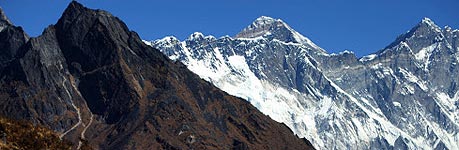
The errors are in a 2007 report by the Intergovernmental Panel on Climate Change, a United Nations-affiliated body.
All the mistakes appear in a sub-section that suggests glaciers in the Himalayas could melt away by the year 2035 – hundreds of years earlier than the data actually indicates. The year 2350 was apparently transposed as 2035.”
All I know is that they’re predicting -23 (centigrade) for Berlin this weekend. I sure hope that this is a glaring error too.
“2035 würden die Himalaya-Gletscher abgeschmolzen sein, warnte der Weltklimarat. Die Prognose fußt womöglich auf einem Zahlendreher – auf keinen Fall aber auf seriöser Wissenschaft.”
Number one again!
Germany may not be the export champion of the world anymore, but Germans are definitely world champions when it comes to doctor visits per year.

The average German, whoever he is, goes to see his doctor an amazing 18 times per year. A third of those who come in are chronically ill too, or at least think that they are. And the only other nation on earth that comes even close to German sickliness is Japan with thirteen visits a year. No, not for the whole nation, I meant for the average Japanese sick dude.
Makes you wonder. About hypochondria, for instance. And health care systems that somehow encourage this type of thing, for another, Praxisgebühr or not. This German “practice fee” (10 Euros per quarter the visitor has to pay when he/she goes to the doctor’s office) was introduced a few years back in the hope of slowing this madness down, but it obviously hasn’t helped. Being sick is still dirt cheap here, I guess.
Help me man, the German health care system said, I’m sick.
In keinem Land der Welt gehen die Menschen so oft zum Arzt wie in Deutschland.
Who remembers the Uncola?
Well the Germans have an Unword, so there. Only they call it Unwort. And this year’s winner (they really mean loser) is Betriebsrastverseucht (works council (think unions) contaminated).

How shocking or something. This is a real “sprachlicher Tiefpunkt” (linguistic low point), man. Talk about being politically incorrect. Who could ever get the idea that works councils in Germany could ever possibly contaminate anything? Whether they wanted to or not, I mean. Other than the general mood, I mean, which is always pretty lousy here to begin with anyway so like who cares? Just stop and think about it: If there weren’t any work councils here, uh, there wouldn’t be any works councils here. And that would lead to, uh, well, further or even real contamination. The whole nation would become contaminated, so-to-speak. You know, a contamination.
So clean up your act and stop using awful Unwords like that. These are not cola nuts. They`re the other kind.
Die Wahrnehmung von Arbeitnehmerinteressen als Seuche zu bezeichnen, sei ein sprachlicher Tiefpunkt im Umgang mit Lohnabhängigen.
Berlin comes in first place again!
When it comes to having the most folks on welfare (Hartz IV) in Germany, that is. Which puts them in last place amoung the other German states, I guess. But still.

Nearly 200 out of 1000 Berliners receive payments from the state to get by, more or less. And it’s lonely up here at the top too, I mean bottom. But somebody’s got to do it. I mean be here.
Knapp 20 Prozent der Berlinerinnen und Berliner seien auf staatliche Unterstützung angewiesen, schreiben die Autoren der Studie „Die Bundesländer im Standortwettbewerb 2010“
Technophobia time again
According to an OECD study, German schools are way behind when it comes to offering their students modern digital technology/media.
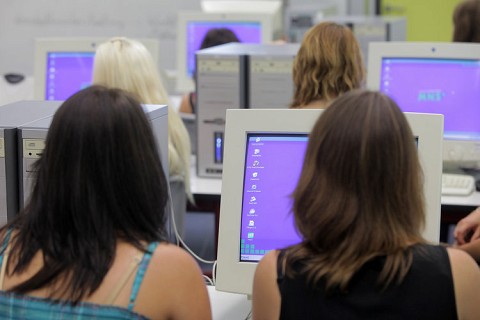
That’s not all that surprising though, really. All this high-tech stuff is kind of spooky and dangerous over here for some reason. Google is pure evil these days, for instance. And we don’t even want to talk about Microsoft.
Actually, we do. The German Federal Office for Information Security just warned against using Microsoft’s Internet Explorer. It’s too vulnerable or something. It is the weak link in recent attacks on Google’s systems. But wait, wouldn’t that a good thing then? Whatever.
„Obwohl Deutschland eine der stärksten Wirtschaftsnationen ist, sind wir, wenn es um digitale Medien in der Schule geht, Letzter im OECD-Vergleich.”
Simone T.

Pull your weight already
Or lose whatever weight you may have had, I mean.
Warning: The following is somebody else`s opinion, somebody you will most likely not agree with (oder doch?). Worse still, it`s been taken from a so-called “blog”.
“The heaviest burden in Afghanistan has been borne by the US, UK and Canada. Of the older NATO nations Denmark has played a major role, contributing more troops and taking more casualties as a part of its population than any other continental European nation. However, other Western nations have not pulled their weight at all, with Germany now acting as the problem child of the Western Alliance.

Germany, with the fourth largest economy in the world and a much larger population than the UK, had less than half of the force strength in Afghanistan as the UK. While British forces are committed to the toughest part of the country, the south, and are there to fight, the Germans have stationed their force in the safest part of Afghanistan, the north, and have and surrounded their commitment with numerous caveats restricting when and how their forces might engage in combat.”
“One of the major consequences of the ongoing war in Afghanistan is a very changed understanding of NATO and the dynamics of the alliance.”
Musical Schmoozical
You’ve read all the books, seen all the TV reports and shows, even followed the Nobel Peace Prize awards. But if you haven’t dropped from adoration exhaustion yet, you still have this one last chance to do so. Although, well, actually we all know that this won’t really be your last chance. That was just a figure of speech or something.

Anyways… A German musical is set to pay tribute to you-know-who in an all-singing, all-dancing Obama musical (Obamusical?) extravaganza. It will soon premiere in Frankfurt and no force in the universe can stop it.
I think I’ll wait for the movie to come out. No, now I think I won’t. But maybe I will check out the DVD one day… In a galaxy far, far away.
But despite complaints on the Internet that this is yet another a rose-tinted portrayal of the president, event organizers stressed that Obama is not being idealized…

