Please.
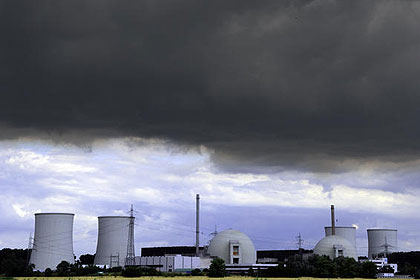
It shouldn’t be a surprise that 300 scientists “from various areas of expertise” have written a letter to Angie Merkel requesting that Germany shut down Germany’s risky nuclear reactors (the entire industry) as soon as possible. What surprises me is when I occasionally bump into a German scientist who isn’t prepared to jump off the cliff with everybody else. They are, needless to say, very few and very far between.
Here’s what physicist Christoph Barthe (a climate change guy) has to say about German nuclear power in an opinion piece called Despite Fukushima (page 15, Die Zeit No. 14, 31 March 2011):
Felix Dachel maintains in his response to “In Praise of the Movement” (Zeit Nr. 13) that the majority of Germans were already against nuclear energy before Fukushima. This is incorrect. An Allensbach survey from March, 2010 revealed that 44% of those asked said that, “all things considered,” they were for the further use of nuclear power, 37% were against it. A survey taken by TNS Emnid in February 2010 revealed that 60% of Germans asked were for the continued use of nuclear energy once the question of the final disposal of nuclear waste gets cleared up, 37% were against it.
Now a lot of nonsense is being spread around in the public concerning this question of the final disposal of nuclear waste. The unresolved waste disposal issue is certainly an effective public appeal argument for the anti-nuclear movement, but it is completely inappropriate as an excuse to phase-out nuclear power. The amount of highly radioactive waste is extremely small: Three-thousandth of a gram per kilowatt hour in Germany. There are more than enough suitable rock layers available which have been stable for countless millions of years and which we can expect with good conscience to remain that way for a few more million years to come. That is simple geologic knowledge. In contrast to that, greenhouse gases continue to be pumped into the atmosphere with foreseeable catastrophic effects that the same anti-nuclear activists warn us about.
It is the same thing when you compare the risks of climate change with the risks of nuclear energy, a technology that has been, despite 30 years of resistance to it, the most climate compatible energy source yet developed. If you compare the very slight risk of radioactive pollution with the very real danger caused by the continued unabated pollution of the atmosphere through greenhouse gases, generation after generation, then it must be clear that the question of risk speaks in favor of nuclear energy and not against it—despite Fukushima.


 Observing Hermann