Happy German Unity Day or something.
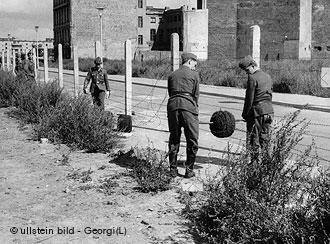
The GDR is part of school curricula – at the end of the 10th grade, after the unit on World War II. Some teachers say they just never get to the GDR, because their students need more time to digest all of the heavy history that came before it. Other teachers and parents simply don’t want to relive their past.
“When I give tours like this now, [two decades] after the end of the GDR, I’m amazed at how little is known about it.”
The GDR wasn’t so bad, her godmother said, as long as you didn’t criticize the system; you could have a normal family life just like in the West.
But in general, many young people are unfamiliar with East Germany: a majority doesn’t know who built the Berlin Wall or whether Willy Brandt was a politician in the East or the West.
“The division of Germany and the postwar period are probably some of the most documented times in history. There are endless shelves full of books on the subject,” Hillmer said. “But the collective historical memory is at zero. All these countless anniversary events aren’t changing anything.”
“The main finding of our study is that young people today, from both the East and the West, are not really able to differentiate between democracy and dictatorship.”

 Observing Hermann