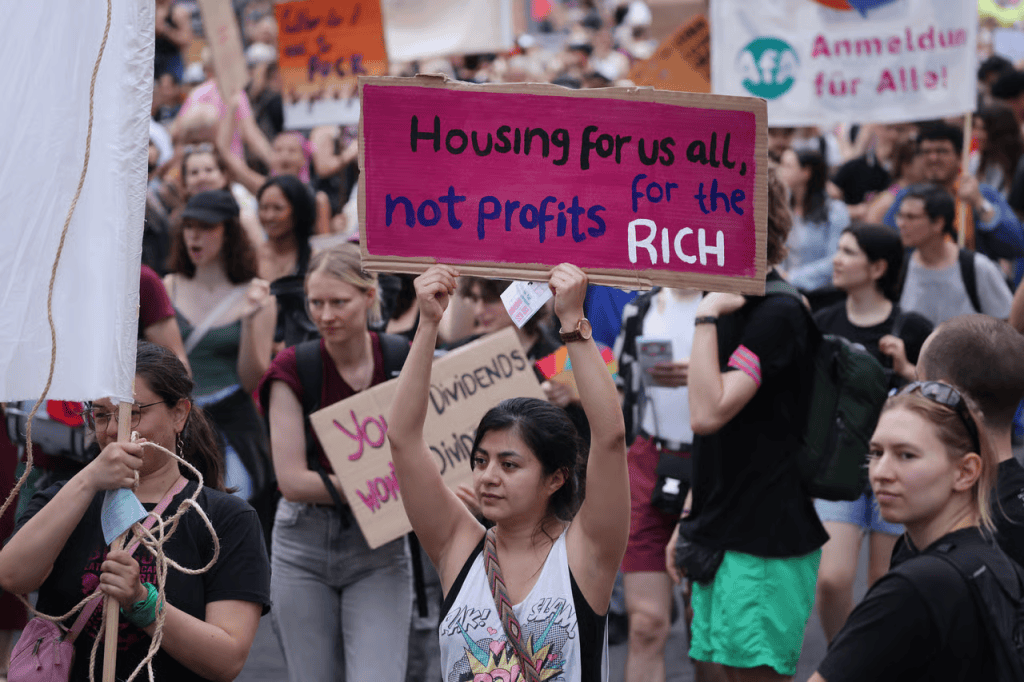
Berlin election campaign centers around radical-left drive to seize properties – Following Sunday’s regional vote, a coalition of left-wing parties could move to expropriate apartment buildings as part of a plan to lower rents…
The Left party, which traces part of its history to East Germany’s communist party, is enjoying a political revival after winning a new wave of support from young voters mobilized by the far right’s rise. For its Berlin campaign, the party has taken inspiration from New York City Mayor Zohran Mamdani, employing his focus on cost-of-living issues as a model.
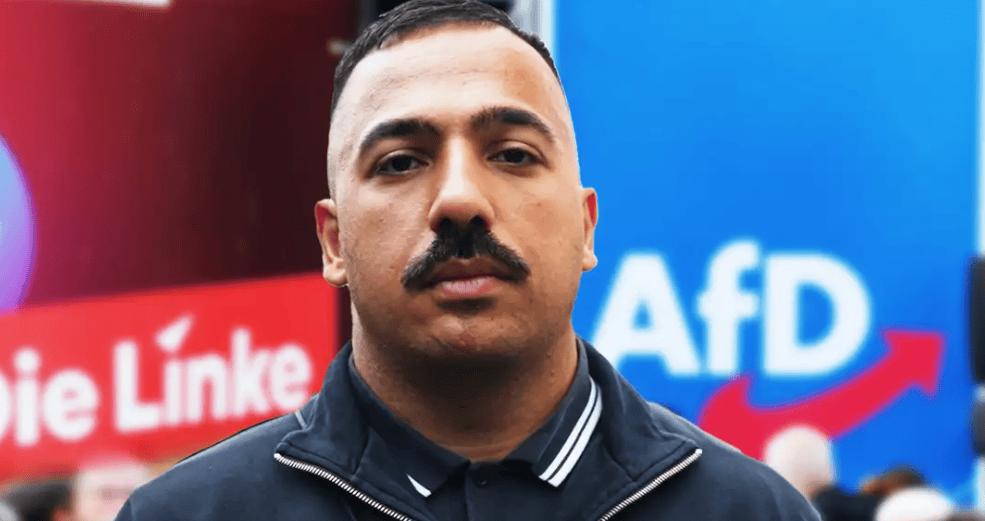
How Mustafa is taking on the far-right Eastern Germany – We followed Mustafa through the final weeks of his campaign for the Left in Saxony-Anhalt, Germany. What matters to young people in Saxony-Anhalt?
When we first meet Mustafa, there are only a few weeks left until the state election in Saxony-Anhalt. He is a candidate for The Left (Die Linke), which, alongside the AfD, is one of the most popular parties among young people in Germany.
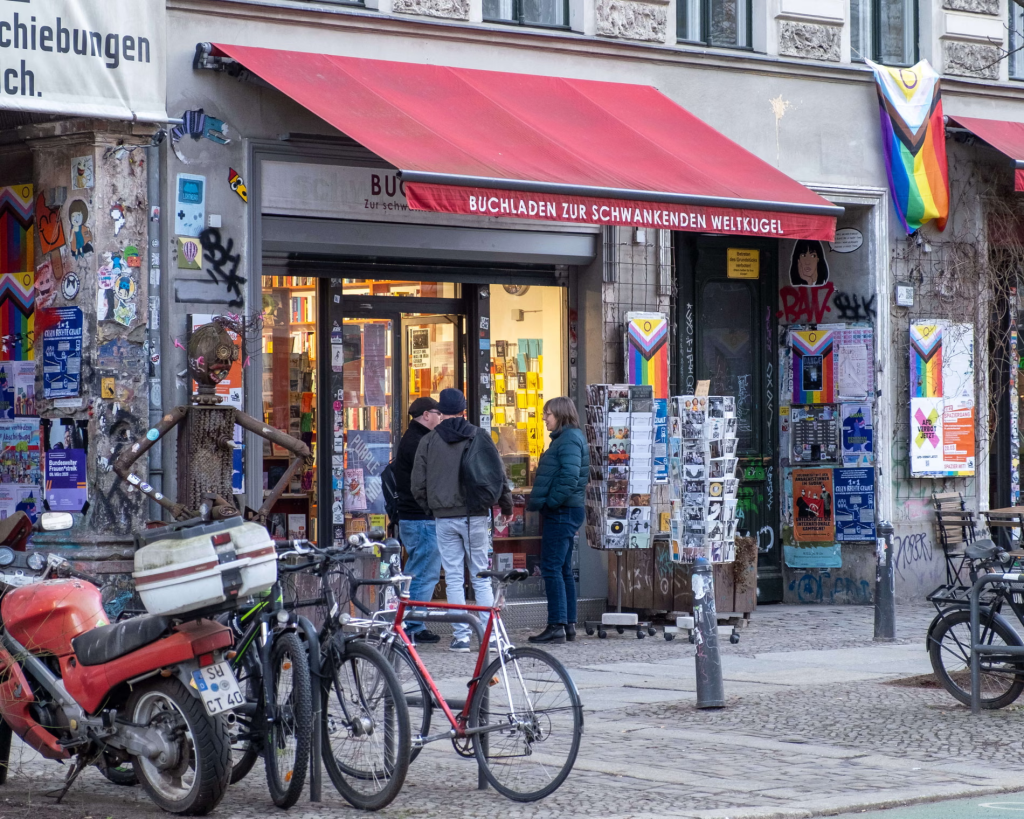
Why independent bookshops strike fear in the heart of Germany’s culture tsar – There is a particular kind of danger that smells like paper and dust. You find it in independent bookshops. Those with uneven wooden floors and handwritten staff recommendations, where someone has shelved Audre Lorde next to Karl Marx and a debut novelist from Neukölln. Places where no algorithm is trying to guess who you are before you have the chance to change your mind.
I walk in for a novel and walk out with a theory of the state, a pamphlet on housing struggles, a Palestinian poet I had never heard of. No “for you” page in an online store would have suggested it. The bookseller did. Independent bookshops are dangerous because they interrupt us. They do not optimise our curiosity. They derail it. Is that the reason why Germany’s culture commissioner, Wolfram Weimer, is now consulting the domestic intelligence agency before approving funds to bookshops?
Every year, the German Bookshop prize, awarded on behalf of the federal government’s commissioner for culture and the media, serves as a financial injection for more than 100 independent, owner-managed bookshops all over Germany. An independent jury selects the winners, based on criteria such as carefully curated literary selection and cultural events. Usually, the public doesn’t take much notice of the prize; its weight on the public purse is barely significant. But for small bookshops operating on narrow margins, the prize money of between €7,000 and €25,000 makes a tangible difference.
This year, for the first time, three bookshops disappeared from the jury’s list, according to an investigation by the newspaper Süddeutsche Zeitung. The ministry of culture deleted them, due to “information of relevance to the domestic intelligence agency”, it states. What kind of information? Nobody knows, not even Germany’s commissioner for culture himself, since the domestic intelligence agency (Bundesamt für Verfassungsschutz) is not allowed to divulge it. A quick look at the three bookshops is telling: they are antifascist, they are proud of it and they are institutions in their communities.
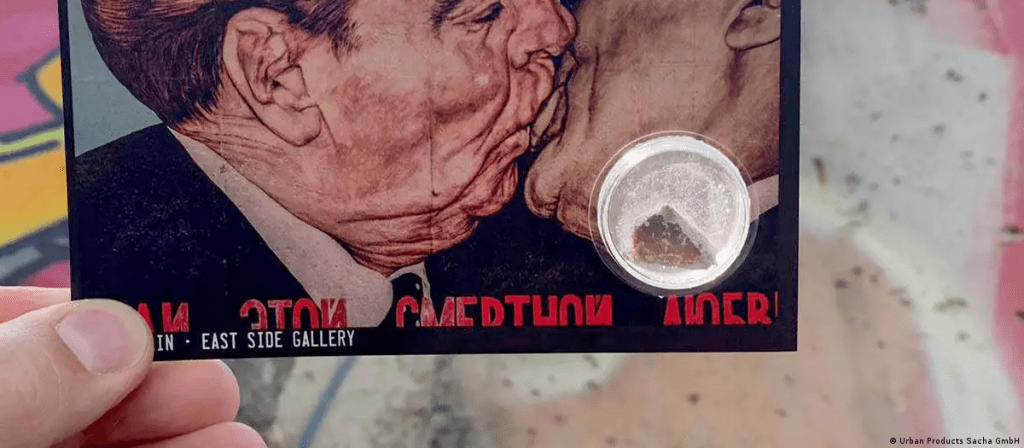
It’s been nearly 40 years since the fall of the Berlin Wall but you can still buy pieces of it in the German capital as souvenirs. Are they the real deal?
When the Berlin Wall fell in 1989, it sealed the fate of East Germany. People wasted no time and started hacking away at the monstrosity with hammers and chisels. Those people chipping away at the former border barricade were known as “Mauerspechte,” or wall woodpeckers. By June 1990, most of the Berlin Wall had been taken care of by bulldozers. Only a few sections of it have survived to this day; at the official Berlin Wall Memorial or the East Side Gallery, for example.
Still, fragments of the Wall keep turning up in large amounts all over the city. The Checkpoint Charlie Museum, souvenir stores and even hotels have thousands of pieces for sale. Almost 40 years since the fall of the wall, supply of the concrete chunks — brightly painted, made into fridge magnets or stuck onto postcards — shows no signs of slowing down. But, how can that be? Could these pieces of rubble perhaps come from much less significant and historical origins?
German contest to live in depopulated Soviet-era city proves global hit – Eisenhüttenstadt offered spacious central flats rent-free for two weeks in effort to attract valuable professionals.
Refugees had to endure freezing temperatures, scaling barbed-wire fences and hiding from soldiers on patrol. Getting caught meant a one-way ticket to one of East Germany’s special prisons — if you were not shot…
How Germany’s “death Strip” Became A Sustainable Lifeline.
Stasi: How the GDR kept its citizens under surveillance – Do all intelligence agents live like James Bond? Not those who worked for East Germany’s Ministry for State Security (Stasi). A new book reveals the mundane lives of the agents.
Free money for all: Germany’s basic income experiment – One of the world’s most extensive studies on unconditional basic income was held in Germany. What does the experiment reveal?
… It is seen as a redistribution of wealth through taxes. In the activists’ calculation, Germany’s top earners — 10% of the population — would end up contributing a part of their income to everyone else. They estimate that 83% of the population would thereby have access to more money. The remaining 7% mid-earners would be unaffected by the redistribution scheme.
In times of rising populism, the basic income activists believe that this is a way to combat the population’s dissatisfaction due to wealth inequality.
IKEA’s motto: “Everything is possible if you think in opportunities.”
IKEA to compensate East German prisoners for forced labor – The German branch of IKEA has pledged millions to compensate victims of the former Communist East German regime, who were forced to make furniture components in the GDR.