So what do you want, Germany? The Germans don’t even know themselves what they want with Europe and/or Germany: In a survey this September by Der Spiegel, clear majorities of Germans said that it wasn’t right to help Greece and other countries with the bailout fund and that Germany was not benefiting from the euro zone. But a clear majority also believed that European institutions should be given more power in a crisis. Classic German schizophrenia again or what?
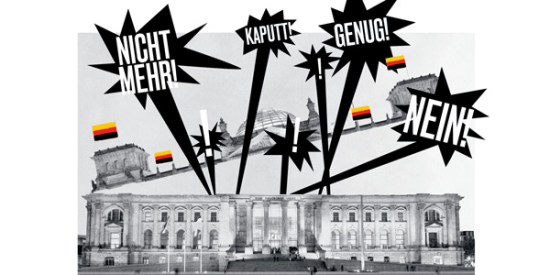
Not that it matters or anything. In the final analysis nobody is asking you what you want: The European Union is a union not of peoples but of heads of state. “General Franco was a head of state, too.”
Nope, I still don’t know what “Europe” is supposed to mean here, but I keep getting the sneaking suspicion that I’m not the only one living in Europe who feels that way. It’s just that I, as a non-European, have the luxury of being able to admit that I don’t get it and that I don’t really care.
But as this latest crisis develops, one thing seems certain. Whatever Europe may be, it clearly has something to do with illusion. Illusion with an s on the end. With lots of illusions. One illusion after the next. Here’s one, for example:
Europe is founded on the illusion of German money without German control. And that bargain has worked, until now, because of the way Germany sees itself within Europe (which itself, as the polls suggest, is an illusion).
“As a good German one has to be a good European.”
 Observing Hermann