Remember when it was European Germany?

Now it’s German Europe.

Huh? Where did this come from all of a sudden? Out of the blue like that?*

It was another “good day for Europe” when, as usual, nothing was actually resolved during the latest EU summit the other day, other than the fact that that nothing had a big Made in Germany stamp on it. The times they are a changed. The country that used to moan about being the paymaster for so long (and still does, of course, don’t get me wrong)  is now “the taskmaster of the entire community” and doesn’t even have the decency to make a secret about it anymore.

But don’t complain about it, my (as in Germany’s) fellow Europeans. This is only what the “fathers of Europe” had envisioned right from the start. Think of  what Jean Monnet had to say about the plan, for instance:

He wanted to guide European countries into a super-state “without their people understanding what is happening. This can be accomplished by successive steps, each disguised as having an economic purpose.”

I admit that this wasn’t quite the purpose he had envisioned but, well, now you “have the salad,” as the Germans like to say (the fat is in the fire). It doesn’t really matter that Berlin has a lack of vision when it comes to dealing with the current euro crisis, Germany calls the shots now and doesn’t need a vision if it doesn’t want one. So get used to it already.

“This is all about Germany, and it’s all about the end of the German appetite for writing checks to the periphery of Europe.”

*Have any of you ever read Philip K. Dick’s The Man in the High Castle? Germany and Japan win World War II. This is kind of like that.

You’ll do it my way

Or it’s the highway. Does that summit up enough for you, Freunde?

Let us sing.

And now, the end is here
And so I face the final curtain

No, wait. This verse is better.

Regrets, I’ve had a few
But then again, too few to mention

No, maybe this one instead.

Yes, there were times, I’m sure you know
When I bit off more than I could chew
But through it all, when there was doubt
I ate it up and spit it out
I faced it all and I stood tall and did it my way

“The defiant stand came as Moody’s issued a downgrade warning on Spain owing to “high refinancing needs in 2011″ and the risk of further bank bail-outs.”

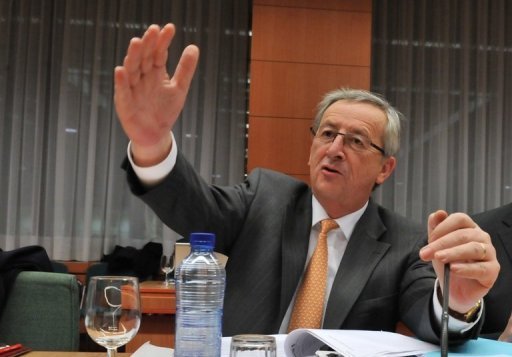
Talk to the hand

“They are rejecting an idea before studying it.” What else is new, Jean-Claude? Remember Iraq? The Germans said no to that before even being asked.

Eurogroup chairman Jean-Claude Juncker “launched a blistering attack” on Germany for its flat refusal to even consider his proposal to create eurozone bonds (“E-Bonds” would help weaker eurozone members raise money). He called the Germans “un-European.” Ouch. It doesn’t get much lower than that, people. Unless it’s “un-Southern European” maybe. Lower, get it?

Too bad he mixed up Merkel & Co. with somebody who gives a Scheiße. Just get used to it, Jean-Claude. And you just keep raising your hand as often as you like.

“This is very strange. This way of creating taboo areas in Europe and not dealing with others’ ideas is a very un-European way of dealing with European matters.”

“Deutschland macht dabei auch ein gutes Geschäft”

Germany is also getting a good bargain in the deal.

What deal you ask? You know, the one the Germans love moaning about so much at the Stammtisch (regulars’ table) these days: How poor Germany has to bail everbody out in Europe (Greece, Ireland, who’s next?) and how said poor Germans are poor victims yet again and blah, blah, tra, la, boo, hoo, hoo.

But there’s always a rest of the story.

Sure, the Germans have to “contribute” the most to this way cool European rescue parachute that keeps getting pulled these days, but they also have the most to gain if everything goes right.

How so? Some call it, I don’t know, refinancing. They borrow the money on the bond market for 3 percent and then loan it to the Greeks and the Irish (and the next folks to come along) for 5.8 percent. If these countries die Kurve kriegen (turn the corner), then the money comes rolling back in–and a big sweet profit to boot.

So dry your eyes over there at the Stammtisch already and take a deep breath after you order your next beer. Es wird alles gut. Everything will turn out good in the end. Maybe even real good.

“Wer sich selbst am Anleihemarkt für knapp drei Prozent refinanziere und an Krisenländer wie Griechenland und Irland Kredite zu einem Zinssatz von 5,8 Prozent ausreiche, könne selbst ordentliche Gewinne einstreichen.”

Divided we stand

But at least divided we stand together, in “broad agreement.”

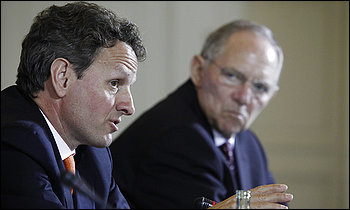
It goes like this: Tim Geithner is all for imposing more conservative rules on financial institutions too, Germany, as long as they’re not too conservative. Germany’s Wolfgang Schäuble, on the other hand, wants kind-of-sort-of the same thing, he says, as long as it’s more conservative than not too conservative and, above all else, international. And as long as it’s German unilateral at the same time too, of course.

Other than that though, they couldn’t agree on much of anything.

“We have a lot in common. We are going to have slightly different approaches. I don’t think we’ll know what separates us until we get to the next stage.”

Germany vs. Europe?

Well welcome to the club, Germany. Like what took you so long?

Now, at the worst possible moment, Germany is turning to nationalist illusions. Europe’s past economic successes are now viewed as German successes.

Europe’s current deep problems are everyone else’s except Germany’s. That is neither realistic nor sustainable. But German politicians and commentators are callously and self-destructively feeding these ideas.

Too little too late

What’s five years late these days? Too much for even the German Defense Ministry, it seems.

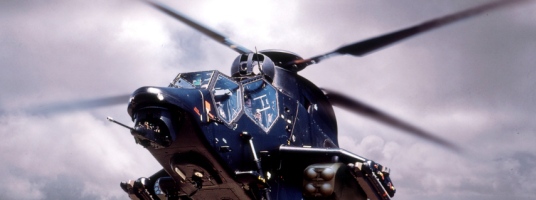
They’re mad as hell and aren’t going to wait it anymore for an order of 80 EADS/Eurocopter/Tiger helicopters to be delivered – five years behind schedule and counting.

Well, that’s not the whole truth. Eleven have actually arrived already (probably driven in on trucks), but these Tigers weren’t the ones they ordered. Hey, Rome (and the EU) wasn’t built in a day either.

Eurocopter, the world’s largest maker of helicopters by units, is a subsidiary of European Aeronautic, Defence & Space Co., which also makes Airbus SAS commercial and military planes.

Merkel botched it with the euro – at least as well as we would have

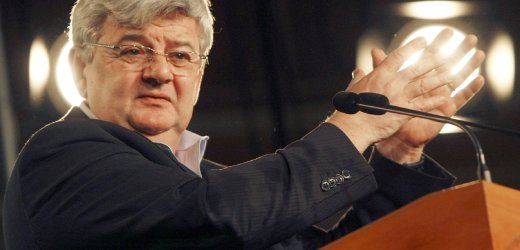
SPIEGEL: But most German politicians are committed to Europe.

Fischer: Only as long as it remains very abstract. But we have to give people enough credit to deal with unpleasant truths. No one explains why the euro is important for Germany and what its failure would mean. And no one explains why Germany has always paid — because it happens to be the big winner in Europe.

SPIEGEL: A community of solidarity means that Germany must pay for the failures of others.

Fischer: What nonsense! The European Union was a transfer union from the very beginning. The common market and the agrarian market were and still are primarily transfer guarantees for Germany and France!

SPIEGEL: How should Merkel have reacted?

Fischer: The chancellor should have put forward her own proposal to rescue the euro, in coordination with France. We have a responsibility as Europe’s strongest economic power. The EU cannot solve its problems in the long run if Germany hides itself. We are paying a high price for our resistance. We are viewed with suspicion in the entire Mediterranean region, and are seen as villains in Greece.

Ground Zero? Here?

Ground zero of Europe’s debt-currency-banking crisis isn’t in Greece, or Portugal, or Ireland or even Spain. It’s in Germany.”

“At one end is a powerful and highly efficient industrial export engine that generates a large trade surplus with the rest of the world, including most other countries in the eurozone. Instead of spending this new export wealth on a higher standard of living, however, parsimonious Germans prefer to save it, handing it over to thinly capitalized German banks that have proved equally efficient in destroying said wealth by investing it in risky securities issued, not coincidentally, by trading partners that need the capital to finance their trade deficits with Germany.”

“What Germans won’t accept is that they wouldn’t have been able to sell all those beautifully designed cars and well-engineered machine tools if Greeks and Spaniards and Americans hadn’t been willing to buy those goods and German banks hadn’t been so willing to lend them the money to do so. “