No One Can Explain German Power Grid Instability

But as far as I can tell, it seems to have begun sometime shortly after the Fukushima nuclear disaster in Japan.
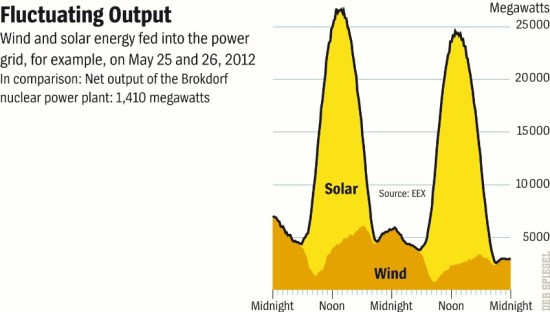
Sudden fluctuations in Germany’s power grid are causing major damage to a number of industrial companies. While many of them have responded by getting their own power generators and regulators to help minimize the risks, they warn that companies might be forced to leave if the government doesn’t deal with the issues fast…

The problem is that wind and solar farms just don’t deliver the same amount of continuous electricity compared with nuclear and gas-fired power plants. To match traditional energy sources, grid operators must be able to exactly predict how strong the wind will blow or the sun will shine.

“Every company — from small businesses to companies listed on the DAX — are buying one (APC emergency power generators) from us.” 
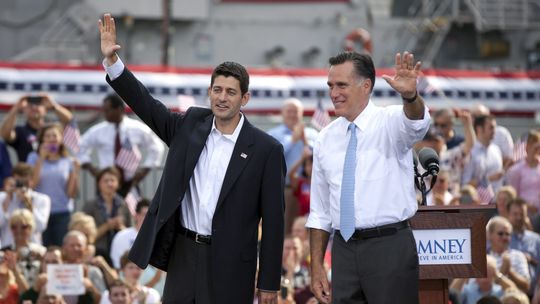
Angela Tea Party Merkel

“Wait a minute… This seems familiar to me. Romney and Ryan stole all this from Angela Merkel! That which the Tea Party wants to do is already being done by Merkel here, and for quite some time now: She wants to force other European states to save instead of just continuing to throw money at them.”

“With Ryan as vice-presidential candidate, the presidential election now has two clear and easily understandable alternatives: Obama wants to save the economy by going further into debt (financed through taxes) and pumping this into the economy. Romney and Ryan want to save the economy by lowering taxes (which should lead to more private investment) and forcing the state to save.”

Ich habe jedenfalls nie verstanden, warum die Deutschen die Tea Party nicht mögen. Logisch ist das nicht: Einerseits sind die meisten Deutschen erschrocken und verängstigt ob des schwindelerregenden amerikanischen Haushaltsdefizits und fest überzeugt, dass Amerika die Staatsschulden abbauen muss. Sonst würde es doch irgendwann zusammenbrechen oder von China aufgekauft. Gleichzeitig aber hassen sie die einzige politische Bewegung, die genau dafür kämpft – die Tea Party.

And now here’s some economist rap.

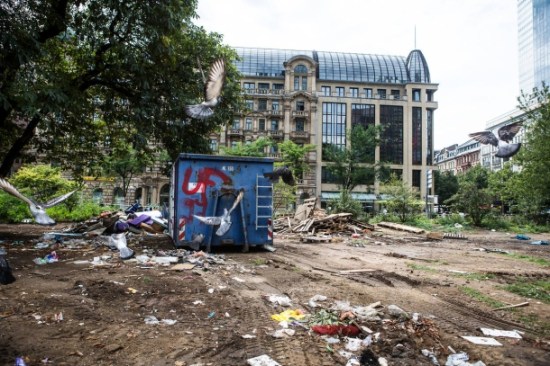
Capitalists To Pay For Occupy Cleanup

Sure, hauling away 300 cubic meters of garbage, hunting down all the rats and fixing up the green areas sounds like lots of fun and all, but somebody is going to have to pay for it, too. And it won’t be the occupants this time.

Yet another vicious blow to capitalism or something.

„Wer Schaden anrichtet, muss ihn auch begleichen.“

40 Percent Feel Discriminated Against?

A new study showing that 40 percent of foreigners living in Germany feel discriminated against in everyday life has left numerous German social scientists completely puzzled.

“This was quite a surprise for most of us,” one expert noted, wishing to remain anonymous. “As everybody out there knows, this percentage should really be a whole lot higher. It’s like 60 or 70 percent easy, I’d say. Those dumb foreigners clearly don’t know what the hell is going on, as usual.”

“Meine Erfahrung ist, dass hochqualifizierte Menschen mit ausländischen Wurzeln teilweise befürchten, in normalen Bewerbungsverfahren ausgegrenzt zu werden.”

It’s Better To Have Come In Ninth Than Never To Have Come In At All

The agony of defeat, or something (when people who are supposed to win lose – just ask Michael Phelps).

Wanting to keep a little reserve on the first day of Olympic competition, Germany’s swimmin’ women missed out on a spot in the women’s 4x100m freestyle final with the ninth fastest/slowest time.

Germans just aren’t good at being reserved, I guess.

“Es ist ja nicht so, dass wir mit solch einem Ergebnis gerechnet haben und machen jetzt alle einfach weiter.”

Biomass Movement Is Over (If You Want It)

Remember the days when crops were something people would eat?

Well the German National Academy of Sciences Leopoldina has just found out that that maybe wasn’t such a bad idea after all.

The German mania for “bioenergy” seems to have already had its day in the solar-powered sun. The academy’s report “Bioenergy – Chances and Limits” concludes that bioenergy is just a lot of bio gas (or hot bio air, if you prefer).

It plays “a minor role in the transition to renewable, sustainable energy sources in Germany at the present time and probably in the future,” requiring more surface area, creating higher greenhouse gas emissions and being more harmful to the environment than other renewable sources.

So what are we going to do with all those imported soybeans now? Eat them? Hey, the plan looked good on green paper, though.

“Die Produktion von Biokraftstoffen stellte eine extrem ineffiziente Nutzung der verfügbaren landwirtschaftlichen Fläche dar.”

Germany Confused About Japan’s “Retreat” From A Nuclear-Free Future

And here we thought that Germans were good at math.

Until Fukushima, Japan satisfied about 30 percent of its electricity demands with nuclear power, while renewable energy made up about 10 percent of the power supply. If one leaves out hydroelectric power, renewables hardly make up more than 1 percent.

“Japan needs a vision.”

The Lesser Of Two Evils

“Finally, a rating agency showed a sense for good timing. The announcement could hardly have come at a better time: Moody’s casts doubts on Germany’s top rating. The rating agency provided its top grade “AAA” rating with a negative outlook. This is perfect timing for the debate which has taken place these past few days concerning additional help payments to Greece.”

“The agency gives two main arguments behind taking this step, and they should be clear to everyone.

First there is the danger that Greece would leave the euro: Then the danger of further contamination for other countries like Italy and Spain would be a threat.

But secondly there is another, far greater danger: If none of these countries leave the euro, then financially weak states would have to be supported indefinitely by the stronger ones.”

“Germany continues to find itself in a very solid economic and financial situation.”

The End With Horror

No horror here. Or terror, if you prefer. How does that German proverb go? Lieber ein Ende mit Schrecken als ein Schrecken ohne Ende?

That is, better an end with horror than a horror without end. And that’s where we’re at with Greece now, finally.

German Vice Chancellor Philipp Roesler said he’s “very skeptical” that European leaders will be able to rescue Greece and the prospect of the country’s exit from the euro had “lost its terror.”

Get it over with already, people, and move on.