German brigade to be combat ready in Lithuania, on Russian border, in 2027.
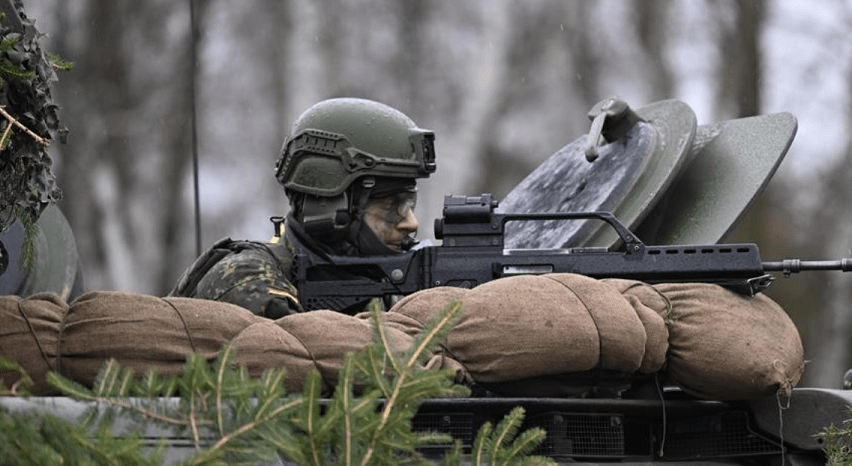
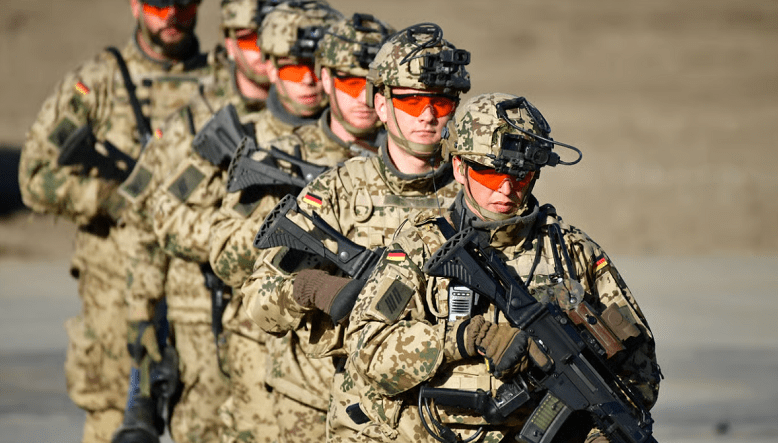
A permanent German brigade of about 4,800 soldiers in Lithuania, on the Russian border, will be combat-ready in 2027, defence ministers of both NATO members said on Monday after signing an agreement on German troops’ first permanent foreign deployment since World War Two.
You’ll never ever find yourselves in that role and everybody knows it. Like, we get it already. Yawn.
It would be nice, however, if you could maybe possibly perhaps put yourselves in the position to defend yourselves. Just saying.
Most Germans oppose military leadership role in Europe – 54% of Germans say they do not want Berlin to pursue more active foreign policy, and 71% say they are against taking on leadership role for Europe’s defense.
According to the survey, a majority of Germans are against a more militarized foreign policy, but support diplomatic efforts to find peaceful solutions to international conflicts.
Don’t take that nonsense seriously, folks. I’m serious.
Wind of change: Germany gets serious about plans to make military ‘fit for war’ – The return of full-scale armed conflict to Europe has Germany dramatically reframing its security policy.
With Russia and Ukraine still locked in combat after nearly two years and a major Israeli-Palestinian conflict underway, the European Union and NATO are feeling their way into a chaotic new world security order – and Europe’s largest economy is shaking up decades-old ideas on what its military is actually for.
Germany Set to Double Its Ukraine Military Aid Under Scholz Plan – SPD-led coalition parties agree on funding boost to €8 billion. Germany is Ukraine’s biggest military backer in Europe.
If approved by the parliament in Berlin where Scholz’s parties hold a majority, the boost would lift Germany’s defense spending beyond the 2% of gross domestic product target pledged by all North Atlantic Treaty Organization members, according to the people.
So that headline down there doesn’t make much sense – in my mind. The German army was never “was ready” and never will be.
Germany aims for a ‘war-ready’ military – It’s the most momentous shift in German defense priorities since 2011.
Russia’s invasion of Ukraine is forcing Germany to turn its military into a powerful and well-financed fighting force focused on defending the country and NATO allies, Germany’s chancellor said on Friday.
“Today, nobody can seriously doubt what we in Germany have been avoiding for a long time, namely that we need a powerful Bundeswehr,” Olaf Scholz said on the second day of a political-military conference presenting the deep change in Berlin’s strategic thinking.
“Our peace order is in danger,” he warned, also mentioning the war between Hamas and Israel and adding that Germany needs “a long-term, permanent change of course.”
The German army. Today. Fit for war? A small town police force in US-Amerika maybe, but the Bundeswehr? It’ll never happen and everybody here knows it. How ridiculous.
German military must be ‘fit for war’ – German Defense Minister Boris Pistorius has said that the country’s military must become combat-ready quickly. But that will require a major long-term overhaul, and experts doubt that will be easy.
Defense Minister Boris Pistorius warned on Sunday night that in the current global situation, Germany needed to be prepared for war and able to defend the country. But that required a fundamental re-think about what the Bundeswehr was for.
Well, they better fly that plane back to Germany ASAP. It might be needed for national defense or something.
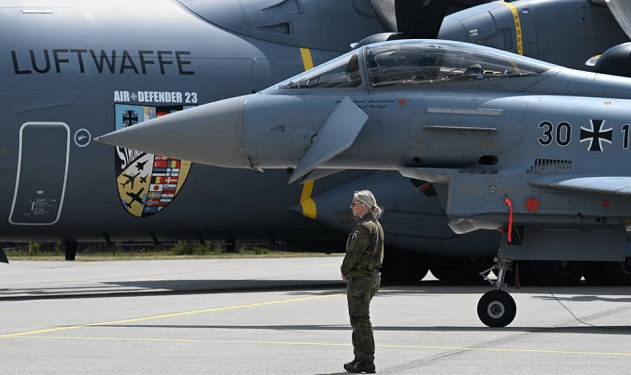
German Air Force rushes to Iceland in ‘Rapid Viking’ drill – The German Air Force kicked off what it called a “lean and mean” operation on Friday to demonstrate its ability to quickly deploy to Iceland as part of a two-week exercise dubbed “Rapid Viking.”
But to be willing to actually use them ourselves? Nein, danke!
German Defense Companies Could Be Europe’s Arsenal of Democracy – But for the Bundeswehr to fight will take a culture shift, not just weapons orders.
More than a decade ago, the German government made the deliberate decision to kill the ability of the Bundeswehr, Germany’s military, to fight a conventional land war in Europe and strip it of the equipment, manpower, and resources to do so. In 1990, as the Cold War was ending, the then-West German Bundeswehr alone was still able to field 215 combat battalions in a high state of readiness. Today, Germany has around 34 battalions, and the word “combat” is a bit of a misnomer. They are at such a low state of military readiness that when the 10th Tank Division conducted an exercise late last year, its entire deployed fleet of 18 Puma infantry fighting vehicles broke down…
This is kind of like leading from behind. Or being led from a behind, if you get my drift.
Germany to unveil first-ever National Security Strategy – Chancellor Olaf Scholz’s government is set to unveil Germany’s first National Security Strategy on Wednesday which aims to provide an overview of the country’s foreign policy and ensure a cohesive cross-ministry approach to security.
Germany has had policy documents in the past addressing security but Scholz’s three-way coalition agreed it wanted a more comprehensive strategy in its pact in November 2021.
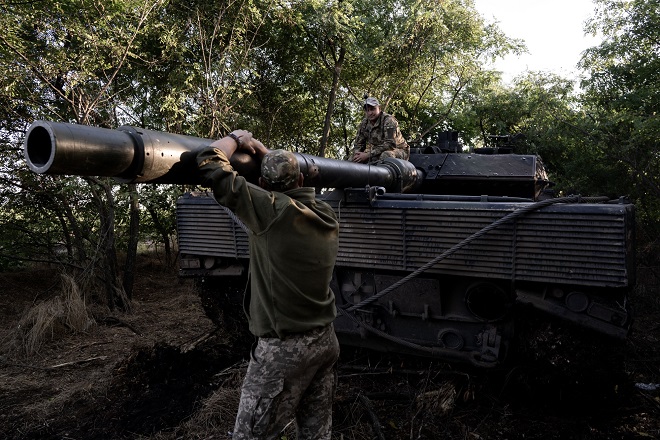
As a welcome gift, Scholz put together an arms package worth 2.7 billion euros. Germany is supplying more infantry fighting vehicles, older Leopard-1s, howitzers, armored combat vehicles, reconnaissance drones and ammunition. It is the most extensive pledge by the German government since the start of the war.