“Unsavoury details”

It’s the little unsavoury details that make a big unsavoury difference.

Germany’s Nord Stream grudge – The looming trial could undermine support for Ukraine…

The first of the Nord Stream criminal trials will start on 26 October in Hamburg. It will expose many unsavoury details. The prosecutors might ask questions such as: who ordered the attacks? What did President Volodymyr Zelensky know? When did he know it? The attack left Germany in a perma-energy crisis.
German of the day: Langstreckenraketen

That means long-range or deep-strike missiles.

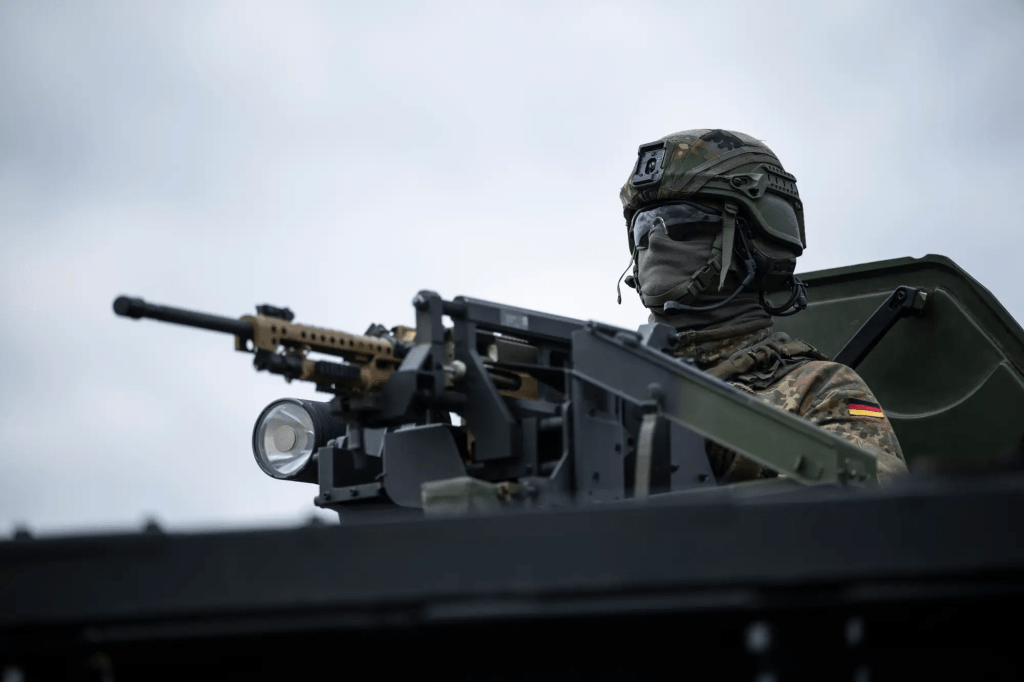
Inside Germany’s roughly $14 billion plan to deter Russia with a new arsenal of deep-strike missiles – The German government expects it will need almost €12 billion — roughly $14 billion — to build a new arsenal of long-range weapons aimed at deterring Russia.

The weapons would give German forces the ability to hit military targets hundreds or even thousands of kilometers behind the front — including command centers, airfields, missile launchers, and supply hubs.

Internal documents call the effort a top priority for both Germany and NATO.

German of the day: Geheimes Waffendepot

That means secret weapons depot.

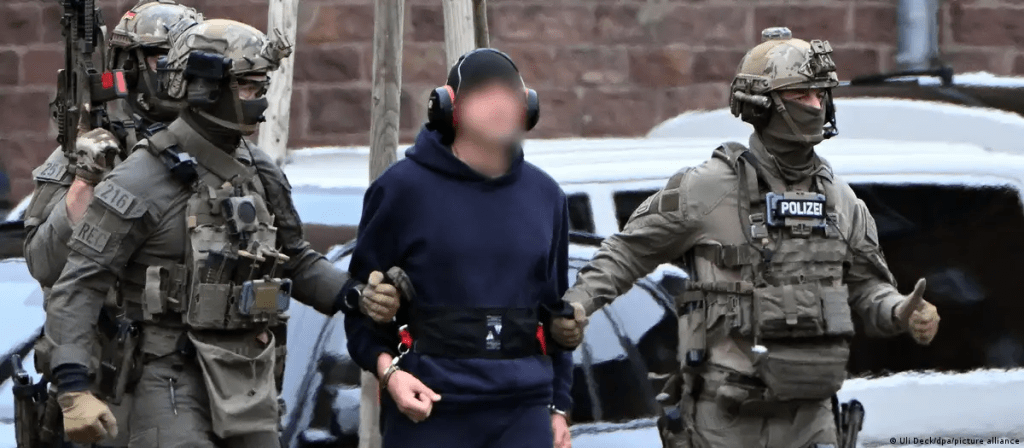
Secret Weapons Depot Discovered Near Berlin – According to reports from WDR, NDR, and SZ, security authorities have discovered a hideout containing two loaded weapons on the outskirts of Berlin. Authorities believe it was a depot used by Russian agents for potential attacks.

It must have been like a scene from a spy thriller when German officials made an explosive discovery in late summer of last year in a wooded area on the state border between Brandenburg and Berlin. According to reports from WDR, NDR, and the Süddeutsche Zeitung (SZ), they found a professionally constructed hideout containing two loaded firearms in the capital’s affluent suburban belt.

Made in Germany

Germany doesn’t have to come back.

It never left in the first place. Not when it comes to war technology.

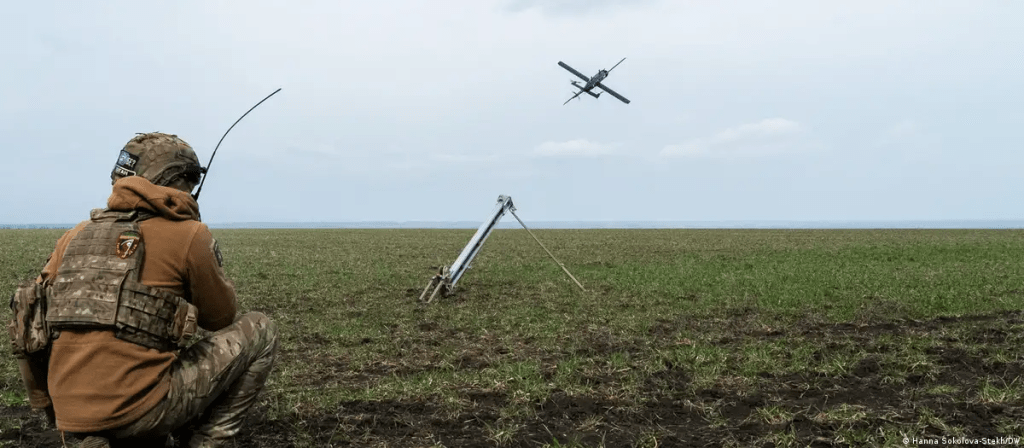
AI drones made in Germany see duty on Ukraine’s front line – The German defense company Helsing is supplying combat drones to Ukraine and will soon provide them to the Bundeswehr.

In a forested strip, two Ukrainian soldiers — a technician and an electrician — attach wings to a large black box. The kit is an HX-2 combat drone from the German manufacturer Helsing, equipped with artificial intelligence.

The billion-dollar startup from Bavaria is supplying thousands of these to the Ukrainian military, funded by the German government. Germany’s armed forces have also recently awarded Helsing a multimillion-euro contract.

“Diplomatically awkward”

The truth often is.

Nord Stream blast ordered by Ukraine, say German prosecutors – German prosecutors believe the Ukrainian national suspected of sabotaging Baltic Sea gas pipelines in 2022 acted “on the orders of state authorities in Ukraine…”

Germany is one of the biggest military backers of Ukraine in its battle against the ongoing Russian invasion, making the incident potentially diplomatically awkward. Before the war, Germany covered a considerable part of its energy needs with fuel and gas from Russia.

It was only three decades?

Sorry, but I think Germany has been misreading Russia for a whole lot longer than that.

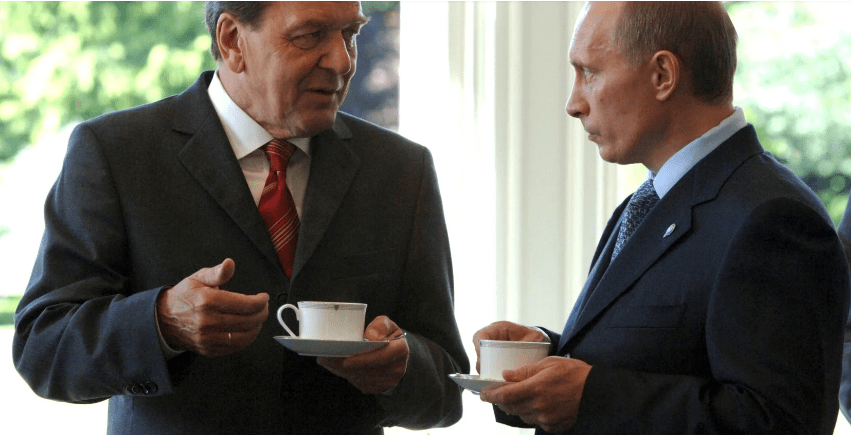
How Germany misread Russia for three decades – Berlin’s 30-year rapprochement with Russia is a cautionary tale of a country that became blind to the possibility of war – and is now paying the price.

Russia’s full-scale invasion of Ukraine in 2022 brought a remarkable period in German-Russian relations to a close. Commerce, foreign investment, cultural ties and personal connections between the two countries had all grown rapidly in the three decades since the Cold War. Trade with the Russian Federation was up by 600 per cent vis-à-vis 1991, and Germany received more than half its gas imports from Russia.

As trade and cultural exchange were expanding, however, the two countries’ visions of international order remained diametrically opposed: Russia vied to have the final word in Ukraine and the South Caucasus, while Germany sought to integrate these states into the European community. This tension is at the heart of two recent books on German-Russian relations, both fiercely critical of the German government’s failure to confront Russia and the corresponding neglect of securing Europe’s Eastern borders.

Germany vulnerable to sabotage?

Hell yeah.

Germany has been sabotaging Germany for years.

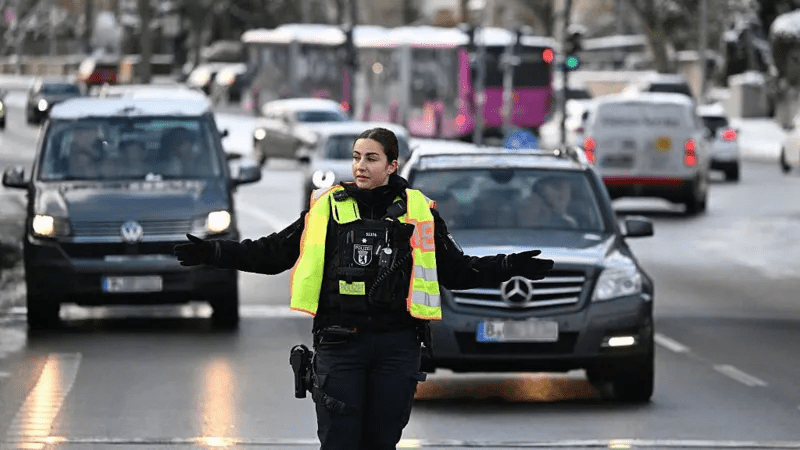
Berlin power outage highlights German vulnerability to sabotage – Power is being restored to the last homes hit by a five-day blackout in Germany’s snow-covered capital, Berlin.

The outage was caused by a suspected arson attack and came as temperatures dipped below freezing.

It is reportedly the longest blackout in the capital’s post-war history. A far-left militant group has claimed it was behind the outage.

German of the day: Russisches Vermögen

That means Russian assets (frozen assets).

Merz also wants to use Russian assets in Germany.

Brilliant move, Germany. The Russians won’t notice and there won’t be any retaliation.

Can Russia’s assets frozen in the EU be used for Ukraine? Negotiations on this issue are gaining momentum. Germany is also making concessions.

We can destabalize ourselves, thank you!

Germans tell Russia.

We don’t need your help.

Germany summons Russian ambassador over campaign to destabilise country, foreign ministry says – Germany’s foreign ministry spokesperson has warned that the authorities are “observing a significant increase in Russian hybrid activities,” claiming that a Russian campaign “seeks to destabilise Germany.”

Step 1, Page 1: Have an army.

Step 2, Page 2: No. A real army.

Germany Has Drawn Up a 1,200-page War Plan for a Russian Attack – Germany has quietly produced a 1,200-page Operational Plan for Germany that assumes a large-scale war with Russia and treats time as the key variable.

Drawn up at Julius Leber Barracks, the plan details how up to 800,000 German, U.S. and other NATO troops would flow east via ports, rivers, rail and roads—and how they’d be supplied and protected en route.

Rather than just counting tanks and troops, Berlin is betting on logistics and an “all-of-society” approach, from infrastructure to cyber. With Russian sabotage and probing already mounting, officials see a genuine race against time to be ready.