How Miraculous

Hidden behind the so-called German economic miracle is an underclass of low-paid employees whose incomes have benefited little from the country’s stability and in fact have shrunk in real terms over the last decade.

Despite Germany’s renowned inflation-fighting efforts, which kept consumer price increases at an average of 1.7 percent a year from 2000 to 2010, more and more low-income Germans report that they cannot make ends meet despite having a job and that they must rely upon state aid to supplement their income.

Nowhere is this deepening chasm more visible than in Berlin-Mitte, the prosperous center of the capital, full of handsome government buildings and fine restaurants that cater to officials and lobbyists.

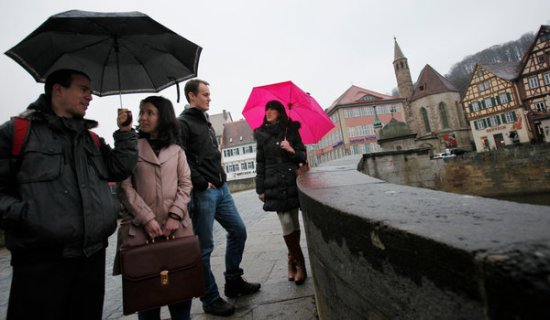
On a rainy summer morning here, only a 10-minute walk from the glamorous Unter Den Linden boulevard, hundreds of poorly dressed men and women lined up inside the district employment office. Some of them had come to look for work, some were applying for state help and some just wanted to accompany a friend.

“They cannot live off their income. Their wages are just too low. They have no choice but to receive help from the state.”

Bad Jobs Must Go

Wow. Even the Brave New Non-Nuclear World (in Germany) demands its tribute.

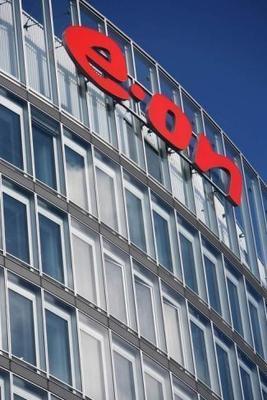
10,000 jobs at Germany’s energy giant Eon will have to go, for instance. But these folks will gladly take on this burden because its what “the people” want. Unfortunately, only about one third of those gladly taking on the burden will be German employees, but you can bet that there will be  further opportunites for them to excel in the very near brave new future.

Das sind mehr als zehn Prozent der gesamten Belegschaft. Damit würde der Sparkurs des Konzerns viel härter ausfallen als bisher bekannt.

Everything Is So Wunderbar Here

When it comes to the German economy and the jobs here, right?

Right. Sort of. Think again. Granted, Germans love nothing better than to bitch and moan about anything and everything they can, their jobs included, but the latest phase of a study done by the Universität Duisburg-Essen has shown that based on a scale from 1 (awful) to 10 (great) German on-the-job satisfaction has dropped from 7.6 to 6.8 during the past 25 years.

In an international comparison, German is even way down at the bottom of the list, the only workers being less satisfied coming from ex-East Block nations like Slowakia, Ukraine, Bulgaria and Russia. But at least now the West Germans are just as miserable as the East Germans are, the study says. So that’s progress, I guess.

Hmmm. I guess nothing ever is as it seems.

Im internationalen Vergleich rangiert Deutschland in der Studie weit hinten auf Rang 18 – nur in den ehemaligen Ostblock-Staaten Slowakei, Ukraine, Bulgarien und Russland seien die Arbeitnehmer demnach noch unzufriedener.


Germans Meant “Work Harder”

Down south (in battling the Greek debt crisis, for instance). Not longer. A study based on OECD and Eurostat figures has determined that Germans work less annually than their no good and lazy Southern European neighbors.

The study indicates that “a German’s average annual work duration (1,390 hours) was substantially lower than for a Greek (2,119), an Italian (1,773) a Portuguese (1,719) and a Spaniard (1,654).”

But at least for that the Germans work more intensely, right? Not according to that study, they don’t.

But at least they mean well, or something?

“Germany’s productivity per head remains close to the average of southern European countries. Its hourly productivity rate is above average but not better than France or Greece,”