Germans Meant “Work Harder”

Down south (in battling the Greek debt crisis, for instance). Not longer. A study based on OECD and Eurostat figures has determined that Germans work less annually than their no good and lazy Southern European neighbors.

The study indicates that “a German’s average annual work duration (1,390 hours) was substantially lower than for a Greek (2,119), an Italian (1,773) a Portuguese (1,719) and a Spaniard (1,654).”

But at least for that the Germans work more intensely, right? Not according to that study, they don’t.

But at least they mean well, or something?

“Germany’s productivity per head remains close to the average of southern European countries. Its hourly productivity rate is above average but not better than France or Greece,”


My Big Fat Greek Bailout II

Certainly not back by populist demand, the German government now seems prepared to stop the bitching and moaning long enough to support funding for the sequel to the first Greek Bailout box office flop and enable the EU to wrap up a second package of aid loans to help a struggling Greece or, to be more exact, the German banks that are now terribly exposed to a possible default there.

“Germany is considering dropping its push for an early rescheduling of Greek bonds in order to facilitate a new package of aid loans for Greece, according to people familiar with the matter. Berlin’s concession that it must lend Greece more money, even without burden-sharing by bondholders in the short term, would help Europe overcome its impasse over Greece’s funding needs before the indebted country runs out of cash in mid-July.”

But if you want any popcorn, you’re going to have to bring it yourself.

Größter Garant der griechischen Zahlungsfähigkeit nach dem IWF mit 30 Mrd. ist Deutschland mit 22,4 Mrd.

Germans Go Home!

“To Save the Euro, Germany has to Quit the Euro Zone

“When the euro was launched, leading German politicians used to argue, with evident relish (and much to the chagrin of the British in particular), that monetary union would eventually require political union. The Greek crisis was precisely the sort of event that was expected to force the pace. But, faced with a defining crisis, Ms Merkel’s government is avoiding airy talk of political union – preferring instead to force harsh economic medicine down the throats of the reluctant Greeks, Irish, Portuguese and Spanish electorates. This is becoming both economically and politically unsustainable. If the objective is to save the currency union, perhaps policy makers are looking at this from the wrong end. In the end, paradoxically, to save the European Monetary Union, the least disruptive way forward would be for the Germans, not the periphery countries, to leave.”

And in a related story…

Everything must go! The Greek government is selling everything it still has its debt-ridden little fingers on so guess who is now interested in buying Athens International Airport? Fraport AG (Frankfurt Airport).

Germany’s Little Greece

Or little Greeces, I guess I should say. Remember all that German finger-pointing at Athens and the indignant lectures about “financial responsibility,” “saving until it hurts” and “working harder?”

Well four of Germany’s sixteen state governments are so way out of control with their money (or lack of it) that they now face the distinct possiblity of sliding into a homegrown debt crises of their own.

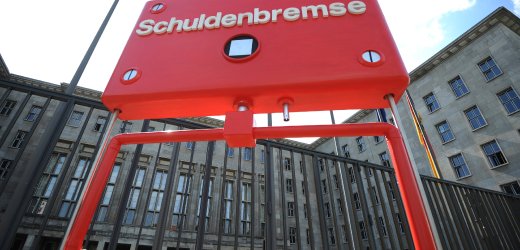
This is the first time that the so-called “stability council” has put on its “debt-brake,” emergency procedures created by the federal government two years ago which is aimed at forcing all state budgets to be in surplus by the year 2020.

And the losers are (who else?): Berlin. Oh yeah, and Bremen, Schleswig-Holstein and Saarland. And just to stick with Berlin, how high is this city in debt? It’s only around something like sort of 62 billion freakin’ euros (17,140 euros per resident).

And how does this way cool debt-brake work? That’s easy. If the states promise to be good in the future (2011 to 2019) they will get an additional 800 million financial support from the federal government each year. You know, just like the way they do it down in Greece. I can’t wait to hear the next lecture.

In den betroffenen Ländern wurden bereits Sparmaßnahmen ergriffen. Im Gegenzug erhalten sie von 2011 bis 2019 Finanzhilfen von insgesamt 800 Millionen Euro pro Jahr, um die Schuldenbremse einzuhalten und ihre Defizite abzubauen.

“Die Noch-Supermacht”

Like S&P, Germany ITSELF believes that it’s time for “the yet superpower” to start saving big time and pronto. And I for one would listen (you know, like listening to E. F. Hutton when they used to talk?) because the Germans have had a whole lot of experience in giving good advice like this as of late. Just look at how their recommendations have helped Greece, for instance.

“The danger is that the Americans are still lulled into a false sense of security.”

“Möglich, dass Obama dann (nach der Wiederwahl) wirklich anfängt zu sparen.”

Maybe history does repeat itself

At least when it comes to Germany’s interest in benefitting from currency troubles, I mean. Hey Greece, Ireland, Portugal, Spain, Italy… Stay hard-up or shut-up.

”The key principle of German economic policy was to persuade the French and Italians to lower the value of the D-mark so as to make Germany more competitive.”

“The Berlin government’s intransigence over the debt issue, while politically understandable from a German point of view, seemingly pays little heed to the realities of the euro economy, which are heavily tilted towards Germany.”

“In pre-EMU days, if the German economy were growing at an estimated 3.7% as it is this year, the German currency and interest rates would both come under upward pressure – damping exporters’ performance and the growth outlook. Now, however, with all EMU economies shackled together, and devaluation an impossibility for the peripheral countries, the hard-up states have nowhere to hide. Germany continues to profit from excellent export performance — and it can self-righteously point the finger of blame for the euro area’s woes at those debt-ridden peripheral states.”

Merkel botched it with the euro – at least as well as we would have

SPIEGEL: But most German politicians are committed to Europe.

Fischer: Only as long as it remains very abstract. But we have to give people enough credit to deal with unpleasant truths. No one explains why the euro is important for Germany and what its failure would mean. And no one explains why Germany has always paid — because it happens to be the big winner in Europe.

SPIEGEL: A community of solidarity means that Germany must pay for the failures of others.

Fischer: What nonsense! The European Union was a transfer union from the very beginning. The common market and the agrarian market were and still are primarily transfer guarantees for Germany and France!

SPIEGEL: How should Merkel have reacted?

Fischer: The chancellor should have put forward her own proposal to rescue the euro, in coordination with France. We have a responsibility as Europe’s strongest economic power. The EU cannot solve its problems in the long run if Germany hides itself. We are paying a high price for our resistance. We are viewed with suspicion in the entire Mediterranean region, and are seen as villains in Greece.

Ground Zero? Here?

Ground zero of Europe’s debt-currency-banking crisis isn’t in Greece, or Portugal, or Ireland or even Spain. It’s in Germany.”

“At one end is a powerful and highly efficient industrial export engine that generates a large trade surplus with the rest of the world, including most other countries in the eurozone. Instead of spending this new export wealth on a higher standard of living, however, parsimonious Germans prefer to save it, handing it over to thinly capitalized German banks that have proved equally efficient in destroying said wealth by investing it in risky securities issued, not coincidentally, by trading partners that need the capital to finance their trade deficits with Germany.”

“What Germans won’t accept is that they wouldn’t have been able to sell all those beautifully designed cars and well-engineered machine tools if Greeks and Spaniards and Americans hadn’t been willing to buy those goods and German banks hadn’t been so willing to lend them the money to do so. “

Our debt doesn’t stink

Chart this. Bloomberg’s Chart of the Day (click on the graphic part) doesn’t put German households in a very good light – when compared to Greek ones.

The Greeks may kick butt when it comes to having the highest level of government debt as a percentage of gross domestic product, but its household debt is considerably less than that of Germany’s.

Thank goodness information like this gets published around here every once in a while is all I can say. I’m sure this’ll calm tempers back down again.

“Germany cannot become Europe’s paymaster.”

Standards schmandards

For all the talk about the profligacy of the Southern European nations, Germany itself falls short of euro area standards, calling for budget deficits of less than 3% and government debt below 60% of gross domestic product. The latest figures from Germany are 3.3% and 73%, according to Eurostat.

“If Germany weren’t in the euro area today, it wouldn’t be able to get in, because it violates both the debt and the deficit criteria,” Buiter said.