Again.

Again.
Honest. No, really.

We mean it now. Those days are over. For real.
Foreign Office in Berlin says Germans still being held in Russia – Germany’s Foreign Office confirmed on Friday that there are a “low double-digit number of people” with German citizenship still being held in Russia. A “single-digit number of Germans” are also being held in Belarus, the Foreign Office said on Friday.
Because Putin (and everybody else the world) knows that Germany is erpressbar (blackmailable, open to blackmail).

Just like the current US-Amerika government of… whoever is actually running the government at the moment.
Why Germany was key to prisoner swap deal with Russia – The German government’s decision to release a convicted Russian killer serving a life sentence for murdering an exiled Chechen in Berlin in 2019 was crucial for the prisoner swap between Russia and the West…
The main figure in the swap, which involved several countries, was Vadim Krasikov, a Russian convicted of killing a former Chechen militant in Berlin in 2019.
A clear message to future blackmailers: The German government lets a convicted murderer go free after two years in prison, just like that, somebody who bumped off one of Putin’s critics right here in Berlin’s Tiergarten, in broad daylight.
We love your missles, honest.
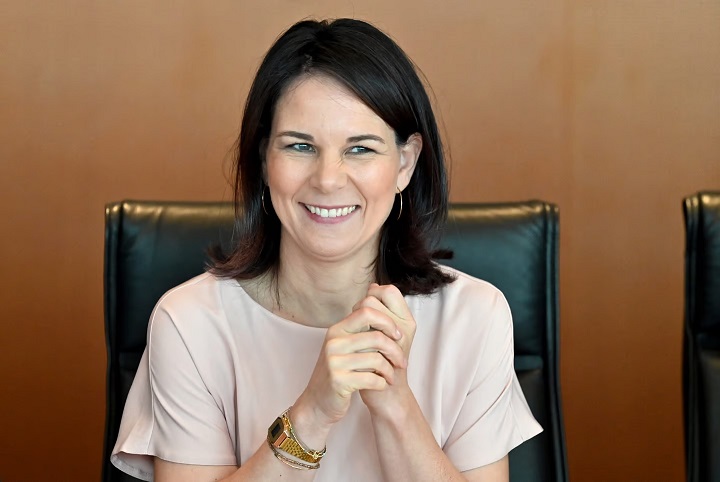
Germany welcomes military investors and industry complex professionals of all levels of experience who share our vision of a prosperous future of preventing or at the very least surviving a Russian attack.
US missiles are welcome in Germany, foreign minister says – Baerbock’s comments came in response to criticism from within the German government coalition.
In theory, at least.

Spy-linked Russians restart trade with German toolmaker – Heller Tools exported machinery to entities linked to a covert FSB smuggling network.
Companies linked to a Russian spy ring have resumed buying machinery from a German toolmaker — just months after the manufacturer was warned about sales to the same smuggling network.
Analysis by the Financial Times has established that Heller Tools, a Dinklage-based group founded in the 19th century, sold a total of $1.2mn of drills and other tools to companies linked to the so-called Serniya smuggling operation.
She is all gone, señor.

Let’s see what Ukraine’s biggest, not second biggest military donor does next year.
Germany plans to halve military aid for Ukraine – Germany is planning to nearly halve military aid for Ukraine next year, from around €8bn (£6.7bn; $8.7bn) to around €4bn, according to a draft budget approved by the government.
Finance Minister Christian Lindner said Ukraine’s financing was “secure for the foreseeable future” due to a G7 group of rich nations scheme to raise $50bn from interest on frozen Russian assets.
Germany is Ukraine’s second biggest military donor, after the US. In 2024, Berlin’s budget for Kyiv is set at nearly €7.5bn.
That means assassination plot.

German shock at reported Russian assassination plot – German political figures have reacted angrily to a report that Russia had plotted to kill the head of Germany’s biggest arms company Rheinmetall, Armin Papperger...
The company is one of the world’s biggest producers of ammunition and has become key to supplying Ukraine with arms, armoured vehicles and other military equipment.
Rheinmetall recently opened a tank repair plant in western Ukraine. Last month, it signed an agreement with Ukraine to expand co-operation in the coming years, including a joint venture to produce artillery shells.
That means rearmament.
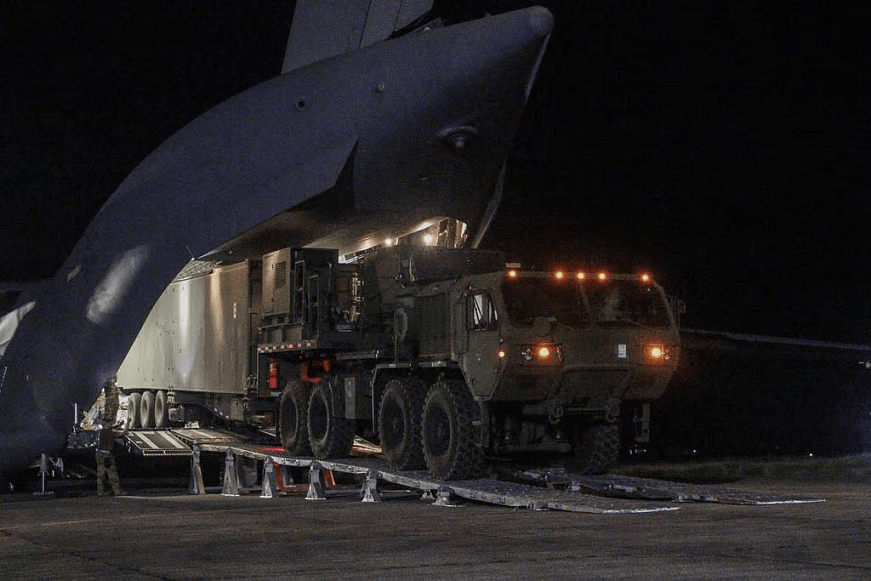
US to send Tomahawks, hypersonics, other long-range fires to Germany – The U.S. will start deploying long-range fires units to Germany in 2026, according to a joint statement from both the U.S. and German governments released today amid the NATO Summit in Washington, D.C.
The new capabilities will “have significantly longer range than current land-based fires in Europe. Exercising these advanced capabilities will demonstrate the United States’ commitment to NATO and its contributions to European integrated deterrence,” the joint statement reads.
You didn’t want me to lecture you in person.

So I’ll just have to lecture from here at home.
Diplomatic tensions are escalating between Germany and Hungary after Budapest canceled a meeting between Foreign Minister Péter Szijjártó and his German counterpart, Annalena Baerbock, that had been planned for Monday in Budapest.
The unusual last-minute cancellation — tantamount to a diplomatic éclat — comes after German Chancellor Olaf Scholz and other EU leaders strongly criticized a trip by Hungarian Prime Minister Viktor Orbán to Moscow, where he met with Russian President Vladimir Putin on Friday.
Baerbock had planned to raise the issue of Orbán’s meeting with Putin during her visit to Budapest on Monday. But “to our surprise, the Hungarian side canceled” the appointment with Szijjártó “at short notice,” a German foreign ministry official told reporters late Friday.
Now “war bunkers” are in. Again.

Germany plans new war bunkers – German cities are calling for new bunkers to be built, to protect the population in the event of war. But critics argue there’s no point.
There might be no better way to gauge a country’s anxieties than by checking in on the companies building panic rooms and private bunkers.
Business has been going worryingly well for BSSD Defence, the Berlin-based company that builds “protection room systems” for private, business and military applications. As well as a range of home security equipment, the company offers everything from “pop-up panic rooms” for around €20,000 ($21,400) to full-scale bunkers for close to €200,000.

