Hardline German ECB Presidential Candidates Dropping Like Flies

After Bundesbank President Axel Weber threw in the towel, crusty old Peer Steinbrueck said don’t even think about asking.

A hardliner on monetary policy matters, Weber has been at odds with several European governments since the outbreak of the eurozone debt crisis.

He vehemently opposed the ECB buying the bonds of debt-stricken peripheral eurozone nations as part of a concerted strategy to calm down the markets.

His public criticism of an ECB council decision in May, 2010, to buy the bonds had angered several EU leaders.

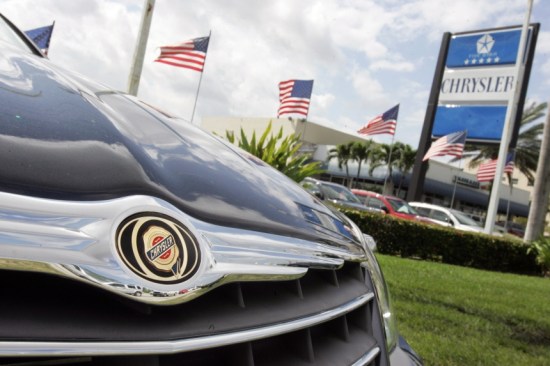
This will be just like Daimler-Chrylser!

Only better. Or even better, I should say (meaning even worse).

Deutsche Börse Eyes Takeover of New York Stock Exchange

“The listed exchanges are losing market share dramatically,” former NYSE director Ken Langone said on CNBC, calling the proposed deal a “big yawn.” “With electronic trading that is now prevalent throughout the industry, it seems to me the only sense for the merger is to cut costs faster than their market share goes down.”

Miserable Management Booming Too

And you thought your boss was lousy And I’m sure she is.

Whopee! The German economy is booming and everything is Friede, Freude und Eierkuchen (peace, love and harmony), right? Well that’s what German managers will tell you these days. German employees appear to see the situtation a bit more differenziert (nuanced). Just ask this lady down here.

Gallop tells us that German workers are anything but highly motivated in these booming economic times in which we, or at least they, now live. Some 66 percent of those surveyed say they only do Dienst nach Vorschrift (they only work to rule, they don’t give any effort more than absolutely necessary) and have very little emotional commitment to their company. About one fifth (21 percent) of the workforce have already quit “innerly” and feel no emotional commitment to their company at all.

German bosses suck really bad, in other words.

And now you have the rest of the story.

Fast die Hälfte der Angestellten (46 Prozent), die innerlich bereits gekündigt haben, haben im vergangenen Jahr aufgrund ihres Vorgesetzten daran gedacht, ihr Unternehmen zu verlassen. Nahezu ebenso viele (45 Prozent) würden ihren Chef mit sofortiger Wirkung entlassen, wenn sie denn könnten.

Dumb Americans buying big cars again

But some of them aren’t all that dumb because they are the ones buying the big German ones. That’s the essence of the article anyway.

Inexplicable, really. German intellectuals everywhere are aghast at the United States failing to do what it is supposed to do yet again. Despite Der Spiegel‘s recent pronouncemnt of the end of US-Amerika as we know it (in black and white and color too), US-Amerikaner are suddenly buying big fat politically correct automobiles as if there were no tomorrow.

Or maybe that is the explanation. Perhaps this is our last collective gasp as a nation before the whole culture (excuse me, I meant lack of culture) implodes with a tremendous groan and rolls over to die, I dunno, in Nevada or someplace. Everybody must sense instinctively that this will be our last chance to drive off into the sunset of our American oblivion in our monstrous ‘merican automobiles in hyper-heroic, High Noon style.

Or maybe… Maybe the experts at Der Spiegel (and experts in general) are just too stupid to poor piss out of a boot.

Der Autoabsatz in den USA boomt.

We never get tired of being admired

Yeah, Herr Brüderle, you guys are the best thing since sliced toast. You’ve done everything right, right?

But please, enjoy it now, while you still can, fast. Because here’s what might just happen next: Mr. Sarkozy putting your money where his mouth is (“Germany and France will never let the euro fail) and your temper tantrum behind the scenes at Davos might be an indication that you have already been pushed down the road you didn’t think you would have to travel:Spending whatever it takes to bankroll your near-bankrupt euro neighbors.

And should it come to that, let’s see how much admiration you’ll be getting from German taxpayers back home.

Germany is getting boxed into a corner. Somehow, the ideas that the bailout-funding European Financial Stability Facility needs to be much bigger, that it should buy government debt, and that the interest rates charged on aid need slashing, have all dodged Frankfurt opposition and moved to the top of the bond market’s agenda.

How poor (poorly paid) are Berliners?

The latest statistics say that they’re the poorest in the land. Nearly a quarter of all Berlin households have to get by on roughtly 1100 euros (about $1,500) per month.

So If you’re looking for rotten work that’s grossly underpaid, Berlin is like, I dunno, El Dorado or something. No skills required, either. Come on down!

And money isn’t everything, of course. Unless you don’t have any, I mean.

Das passt ins Bild von der „armen“ Hauptstadt und hat vor allem mit der hohen Arbeitslosigkeit zu tun. Sie liegt in Berlin bei 12,8 Prozent – so hoch wie in keinem anderen Bundesland. Mehr als 600.000 Menschen beziehen Sozialtransfers.

Germans in Davos: We’re not close-fisted because we want to be

We’re close-fisted because it’s one of our defining national obsessive compulsive disorders and the one over which we have the least control.

When it comes to the euro crisis, Germany is about to be slapped around a bit by some folks at the Davos World Economic Forum for not being willing to make more money available than it already has. There is not enough money in circulation in Europe, they believe, yet this is necessary for certain ailing economies to be able to crawl back out into growth again.

Germany’s critics also believe that more money needs to be set aside for the European “safety chute” fund, something Germany steadfastly refuses to do. This extra capital would convince financial market investors that the euro is properly “covered.”

Needless to say, the Germans will listen politely and refuse to budge an inch, their fists tightening automatically, close-fistedness being one of their defining national obsessive compulsive disorders and the one over which they have the least control.

What can I say? This is New Europe, people. Germany does what it wants and everybody else here has to like it.

Für die deutsche Delegation geht es in diesem Jahr nicht so gemütlich zu wie üblich.

Remember when it was European Germany?

Now it’s German Europe.

Huh? Where did this come from all of a sudden? Out of the blue like that?*

It was another “good day for Europe” when, as usual, nothing was actually resolved during the latest EU summit the other day, other than the fact that that nothing had a big Made in Germany stamp on it. The times they are a changed. The country that used to moan about being the paymaster for so long (and still does, of course, don’t get me wrong)  is now “the taskmaster of the entire community” and doesn’t even have the decency to make a secret about it anymore.

But don’t complain about it, my (as in Germany’s) fellow Europeans. This is only what the “fathers of Europe” had envisioned right from the start. Think of  what Jean Monnet had to say about the plan, for instance:

He wanted to guide European countries into a super-state “without their people understanding what is happening. This can be accomplished by successive steps, each disguised as having an economic purpose.”

I admit that this wasn’t quite the purpose he had envisioned but, well, now you “have the salad,” as the Germans like to say (the fat is in the fire). It doesn’t really matter that Berlin has a lack of vision when it comes to dealing with the current euro crisis, Germany calls the shots now and doesn’t need a vision if it doesn’t want one. So get used to it already.

“This is all about Germany, and it’s all about the end of the German appetite for writing checks to the periphery of Europe.”

*Have any of you ever read Philip K. Dick’s The Man in the High Castle? Germany and Japan win World War II. This is kind of like that.

You’ll do it my way

Or it’s the highway. Does that summit up enough for you, Freunde?

Let us sing.

And now, the end is here
And so I face the final curtain

No, wait. This verse is better.

Regrets, I’ve had a few
But then again, too few to mention

No, maybe this one instead.

Yes, there were times, I’m sure you know
When I bit off more than I could chew
But through it all, when there was doubt
I ate it up and spit it out
I faced it all and I stood tall and did it my way

“The defiant stand came as Moody’s issued a downgrade warning on Spain owing to “high refinancing needs in 2011″ and the risk of further bank bail-outs.”

It’s passé, José

Remember when hysterical warnings about the approaching climate catastrophe used to be en vogue here in Germany? You remember, long, long ago. Like during that near-snowed-out UN climate summit held in Copenhagen last year? That’s all passé now, for some inexplicable reason. And I, for one, really miss all the brouhaha.

The media here barely even bothered to cover the latest doomed UN climate summit, this time held in Cancun, Mexico, I think. The little coverage you could find was so drab, so pragmatic, so, I don’t know, so businesslike, it put you right to sleep. Well it did me.

Like where did all the fire go? Not a single riot anywhere. Where’s all the hybris and the hype? Whatever happened to those drowning polar bears and ticking clocks and time bombs and other highly dramatic life and death symbolic scenarios (scenario symbolics?)? Sure, I know, time has actually run out for us already. Copenhagen was the last chance (or was it Kyoto?), and yet the snow, I mean show must still go on, mustn’t it? But what do we get now? Now all anybody wants to talk about are emission certificates. Emission certificates and business opportunities. Pitiful. I remember when our planet’s future used to be at stake. Now the only thing at stake is “multilateralism.” Boooring.

Mad? You bet I’m mad, mister. It’s disgusting, I tell ya. I’m disillusioned (have you been dis-illusioned yet?). It’s freakin’ UN climate summits like these that give global warming a bad name.

“Climate change itself is changing — from an existential danger to civilization into an opportunity for profit.”