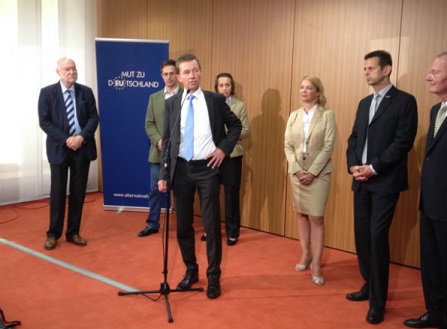
Why Are These Eurosceptic Parties Winning?

The professional Europeans in Brussels made clear that they don’t want this to happen.
Alternative

So what do they do then? They do what they always do: Ignore what just happened and carry on with EU business as usual, whatever that is. Well, one thing we do know about EU business as usual in the meantime is that it is carried out by a Brussels political elite that Jane and Joe European simply does not understand nor feel represented by.

Not that anyone out there cares or anything, but the voter turnout for this latest round of European elections was absolutely pathetic and those who did vote voted in one-fifth of the new European Parliament’s seats to political parties critical of the EU’s previous policy, whatever that was. You would think that the elite would finally get the message here, right? Nope. It ain’t happening. And that’s why it ain’t happening with Europe.

I know. Why doesn’t Brussels consider acknowledging this overwhelming European apathy and start respecting how those Europeans who did vote have voted and slowly start the process of giving back competencies to the countries in question? You know, decentralize and let Europeans start deciding more for themselves at the local level again? Na. Wozu (what for)? If it wasn’t decided in Brussels, it didn’t happen.

Für den schlichten Normaleuropäer sei der schwierige Konsensfindungsprozess in der EU zu komplex. Der leider etwas beschränkte Bürger wisse gar nicht, wie gut die EU für ihn sei. So redet sich die „europäische Elite“ das Wahlergebnis schön und blendet die Tatsache der drastisch schwindenden Zustimmung aus.

PS: Speaking of winning, Tempelhof loses. I mean wins?

I’ll Bash Germany With The Best Of Them

But… How is it that its critics blame Germany for the high unemployment, declining living standards, and riots to their South?

Germany

If this were a football game, the referee should call unnecessary roughness for piling on Germany. The American Left led by Paul Krugman (The Harm Germany Does and Those Depressing Germans) excoriates Germany for forcing austerity on the rest of Europe. The U.S. Treasury and others (no newcomer to spending) demands that miserly Germany spend more to pull the PIIGS (Portugal, Italy, Ireland, Greece and Spain) out of their economic doldrums…

I interpret the liberals’ German bashing as having an entirely different motivation – their inherent dislike of economic success… In the liberal mind set, success must be equally shared. If one person, company, or country is better off, it must be at the expense of those who are less well off. We need to even things out in their zero-sum world.

PS: And I’m going to go even further out on the limb tonight defending Germany by predicting that they will finally – after 19 encounters? –  beat Italy.

Springtime For Merkel And Germany

In the end, the Cypriots swallowed the bitter medicine. Facing national humiliation and a bleak future many complain their small nation has been forced to succumb to the will of a larger, merciless power – Germany.

Cyprus

And the Germans also have a clear and consistent analysis of the problem. They believe that fiscal profligacy or faulty business models lie at the heart of the crisis – and the solution is austerity, allied to structural reform. There are many who argue that this prescription is dangerous. But the anti-austerians have failed to come up with a set of alternative policies that is coherent enough to turn the intellectual tide.

…This Germanophobia is unfair. Behind all the shouting and the wrangling, German taxpayers will once again be funding the biggest single share of yet another eurozone bailout.

Friedman’s Prophecy

I don’t believe in prophets. I’m very skeptical when it comes to economists of all flavors, too.

But when looking around at what’s going on here in Europe these days and considering how even the Spiegel itself now warns us about investors preparing for the euro collapse, I can’t help but wonder if Milton Friedman didn’t have a functioning crystal ball after all.

“There is no historical precedent for such an arrangement (the euro). It involves each country’s giving up power over its internal monetary policy to an entity not under its political control. Such a system has economic advantages and disadvantages, but I believe that its real Achilles heel will prove to be political; that a system under which the political and currency boundaries do not match is bound to prove unstable.”

Do as I say, not as I do

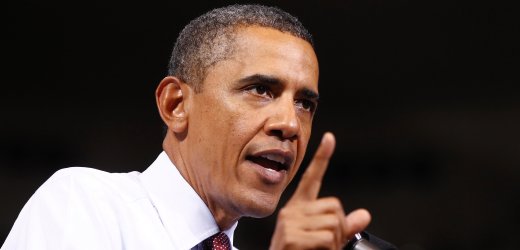
Believe you me, Europe, President Barack Obama knows what he’s talking about when he’s talking about debt.

And that is why he wants YOU to solve your eurozone debt crisis pronto. He is, after all, “deeply engaged” with European nations about solving the eurozone debt crisis, if less so about solving the American one, and is deeply convinced that European countries need to coordinate fiscal policies just like the American administration and Congress have not.

“Right now you have a single currency but you don’t have a single set of economic policies, and that’s created great difficulty,” the President said. “Like duh, we know all about that. Just look at us if you want to see what that kind of clueless leadership gets you.”

“Europa hat derzeit zwar eine geeinte Währung, aber es verfügt über keine gemeinsame Wirtschaftspolitik. Und das schafft große Probleme.”

Talk to the hand

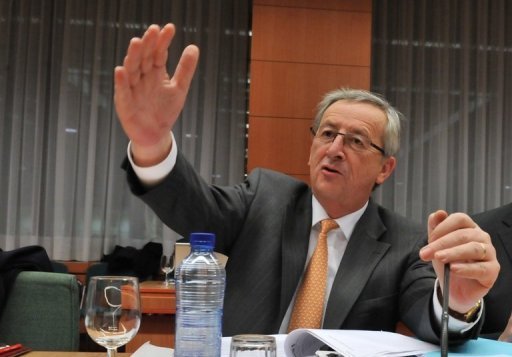
“They are rejecting an idea before studying it.” What else is new, Jean-Claude? Remember Iraq? The Germans said no to that before even being asked.

Eurogroup chairman Jean-Claude Juncker “launched a blistering attack” on Germany for its flat refusal to even consider his proposal to create eurozone bonds (“E-Bonds” would help weaker eurozone members raise money). He called the Germans “un-European.” Ouch. It doesn’t get much lower than that, people. Unless it’s “un-Southern European” maybe. Lower, get it?

Too bad he mixed up Merkel & Co. with somebody who gives a Scheiße. Just get used to it, Jean-Claude. And you just keep raising your hand as often as you like.

“This is very strange. This way of creating taboo areas in Europe and not dealing with others’ ideas is a very un-European way of dealing with European matters.”

“Deutschland macht dabei auch ein gutes Geschäft”

Germany is also getting a good bargain in the deal.

What deal you ask? You know, the one the Germans love moaning about so much at the Stammtisch (regulars’ table) these days: How poor Germany has to bail everbody out in Europe (Greece, Ireland, who’s next?) and how said poor Germans are poor victims yet again and blah, blah, tra, la, boo, hoo, hoo.

But there’s always a rest of the story.

Sure, the Germans have to “contribute” the most to this way cool European rescue parachute that keeps getting pulled these days, but they also have the most to gain if everything goes right.

How so? Some call it, I don’t know, refinancing. They borrow the money on the bond market for 3 percent and then loan it to the Greeks and the Irish (and the next folks to come along) for 5.8 percent. If these countries die Kurve kriegen (turn the corner), then the money comes rolling back in–and a big sweet profit to boot.

So dry your eyes over there at the Stammtisch already and take a deep breath after you order your next beer. Es wird alles gut. Everything will turn out good in the end. Maybe even real good.

“Wer sich selbst am Anleihemarkt für knapp drei Prozent refinanziere und an Krisenländer wie Griechenland und Irland Kredite zu einem Zinssatz von 5,8 Prozent ausreiche, könne selbst ordentliche Gewinne einstreichen.”