Germany Drains Spain’s Brains

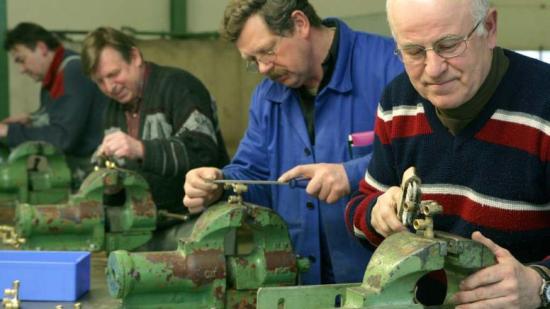
In a ghoulish plan to intensify their already ironclad grip of an anemic Europe, depraved German industrialists have now begun luring unsuspecting southern European engineers to Germany by offering them well-paid jobs which will allow them (the depraved Germans) to drain their brains at leasure.
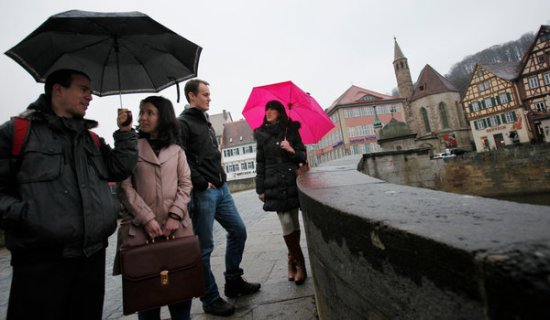
To make matters worse, if that were possible, another grisly gimmick has also been introduced in which so-called “blue cards” (green had already been taken) are being offered to skilled non-EU workers, as well. Although ostinsibly intended to “make the immigration process” easier, this “blue card” babble is clearly just another cynical euphemism for more German brain draining activity.

The gruesome brain-sucking capitalist bastards.

In December, a planeload of 100 Spanish engineers flew to nearby Stuttgart for a weekend of job interviews. Within a month, about a third of them had been hired. And some German companies have been making connections over the Internet, simply plucking Spanish, Portuguese, Greek and Italian professionals from sites like LinkedIn.


Speaking Of The Dark Side

Here’s a little tidbit about the dark side of “Germany’s jobs miracle.”

“BEST LOW WAGE SECTOR IN EUROPE”

Job growth in Germany has been especially strong for low wage and temporary agency employment because of deregulation and the promotion of flexible, low-income, state-subsidised so-called “mini-jobs”.

The number of full-time workers on low wages – sometimes defined as less than two thirds of middle income – rose by 13.5 percent to 4.3 million between 2005 and 2010, three times faster than other employment, according to the Labour Office.

Germany can only hope that other European countries do not emulate its own wage deflationary policies too closely, as demand will dry up: “If everyone is doing same thing, there won’t be anyone left to export to.”

PS: Like I noted on a post the other day, the USA and Germany have more in common than they think. Now the Greeks are burning German flags, too.

How Miraculous

Hidden behind the so-called German economic miracle is an underclass of low-paid employees whose incomes have benefited little from the country’s stability and in fact have shrunk in real terms over the last decade.

Despite Germany’s renowned inflation-fighting efforts, which kept consumer price increases at an average of 1.7 percent a year from 2000 to 2010, more and more low-income Germans report that they cannot make ends meet despite having a job and that they must rely upon state aid to supplement their income.

Nowhere is this deepening chasm more visible than in Berlin-Mitte, the prosperous center of the capital, full of handsome government buildings and fine restaurants that cater to officials and lobbyists.

On a rainy summer morning here, only a 10-minute walk from the glamorous Unter Den Linden boulevard, hundreds of poorly dressed men and women lined up inside the district employment office. Some of them had come to look for work, some were applying for state help and some just wanted to accompany a friend.

“They cannot live off their income. Their wages are just too low. They have no choice but to receive help from the state.”

Everything Is So Wunderbar Here

When it comes to the German economy and the jobs here, right?

Right. Sort of. Think again. Granted, Germans love nothing better than to bitch and moan about anything and everything they can, their jobs included, but the latest phase of a study done by the Universität Duisburg-Essen has shown that based on a scale from 1 (awful) to 10 (great) German on-the-job satisfaction has dropped from 7.6 to 6.8 during the past 25 years.

In an international comparison, German is even way down at the bottom of the list, the only workers being less satisfied coming from ex-East Block nations like Slowakia, Ukraine, Bulgaria and Russia. But at least now the West Germans are just as miserable as the East Germans are, the study says. So that’s progress, I guess.

Hmmm. I guess nothing ever is as it seems.

Im internationalen Vergleich rangiert Deutschland in der Studie weit hinten auf Rang 18 – nur in den ehemaligen Ostblock-Staaten Slowakei, Ukraine, Bulgarien und Russland seien die Arbeitnehmer demnach noch unzufriedener.