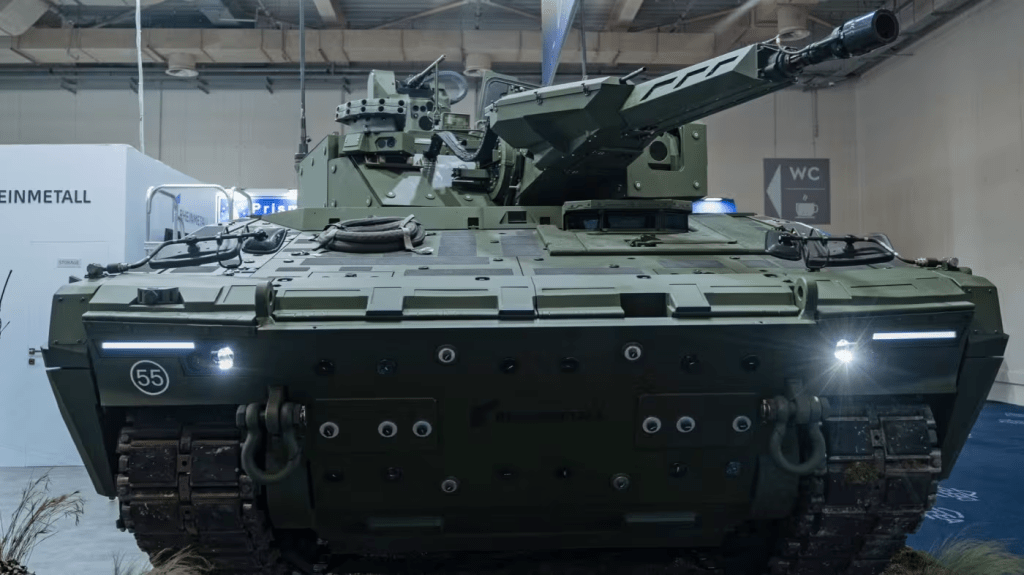
We can’t defend our own country…

From drones. It’s illegal or something here in Germany.

So we’ll send our drone-defense experts to help some other country. Keeps them busy.

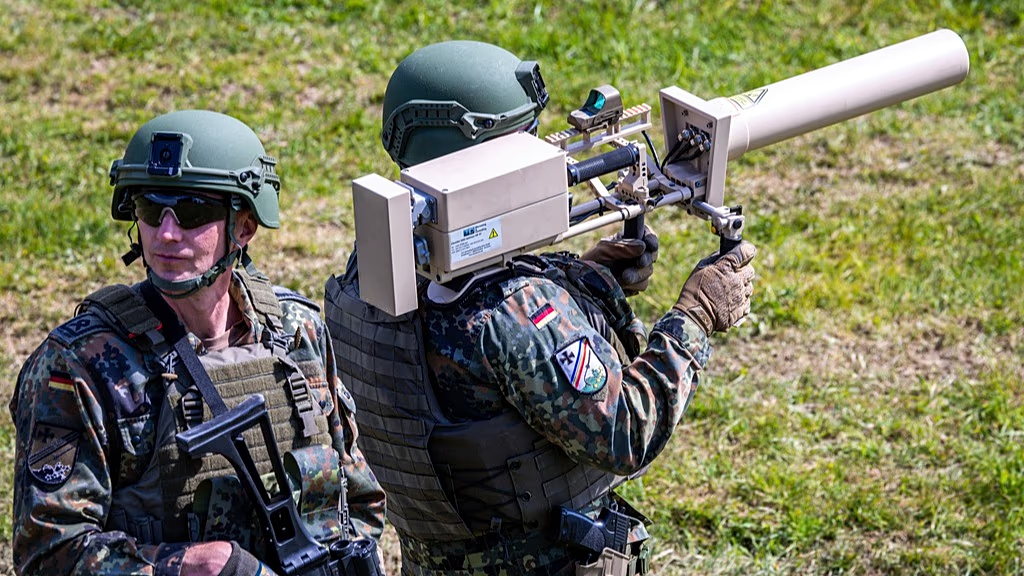
German Luftwaffe dispatches drone-defense experts to help Belgium – The German military has sent specialists to Belgium to help authorities there combat drones following sightings near crucial military facilities, including those housing nuclear weapons.

The Bundeswehr announced the move in a press release late Thursday. According to the military, first units of the Luftwaffe – Germany’s air force – have already arrived in Belgium, where they are investigating the situation on the ground and coordinating with the Belgian armed forces. Further German forces would “soon follow,” the military said.

German of the day: Falsche Nostalgie

That means false nostalgia.

Germany’s Merz warns against ‘false nostalgia’ over US alliance – The chancellor’s comments show European leaders are girding for a future in which the transatlantic alliance is no longer the bedrock on which the continent’s defense and economy stand.

“We must face the fact that our relationship with the U.S. is changing, The U.S. is reassessing its interests — and not just since yesterday. And so we in Europe must also adjust our interests, without false nostalgia.”

“Why the Bundeswehr cannot shoot them down?”

Duh. Because the Bundeswehr cannot shoot them down.

They don’t have the means.

Russian spy drones over Germany: Why the Bundeswehr cannot shoot them down – Russia uses surveillance drones over eastern Germany to monitor Western arms deliveries to Ukraine. German authorities are struggling to counter these espionage activities.

Russian surveillance drones are conducting reconnaissance flights over eastern Germany to track arms shipments to Ukraine, with over 530 drone sightings recorded in the first three months of this year alone, according to Western intelligence services.

They track the ever-changing routes of European military transports to identify which weapons will soon reach Ukraine, where new war equipment will be delivered, and when new ammunition will arrive at the front.

Spending money you don’t have?

It’s easy, Germany. You can do it too.

The best part is that there are never any consequences… Right? Even when spending the money you don’t have is never actually spent.

Germany’s borrowing spree plans face a reality check – Investors would be wrong to overstate concerns about a debt surge by the country.

Germany has had an abrupt awakening on the need to increase defence spending. The country enjoyed an oversized peace dividend for years: before the Berlin Wall fell, west Germany spent almost 3 per cent of GDP on defence. In the three decades after 1993 that ratio dropped to around 1.2 per cent annually. Military capabilities fell commensurately.

Since Russia’s attack on Ukraine and the election of a US president given to venting misgivings about European allies, a hectic scramble has ensued to make up for lost time. As chancellor, Olaf Scholz declared a “Zeitenwende” (or historical turning point) and parliament approved a €100bn debt-financed special fund for defence spending…

Nevertheless, markets would be wrong to overstate the German debt surge. The government’s ambition will probably be thwarted when the plans get in contact with reality. Appropriating borrowing permission is much easier than actually spending it. Scholz’s military special fund is a case in point. Up to April, halfway through its life, only around a quarter of the money has been disbursed.

You can pump in all the money you want

Into defense.

What difference does it make if nobody is interested in defense?

Few Germans willing to take up arms to defend country, survey shows – Nearly 60% of Germans say they are not prepared to defend their homeland with weapons if Germany were attacked militarily.

Only 16% of Germans would “definitely” be willing to defend their country with weapons in case of a military attack, according to a new poll released Monday.

The Forsa Institute survey revealed widespread reluctance among Germans toward military engagement, despite repeated warnings from political and military leaders that the country should prepare for a potential armed conflict.

A clear majority—59%—indicated they would “probably not” or “definitely not” be prepared to defend Germany militarily if attacked. Among women, this reluctance was even higher at 72%.

German of the day: Trittbrettfahrer

That means freeloader.

Or free rider, if you prefer.

Germany’s Merz tells BBC Europe was free-riding on US – German Chancellor Friedrich Merz has accepted US accusations that Europe was doing too little to fund its own defence and security, but now believes they are on the same page.

“We know we have to do more on our own and we have been free-riders in the past,” he told the BBC’s Today Programme, “they’re asking us to do more and we are doing more.”

If only the UK, Norway and Germany could learn to live in peace…

What a wonderful world it would be.

Royal Navy Submarine Hunters Challenge Norwegians and Germans in Fjord Showdown – Exercise Green Eel tests cutting-edge anti-submarine warfare tactics in Norway’s challenging waters.

For two weeks, Royal Navy Merlin Mk2 helicopters from the United Kingdom took on Norwegian and German submarines in a complex underwater intelligence battle in Norway’s fjords. The mission was part of the international exercise Green Eel, which brought together naval forces from the UK, Norway, and Germany.

Hold your horses there, Germany

First the army. Then you can have the nukes.

Most Germans want Europe to have its own nuclear umbrella, poll finds – Nearly two-thirds of Germans support a European nuclear deterrent independent of the United States, according to a new poll released Monday, marking a dramatic shift in public opinion amid growing concerns about American commitment.

The survey found 64% of Germans back the concept of a European nuclear umbrella that doesn’t rely on Washington, with support spanning age groups, regions, and political parties — an unusual consensus in German policy debates.

German of the day: Kleine grüne Männchen

That means little green men.

Russia could send “little green men” to test NATO’s resolve, German intelligence boss warns – Russia is determined to test the resolve of the NATO alliance, including by extending its confrontation with the West beyond the borders of Ukraine, the Germany’s foreign intelligence chief told the Table Media news organization.

Bruno Kahl, head of the Federal Intelligence Service, said his agency had clear intelligence indications that Russian officials believed the collective defence obligations enshrined in the NATO treaty no longer had practical force…

Without detailing the nature of his intelligence sources, Kahl said Russian officials were envisaging confrontations that fell short of a full military engagement that would test whether the U.S. would really live up to its mutual aid obligations under Article 5 of the North Atlantic Treaty.

“They don’t need to dispatch armies of tanks for that,” he said. “It’s enough to send little green men to Estonia to protect supposedly oppressed Russian minorities.”

“A culture of caution”

Could get you killed.

‘Crazy’ data rules hit German plans to boost army reserve – Reservists’ association says Berlin has lost contact with almost a million potential reservists.

Strict data protection laws are hindering Germany’s efforts to swell the ranks of the armed forces of Europe’s largest nation, its reservists’ association has warned. 

Patrick Sensburg, head of the Reservist Association of the German Armed Forces, said tough German and EU privacy rules meant it could not keep in contact with close to a million people who might help boost the country’s reserve forces as it seeks a stronger role in European defence and security…

Sensburg, a former member of parliament from Merz’s ruling Christian Democrats, added that while some might be unwell or uninterested, if even only a quarter of the 1mn agreed to serve it would be enough to meet the target for reservist numbers. 

He said it was absurd that the body responsible for collecting Germany’s annual television fee could contact citizens a few weeks after they had moved house, while he had no way of tracking down people whose names were in the association’s records.