German of the day: Herbst der Reformen

That means the autumn of reform.

It’s similar to the German spring, summer and winter of reform, only here nothing gets reformed in autumn.

Germany’s Merz faces trouble over ‘autumn of reform’ – Friedrich Merz has decided that the autumn must be the season for tackling Germany’s urgent domestic problems, but that means conflict with his center-left coalition partners.

Chancellor Friedrich Merz’s “autumn of reform” could turn into a season of coalition strife as he plows ahead with his ambitious plan to reform Germany’s welfare state, while bringing in tax reforms to boost the economy.

The challenges are significant: The German economy now faces a third year without GDP growth, the welfare state and pension system are failing to keep up with demographic challenges, and the federal budget has a hole of some €172 billion ($200 billion) for 2027 to 2029.
How Do You Reboot Something That Was Never Running In The First Place?

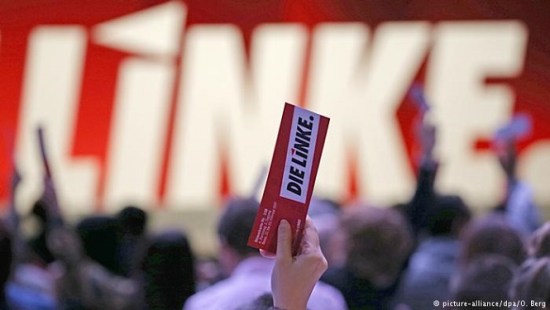
Germany: Left Party calls for EU ‘reboot’ at party convention.

Linke

Germany’s socialist party has presented a fundamental EU reform agenda at their convention in the western city of Bonn. Members decided against calling for the creation of a “European Republic” in the manifesto.

Now get this: They want to make the EU more “international” than it already is. International is why the EU isn’t working in the first place. Take their international EU border, for example. Their international currency (think Greece vs. Germany) really rocks, too. To name just a few structurally international shortcomings, I mean.

The one thing that could make something like the EU work is the one thing that all agree must never be mentioned, much less ever put into practice: A federation of sovereign, national states. No, the Eurocrats prefer, insist upon fixing and re-fixing and rebooting again and again and again…

“Our vision is anchored in a solidarity-based internationalism. Together with other left-wing parties, we stand for a fundamental change of policy in the European Union.”

SPD Ready To Abolish The One Reform They Accidentally Did Right

It took them fifteen years to sink this low but better late than never, I guess.

Nahles

The SPD, clutching for any straw it can still find before going under completely, is now prepared to do away with the infamous Hartz IV reform introduced by the SPD-lead government under Gerhard Schroeder in 2003. Never popular because it made major demands upon the unemployed, it nevertheless brought a considerable reduction in short- and long-term unemployment and contributed to making Germany the employment powerhouse it is in Europe today. Back to the future. As in living in the past.

AUSGERECHNET IHR GRÖSSTES ERFOLGSPROJEKT – SPD will Hartz IV abschaffen!

Remember When Spain Was Down And Out?

Mercedes Benz seems happy enough building cars there now, for instance. Then you’ve got the current Greek government

Spain

The European Central Bank is predicting that Spain will be one of the economic drivers of Europe in 2015. Powered by a cheap euro and low interest, economic growth is predicted to rise by 2.3 percent this year. The Spanish government is expecting one million additional jobs for 2014 and 2015.

Along with Portugal and Ireland, Spain represents an example of how an economic crisis can be turned into an opportunity. These countries’ experiences show that a nation can recover its economic competitiveness through painful reform, even in a monetary union.

As a result, Spain — especially in the eyes of liberal economists — represents the counterpoint to Greece, which has gotten entangled in its national battle against economic relegation and is losing ever more time with its recriminations against the rest of the euro group.

A New Axis Of Evil Or Something

It’s not just Germany hurting Greek feelings anymore (although the Germans are still evil, too).

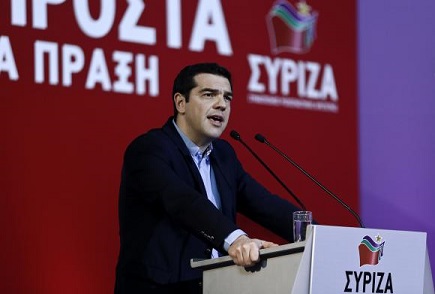
Tsipras

The Greek government is now accusing Spain and Portugal of conspiring against it, as well. It’s a conspiracy, you see, because these two countries are willing to carry out the stringent reforms needed to get their economies going again. Greece clearly is not.

Greece’s leftist Prime Minister Alexis Tsipras accused Spain and Portugal on Saturday of leading a conservative conspiracy to topple his anti-austerity government, saying they feared their own radical forces before elections this year.

How much longer is this show going to go on?

“Nach europäischen Maßstäben war das ein sehr ungewöhnliches Foulspiel. Das tun wir nicht in der Euro-Gruppe, das gehört sich nicht.”