The Three Percent Solution?

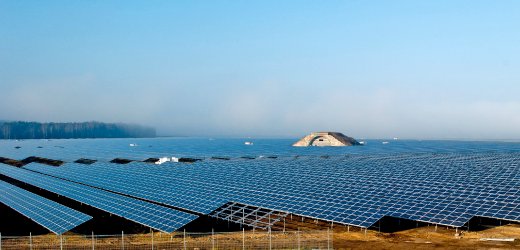
Three percent. That’s how much solar energy contributes to Germany’s overall energy mix (now don’t go be a jerk and break it to the Germans that the sun doesn’t shine very much here).

But that doesn’t really matter because, jeepers, that measly three percent only costs consumers half of the total 17 billion euros they have to shell out for renewable energy here.

It’s the principle of the matter, you see. If the Germans left this solar energy stuff up to the free market (that means no subsidies), then solar power’s contribution would be even lower than three percent – at none of the cost – and just think about how ridiculous they would look then.

And (even) the Spiegel says: Solar Subsidy Sinkhole

Our Autobahns Don’t Stink

Remember how the Greens in Berlin shot themselves in the foot after elections last fall by sticking ever so stickily to sticky green principles by just saying no to a two-mile stretch of Berlin autobahn that everybody in town wanted but them?

It was a stellar performance in reality check checking and how not to form a coalition government with the SPD even though everyone seemed convinced up until then that the Greens were either going to take over the Berlin city goverment completely or at least play a major role as junior partner (neither happened).

Well surprise, surprise. Green shirt ideologues what’s upstairs have now just okayed a working paper calling for a more offensive and quite massive expansion of the German autobahn system in West Germany. This is not a sell-out of green principles, however, not that you were even thinking that.

Green autobahns, as you may know, are made of biodegradable concrete and recycled plastic ALDI shopping bags, constructed using environmentally friendly green technology (wind-, I mean hot air-powered) and progressive landscaping techniques which allow for low carbon tire prints, renewable eco-outhouse rest stop stops and an overal eco-friendly and very green if not rather high global environmental greenhouse impact.

Alles im grünen Bereich, wie immer. 

Too Much Sun, Son

Now if we could only learn to harness the power of falling solar energy company stocks…

Solar Millennium AG plunged by a record in Frankfurt trading after becoming the second publicly traded German solar company to file for insolvency.

Let’s face it, people: The sun and Germany just don’t mix.

Solar Millennium war ein grüner Börsenstar. Beim Solarkraftwerk-Hersteller klang immer alles nach Weltrettung, ständig ging es um die Zukunft der Menschheit. Seit Donnerstag ist das Unternehmen pleite und es wird klar: Viele hundert Millionen Euro sind weg. Es droht einer der größten Anlageskandale der Geschichte. 

Germans Puzzled By Rising Electricity Prices

They are also puzzled about the increased number of “mini-blackouts” taking place across the land.

And no one can properly explain these mysterious phenomena, although the Internet portal Verivox gave it a halfhearted try: The increased share in the costs for renewable energy and the ten percent wholesale energy price increase which resulted after the shutdown of eight nuclear power plants this sommer are responsible.

To be fair, electricity prices rise here very year. To be unfair, most German media and the poltical elite refuse to admit that the price increases now taking place are a direct result of their hysterical nuclear phase-out Aktionismus (politicking).

Als Grund gab Verivox die gestiegene Umlage für die erneuerbaren Energien sowie die Erhöhung der Großhandelspreise an, die für rund 15 Euro Mehrkosten im Jahr verantwortlich sein werden. Die Großhandelspreise waren nach der Abschaltung von acht deutschen Atomkraftwerken im Sommer um rund zehn Prozent nach oben geschossen.

Green Electricity Threatening Energy Turnaround

Yeah, I know. You thought that Germany’s Energiewende (energy turnaround) was synonymous with green or eco-power (I did too). But if you listen to what some scientist types are saying (Rheinisch-Westfälischen Institut für Wirtschaftsforschung or RWI, for instance)–and you won’t, and nobody else will either–the present state of renewable energy in Germany is so clearly deficient and so way too costly (especially when it comes to generating solar energy) that they recommend rethinking the whole big turnaraound thang (not that all that much thinking had gone into it in the first place or anything, that rethinking part was just a figure of speach).

Some of these folks are even starting to call this mess Der große Solarschwindel (The Great Solar Energy Scam). But, like I said, nobody is particularly interested in hearing about things like this. Or do you want the Green Shirts to come knocking on your door one night? And after all, money is no object here. It never is when it isn’t your own.

Es bestehen derzeit in Deutschland so große Defizite in Bezug auf Leitungsbau, Speicherkapazitäten und bei der Vernetzung mit den europäischen Nachbarn, dass es vorerst nicht ratsam erscheint, mit dem Ausbau regenerativer Stromerzeugungskapazitäten fortzufahren.

No good NIMBY-pamby protesters!

Are we having an energy revolution yet?

Although there is a long way to go before construction can begin on the high-voltage transmission lines, the “regional resistance” that the experts colored on their map has already begun to materialize.

There are obstacles everywhere. Either the landscape is so densely populated that it is poorly suited for big infrastructure projects, or it is so devoid of people that it should be preserved precisely for this reason.

The tactics of the power-line opponents are simple and perfectly understandable. The more arguments that can be presented against the project, the more likely it is that the future route will run further away from one’s own community and closer to the neighboring village instead.

Fortunately for the opponents, German law offers plenty of ways to keep the power masts at a good distance.

Saving birds and bats from the power lines, protecting gliders, a festival of bureaucracy. It’s all here, people.

U-Turn, I-Turn, We All Turn

Turn, as in spinnen (to spin or, in this case, to be mental). This is another one of those only-in-Germany ones.
How long has it been since the latest greatest German Wende (turnaround)? Read some of these:

The U-turn on nuclear policy Chancellor Angela Merkel announced last month following the Fukushima accident will involve a massive expansion of renewable energies — as rapidly as possible. She is giving the public what it wants. But the shift will nevertheless provoke a major backlash. Germans may love their green energy, but they also have a growing proclivity towards not-in-my-backyard (NIMBY) lawsuits and referenda.

Many are now asking themselves if the transition to renewable energies will ruin the nation’s countryside.

Germany’s Federal Agency for Nature Conservation is already warning that in the rush to expand renewable energies, nature and wildlife conservation is being put on the back burner.

Germany’s opposition to wind power is well organized. The website windkraftgegner.de (wind power opponents), lists more than 70 protest campaigns.

Opposition is also mounting against the massive power masts that will be needed to transport clean energy across Germany and Europe.

And on and on and on. I don’t make this stuff up, people. Now they’re takin’ it to the streets to protest against renewable energy.

And the Green party’s grand energy strategy after their magnificent triumph down there in Baden-Wuerttemberg last month? Save power.

“We as Greens need to demonstrate our credibility,” national party co-chair Claudia Roth has said. At the same time, though, the Greens are very often active in the local NIMBY protests against the very kind of projects the party backs.