American good Samaritan stabbed by Syrian immigrant in Germany after stepping in to stop harassment – An American has been stabbed by a Syrian national in Germany after allegedly stepping in to help two female passengers being harassed on a tram, according to reports.
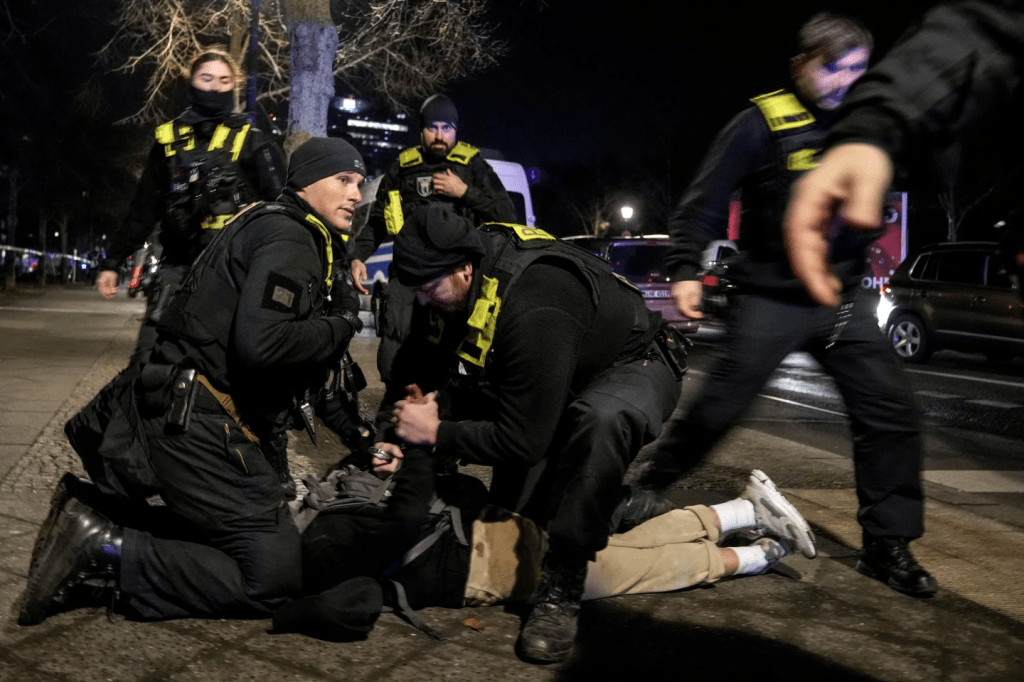
The young man was attacked at around 12:25 a.m. on Sunday after intervening when “two men from a group harassed female passengers” on the tram in the eastern German city of Dresden, Saxony police said in a statement.
The best part is that there are never any consequences… Right? Even when spending the money you don’t have is never actually spent.
Germany’s borrowing spree plans face a reality check – Investors would be wrong to overstate concerns about a debt surge by the country.
Germany has had an abrupt awakening on the need to increase defence spending. The country enjoyed an oversized peace dividend for years: before the Berlin Wall fell, west Germany spent almost 3 per cent of GDP on defence. In the three decades after 1993 that ratio dropped to around 1.2 per cent annually. Military capabilities fell commensurately.
Since Russia’s attack on Ukraine and the election of a US president given to venting misgivings about European allies, a hectic scramble has ensued to make up for lost time. As chancellor, Olaf Scholz declared a “Zeitenwende” (or historical turning point) and parliament approved a €100bn debt-financed special fund for defence spending…
Nevertheless, markets would be wrong to overstate the German debt surge. The government’s ambition will probably be thwarted when the plans get in contact with reality. Appropriating borrowing permission is much easier than actually spending it. Scholz’s military special fund is a case in point. Up to April, halfway through its life, only around a quarter of the money has been disbursed.
A major pillar of German international policy is to regularly stress how Germany will never again “go it alone.” German politicians then promptly demonstrate the importance of this strategy by going it alone once again.
Germany halts arms exports that Israel can use in Gaza – Germany is to suspend exports of weaponry that could be used in the Gaza Stripbecause of Israel’s plan to expand its operations there – the first time united Germany has acknowledged denying military support to its long-time ally.
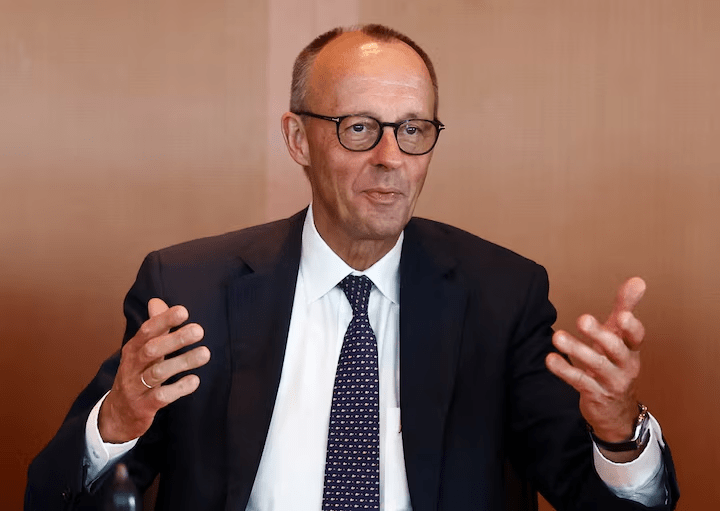
Chancellor Friedrich Merz’s sudden about-turn on Friday followed mounting pressure from the public and his junior coalition partner over the manmade humanitarian crisis in Gaza, where Israel has severely restricted supplies of food and water.
This Gaza photographer stages Hamas propaganda – Emaciated children, desperate mothers, and people begging for food with empty pots: these photos from Gaza circulate around the world. They are moving millions of people and influencing politics worldwide.
However, research by the Süddeutsche Zeitung newspaper now calls these images into question: Are some of the pictures from Gaza deliberately staged—and part of a propaganda strategy by Hamas terrorists?
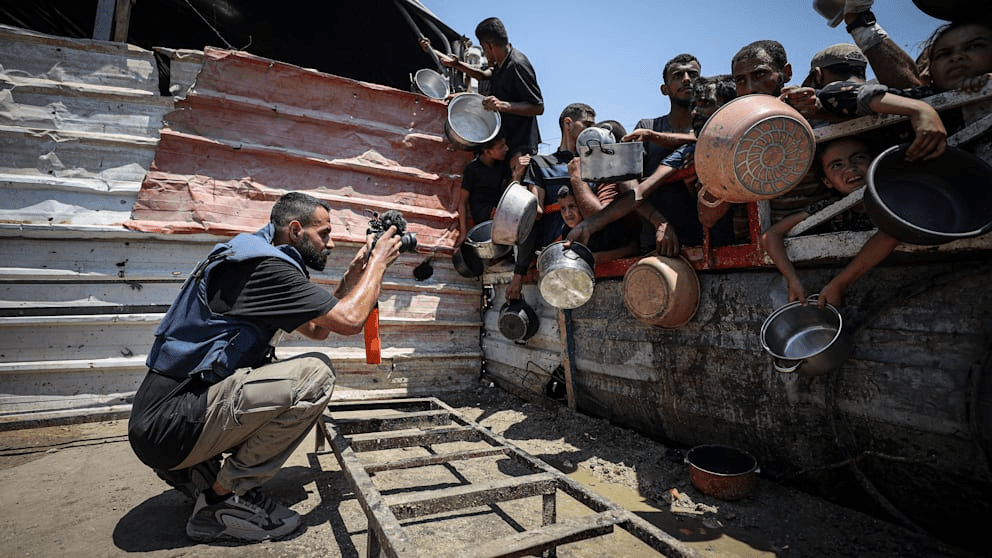
The hunger is (almost always) real – but the images are often not entirely so. For example, a widely circulated photo recently showed desperate people in front of a food distribution point on a truck. Opposite them: photographer Anas Zayed Fteiha, a freelance “journalist” working on behalf of the Turkish news agency Anadolu.
Possible problem: The scene, also captured by other photographers, shows mainly adult men waiting for food—and getting it.
Why won’t he tell us the rest of the letters in his name?
Syrian man charged with attempted murder in Berlin Holocaust Memorial stabbing – Germany’s top prosecutor has filed charges against a Syrian man in connection with a stabbing attack at Berlin’s Holocaust Memorial in February that seriously wounded a Spanish tourist.
The suspect sought to use the alleged crime to join the militant Islamic State group, the federal prosecutor said. The charges were filed July 18 and announced Tuesday.
The man, who was only identified as Wassim Al M. in line with German privacy rules, allegedly sent a photo of himself to members of the group before the stabbing to give the militants the opportunity to claim responsibility for the crime, authorities said.
The consequences of green climate disinformation – Whether it’s heat, drought or global warming, the loudest warnings about climate change are preventing effective solutions…
The EU had proposed being able to buy three percent of its CO₂ reduction outside the continent from 2036, for example by planting forests in Africa… Green lobbyists, on the other hand, want all of this money to be spent on climate protection in this country (Germany). The case is exemplary: those who are particularly vehement in their warnings about climate change are opposed to pragmatic solutions.
They moan about it being too hot, too cold, too wet or too dry for the season and blame it on the “Climate Crisis.”
How Germany manages extreme heat and climate change – The next heat wave has been forecast in Germany. How is a country known for its lack of air conditioning preparing?
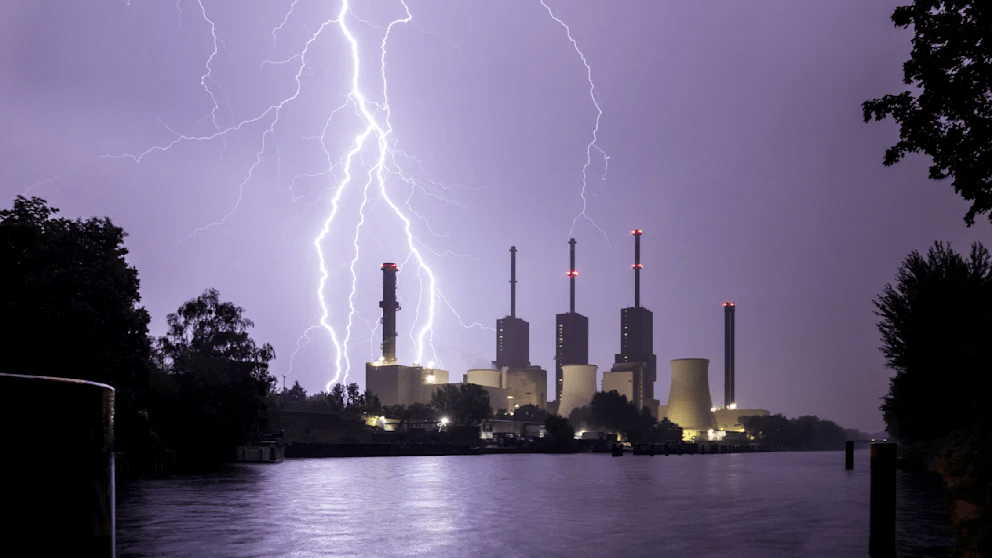
This summer has seen some hot days in Germany. Very hot. In early July, temperatures in Hamburg and Cologne soared to 37 degrees Celsius (98.6 F). Some areas recorded temperatures close to 40 C.
In earlier years, such temperatures were not typically recorded until early August — a development that experts attribute to climate change. On radio, television and social media, people were urged to stay at home, especially during the middle of the day.
They’ve already had over ten years to do it (thanks again, Angie).
Germany to tighten people-smuggling law as chancellor visits UK – Germany is set to tighten its laws to crack down on gangs smuggling migrants to the UK by the end of the year, Downing Street has said.
The announcement comes alongside a new agreement between the UK and Germany covering areas including migration, business and defence, which will be signed during Friedrich Merz’s first official visit to the UK as German chancellor on Thursday.
Germany’s 16 states locked in row over dates of school summer holidays – Two southern states cling to past ruling that children are needed for harvest and claim the latest, most favoured slot.
Germany’s 16 states are locked in a fierce row over when they are able to take their summer school holidays, with the southernmost two accused of permanently hogging the best slots on the grounds that their children are required to help bring in the harvest.
German government shows cracks over nuclear energy – The economy minister attended a meeting of EU states using nuclear energy, even though Germany shut down its last reactor in 2023. The environment minister was quick to insist Germany will stick to its nuclear phaseout.
“There are no further commitments [to the nuclear industry], nor will there be any.”