Category Archives: History
German of the day: “Faktisch am Ende”
That means effectively finished.
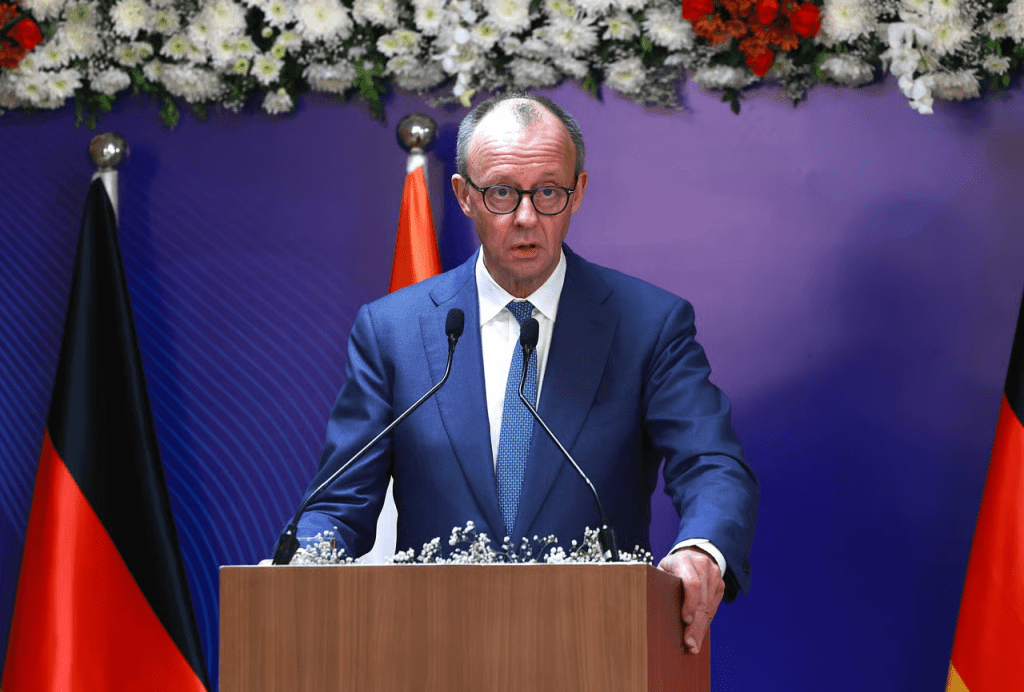
Iran’s regime is finished, says Merz – “I assume that we are now witnessing the final days and weeks of this regime,” German chancellor says as Iranian protests sweep the country.
“If a regime can only stay in power through violence, then it is effectively finished. I assume that we are now witnessing the final days and weeks of this regime.”
American colonialism bad!
European, not so much.
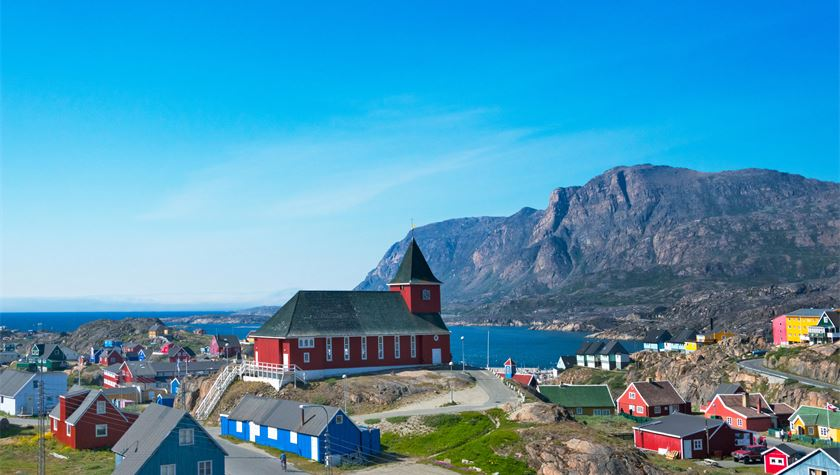
Greenland’s colonial past could be Washington’s way in – Greenland’s legacy of Danish colonialism, forced relocations and cultural trauma may now become the opening Donald Trump needs to pull the island away from Europe’s orbit.
When US President Donald Trump first mused about a Greenland takeover, the initial reactions were a blend of disbelief, bemusement and nervous laughter. It felt like yet another outlandish flourish, and marginally more realistic than annexing Canada.
But beneath the jokes sat a truth few confronted: Greenland’s position within Europe is fragile. The island bears deep scars from Danish colonialism, depends heavily on Danish funds and exists in a constitutional limbo: tied to Denmark, yet outside the EU’s political system. Those unresolved tensions leave Greenland politically unanchored, and exposed.
There are fireworks…
Then there are fireworks.
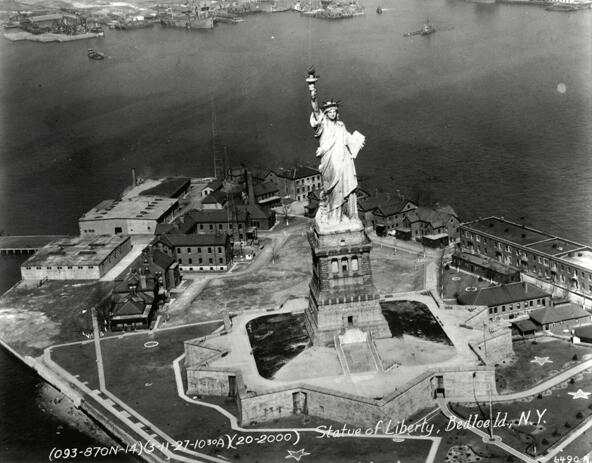
German Spies Detonated 2 Million Pounds of Explosives in New York Harbor in 1916: The Statue of Liberty’s Torch Has Been Closed Ever Since – Just after 2 a.m. on July 30, 1916, a freight car loaded with TNT exploded at a munitions depot on Black Tom Island in New York Harbor. The blast registered as a 5.5 magnitude earthquake and was felt 90 miles away in Philadelphia. Windows shattered from Times Square to Brooklyn. The Statue of Liberty took shrapnel damage. Firefighters were blown out of their boots.
Tombstone, Germany
Roman burial mound style.
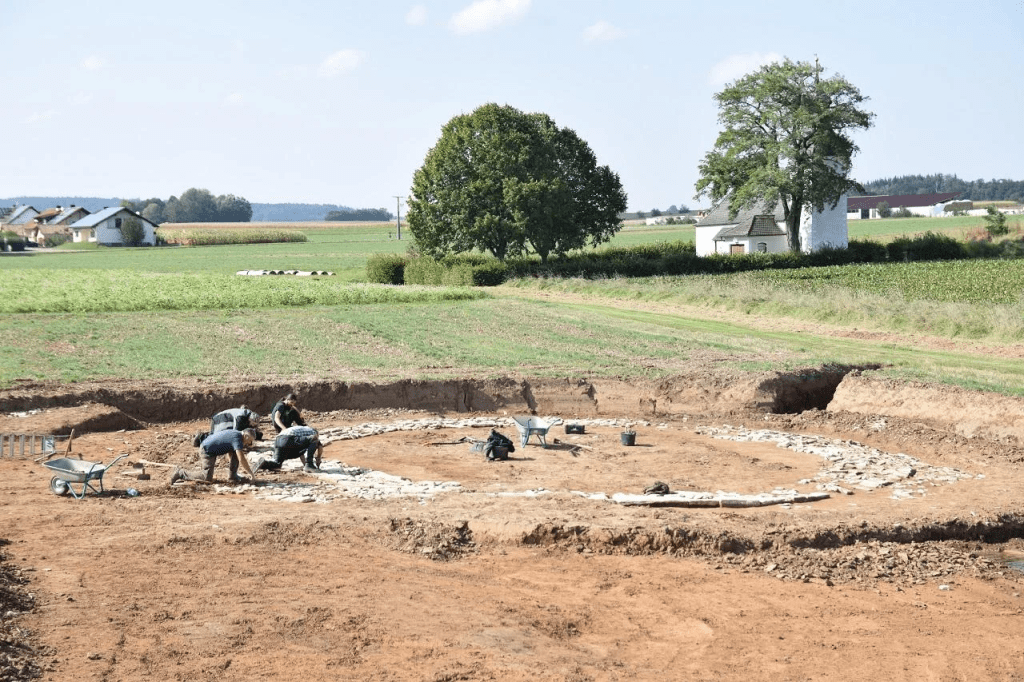
Rare Roman-era circular stone monument unearthed near Nassenfels, Germany…
Burial mounds were an enduring Roman tradition, blending Mediterranean influences with older Central European customs. They appeared in the northwestern provinces from the first century CE. Some newly built tumuli coexisted with the reuse of prehistoric mounds, perhaps as a deliberate link to pre-Roman or Celtic traditions. Such stone tumuli of this size are extremely rare in Raetia, and the Wolkertshofen discovery is therefore particularly significant for understanding local funerary practices.
The absence of bones and grave offerings indicates it is a symbolic tomb rather than a physical burial. Constructing such cenotaphs for those who died far from home allowed family members to perform commemorative rituals in their memory. The precise craftsmanship of the structure and its location along a Roman road both suggest technical skill as well as the social ambitions of the builders.
German of the day: Das waren Zeiten!
That means “those were the days!”
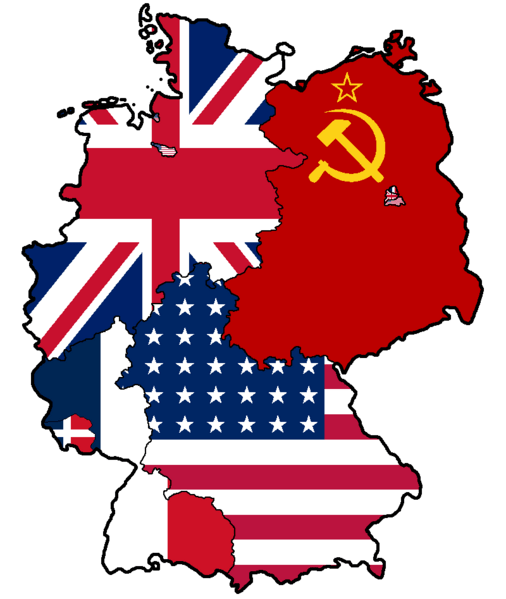
When everything still worked in Germany. Before German reunification.
5 facts about German Unity Day – On October 3, Germany celebrates the reunification of East and West. How did it come about — and how is it celebrated? How do Germans feel about reunification today?
Following the end of World War II in 1945, a defeated Germany was divided into four occupation zones, controlled by the Allied powers: the United States, France, Great Britain and the Soviet Union.
In 1949, two states emerged: the democratic Federal Republic of Germany (FRG) in the West, and the socialist German Democratic Republic (GDR) in the East, with the latter being under Soviet control. From that point on, Germany was divided…
There’s lithium in them thar hills!
Except there are no hills thar to speak of.

“Germany Just Found 43 Million Tons Underground”: Lithium Discovery Makes Tesla Batteries While Russia Loses Energy War Forever – Germany’s Altmark region is set to transform the global energy landscape with the discovery of one of the world’s largest lithium deposits, positioning the nation as a pivotal player in the electric vehicle and battery supply chain.
German of the day (2025): Hausverbot
That means house ban.
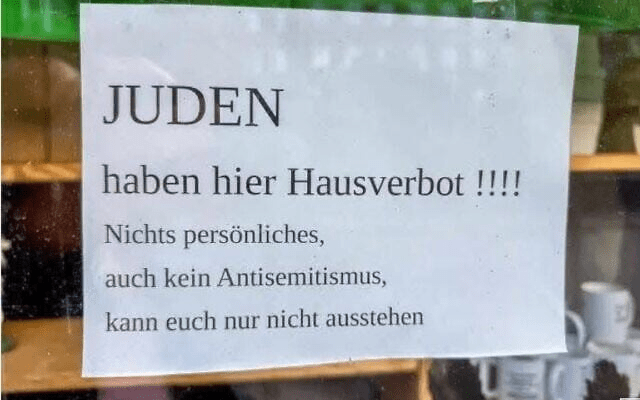
“Nothing personal, nor is this anti-Semitism, I just can’t stand you.”
“Jews are not allowed here!!!!”
German shop sign banning Jews sparks wide condemnation, police action – Flensburg store owner claims ban ‘not even antisemitism. I just can’t stand you’; Israeli envoy: ‘The 1930s are back’; German official slams sign as Jew hatred ‘in its purest form.’
Like Disneyland
Only communism.

German contest to live in depopulated Soviet-era city proves global hit – Eisenhüttenstadt offered spacious central flats rent-free for two weeks in effort to attract valuable professionals.
Get out your wurst puns because…
Sausage is a grill’s best friend.

German states debate who invented Bratwurst sausages – A row has broken out between two German states, Bavaria and Thuringia, as to who can lay claim to inventing the Bratwurst sausage.
Until now, the “Wurstkuchl” tavern in Bavaria has claimed to be “the oldest Bratwurst stand in the world.”
Die Wurstkuchl is situated on the Stone Bridge in Regensburg on the Danube River. The oldest documented evidence of a cook or a food stall at the Stone Bridge is said to date back to 1378.
But now, historians in Erfurt, Thuringia’s state capital, have come across a document from 1269 that mentions people who rented a building with a meat-roasting stand (Brathütte) and a roasting pan (Bräter) – more than 100 years earlier than the Regensburg sausage stand.
 Observing Hermann