“No Risk Please, We’re Germans”

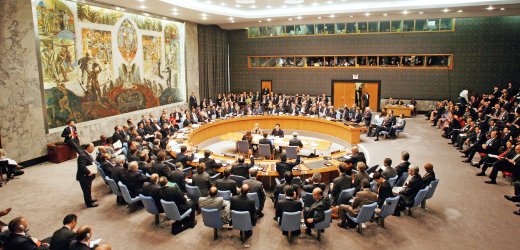
The German skeptics across the political spectrum who continue to describe the actions of the anti-Gadhafi alliance as being “insufficiently conceived” are completely right. The actions were not well conceived. They were born out of necessity, and the first sorties were chaotic because the nations that took action were convinced that they lacked the time to think things through.

They were not out to cleanly and permanently regulate the affairs of Libya through the use of force. They were intent on preventing a bloodbath within a few hours with an untidy, last-minute campaign. Given these circumstances, the idea that Westerwelle could have been the foreign minister of a permanent Security Council member — equipped with veto power — is extremely unsettling.

Germany seems determined to torpedo the international community’s newfound resolve. 

Good Bank Bad Bank

Amerikanische Banken sind böse, deutsche sind gut.

Deutsche Bank AG, whose bets against subprime mortgages helped it weather the financial crisis, pressed to sell a $1.1 billion collateralized debt obligation to clients in 2007 as the co-head of its CDO team foresaw a market slump, a U.S. Senate panel found.

Lippmann (not the co-head but then-top CDO trader), whose bets against the housing market were also described in Michael Lewis’s “The Big Short,” had repeatedly tried to warn co-workers and clients in 2006 and 2007 about the poor quality of the mortgage securities underlying many CDOs, according to the report. The return on his bets against mortgages “was the largest profit obtained from a single position in Deutsche Bank history.”

“Keep your fingers crossed but I think we will price this just before the market falls off a cliff.”

So how do German financial experts react to the big short CDO scam and the crisis that followed? How else? American banks have to take the responsibility for what happened.

“Im Nachgang der Finanzkrise müssen sich amerikanische Banken verantworten.”

U-Turn, I-Turn, We All Turn

Turn, as in spinnen (to spin or, in this case, to be mental). This is another one of those only-in-Germany ones.

How long has it been since the latest greatest German Wende (turnaround)? Read some of these:

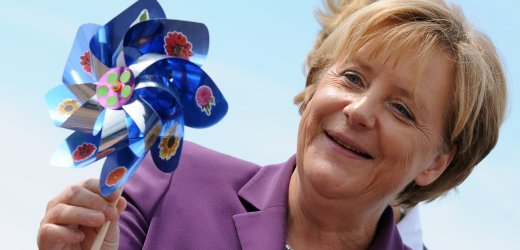
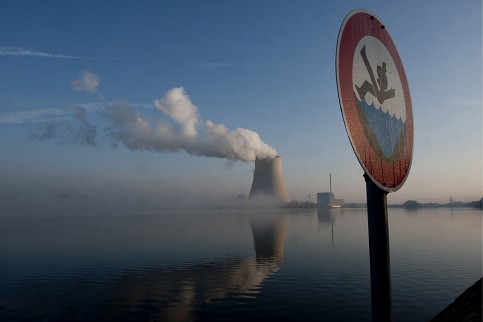
The U-turn on nuclear policy Chancellor Angela Merkel announced last month following the Fukushima accident will involve a massive expansion of renewable energies — as rapidly as possible. She is giving the public what it wants. But the shift will nevertheless provoke a major backlash. Germans may love their green energy, but they also have a growing proclivity towards not-in-my-backyard (NIMBY) lawsuits and referenda.

Many are now asking themselves if the transition to renewable energies will ruin the nation’s countryside.

Germany’s Federal Agency for Nature Conservation is already warning that in the rush to expand renewable energies, nature and wildlife conservation is being put on the back burner.

Germany’s opposition to wind power is well organized. The website windkraftgegner.de (wind power opponents), lists more than 70 protest campaigns.

Opposition is also mounting against the massive power masts that will be needed to transport clean energy across Germany and Europe.

And on and on and on. I don’t make this stuff up, people. Now they’re takin’ it to the streets to protest against renewable energy.

And the Green party’s grand energy strategy after their magnificent triumph down there in Baden-Wuerttemberg last month? Save power.

“We as Greens need to demonstrate our credibility,” national party co-chair Claudia Roth has said. At the same time, though, the Greens are very often active in the local NIMBY protests against the very kind of projects the party backs.

Humanitarian effort here? Nein Danke!

In Libya, maybe. But only if you ask nicely.

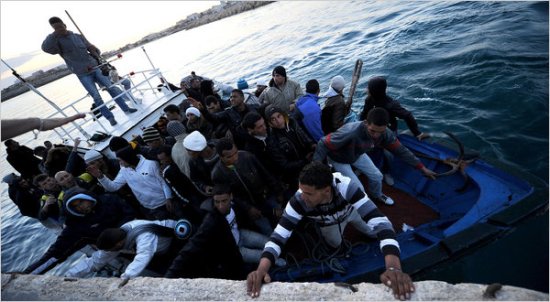
Uh oh. Germany is lecturing about responsibility again (immigrants from North Africa are trying to make their way to Europe for some strange reason these days and the EU is showing EU solidarity again).

Germany criticized Italian officials for undermining the Schengen Agreement, which established passport-free zones, and said Italy should handle the immigrants on its own.

“Within this European solidarity, it is necessary for each individual country to first face its responsibility,” Germany’s interior minister, Hans-Peter Friedrich, said in a television interview.

Libya: Frankreich reagierte mit Spott auf Deutschlands Pläne: Die Bereitschaft Berlins zu einem humanitären Hilfseinsatz in Libyen sei wie eine “mündliche Nachprüfung”, sagte Verteidigungsminister Gérard Longuet am Dienstag vor der französischen Nationalversammlung.

Massive German Kiss-Up Offensive Underway

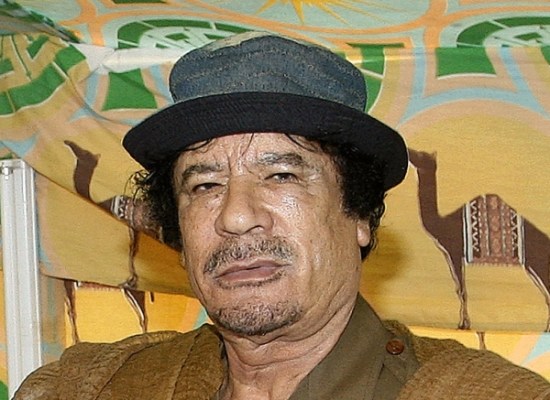
And we’re talking offensive, folks. In a too-little-too-late attempt to make amends for breaking ranks with its allies and refusing to support the United Nations Security Council resolution authorizing military action in Libya, Germany has now begun a surprise kiss-up campaign by actively publishing unflattering photos of Libyan strongman Muammar Gaddafi.

Degrading reports about botched plastic surgury operations performed on Gaddafi are also making the rounds.

But it doesn’t just stop there. Someone the Germans are referring to as Agent 008 has also been sent to Tripolis to see about establishing a ceasefire.

And as if that weren’t enough already, Germany also says that it is now prepared to let its troops take part in Libya “to help provide humanitarian aid to Libyan civilians” (if the United Nations asks the European Union please, pretty please). You know, that old we’re-the-good-soldiers-who-do-the-good-things trick of theirs?

The policy shift, announced by Foreign Minister Guido Westerwelle on Thursday night, reflects disarray in Germany’s strategy but an awareness that its standing among its allies was damaged when Mr. Westerwelle told the country’s ambassador to the United Nations to abstain from the vote.

Funnel Payments Stopped Despite Iranian Pledge

Despite Iranian President Mahmoud Ahmadinejad’s repeated pledge to Germany that Iran’s nuclear program is being used for energy only and that he would reveal any future secret Iranian nuclear site plans “as soon as he became aware of them,” a spokesman for the German government says that the deal to funnel oil payments from India to Iran through Germany’s central bank has been scrapped.

Enraged by this sudden change of heart, Mr. Ahmadinejad asked the Germans “But what about my promise to give 60-days notice before unleashing any surprise attacks on Israel using the missiles that we almost certainly do not have, to the best of my recollection? Doesn’t that mean anything?”

Washington has questioned Germany’s resolve to enforce sanctions given its strong trading links with Tehran.

Nein, Danke! We’ll import nuclear energy instead!

This is where the European unity part comes in, I guess (and the electricity still has to come out of the Dose/wall socket somehow, doesn’t it?).

Ever since the nuclear power plant moratorium has kicked in, Germany has begun importing more foreign energy than it exports, most of this having been generated at French nuclear power plants. This is where the ideological wheels hit the road, people. Are we having Realpolitik yet?

It’s typically German somehow: Loudly wash your hands of the matter while letting someone else do the dirty work for you.

And speaking of Realpolitik, I can’t wait until the “paying for all of this” part kicks in. There won’t be a moratorium on that one. It won’t be too long until the next wave of hysteria hits the fan again, in other words.

Davon profitieren vor allem französische AKW.

What’s the big deal?

The Germans always wheel and deal like this.

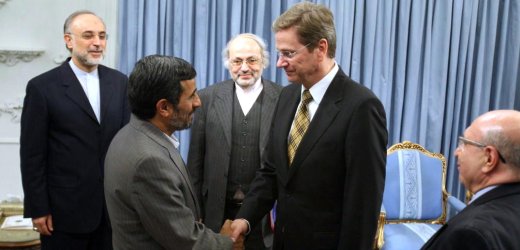
German Foreign Minister Guido Westerwelle not only personally brought back two German hostages to Berlin after personally meeting with El Presidente Iranian Mahmoud Ahmadinejad in February, he and other German government officials personally saw to it that the German central bank personally provide assistance to India in an oil deal with Iran as payoff for the hostage release. Nothing personal.

So deal with it already.

The sources say the German government approved the Bundesbank’s help in the Iranian-Indian transaction in exchange for the release of the two prisoners.

If German men could only be more like American women…

Political men, I mean. And military women.

Sie hat 4000 Flugstunden absolviert, lenkte die Präsidentenmaschine “Air Force One” und servierte an Thanksgiving Truthahn auf dem Stützpunkt Ramstein: Margaret Woodward kommandiert die US-Kampfjets über Libyen – die erste Frau, die einen Luftkrieg koordiniert.

German Gaijin Just Don’t Get It

How could they?

Here are some lines from a report by a Spiegel journalist who, being a product of his Umwelt (environment), obviously can’t understand what is going on with these peculiar, “fatalistic” Japanese who have the audacity to show courage in the face of disaster.

There is little evidence of panic.

There is not a single person protesting on the streets in the entire city (Tokyo).

Japanese fireman Nakamura Junichiro: “It was not my choice, but I wanted to go there. This is the most difficult hour for Japan. It was my duty.”

“The tsunami represents a good opportunity to cleanse this greed (the egoism the elder speaker believes his fellow Japanese have succombed to), and one we must avail ourselves of.”

The destructive forces of nature, writes Asia expert Ian Buruma, are “to a certain extent part of Japanese culture.” This creates fertile ground for a Japanese fatalism that has developed throughout history and culminates in the expression “shikata ga nai,” meaning “it can’t be helped.” A further product is the widespread belief that nothing beautiful on Earth is permanent and that the Japanese people must close ranks in times of national disaster.

Those who seek to wait it out in Osaka must be gaijin — a non-Japanese or outsider. Someone who doesn’t understand that now, more than ever, every cog in the wheel counts. Someone who shirks his responsibility while a hero like fireman Nakamura Junichiro risks his life to cool down the reactors in Fukushima.