I’m going to go out on the limb here and say…

Fake.

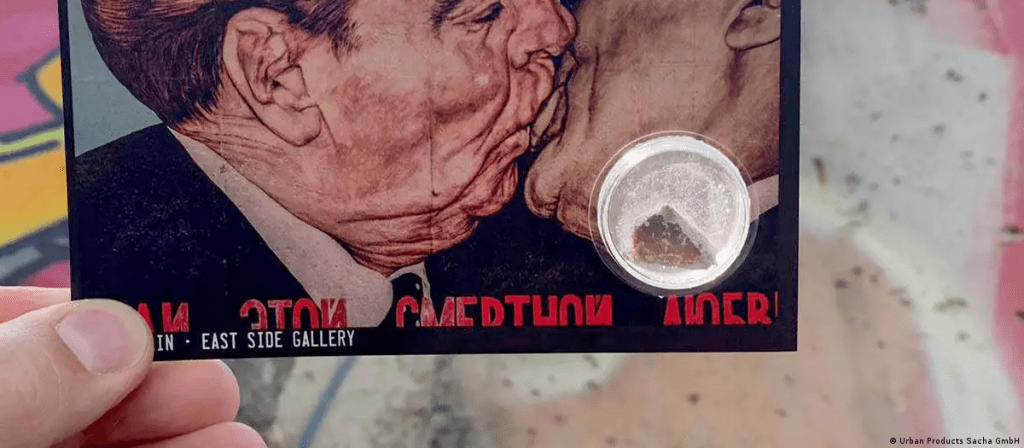
Fake Berlin Wall fragments on sale as souvenirs?

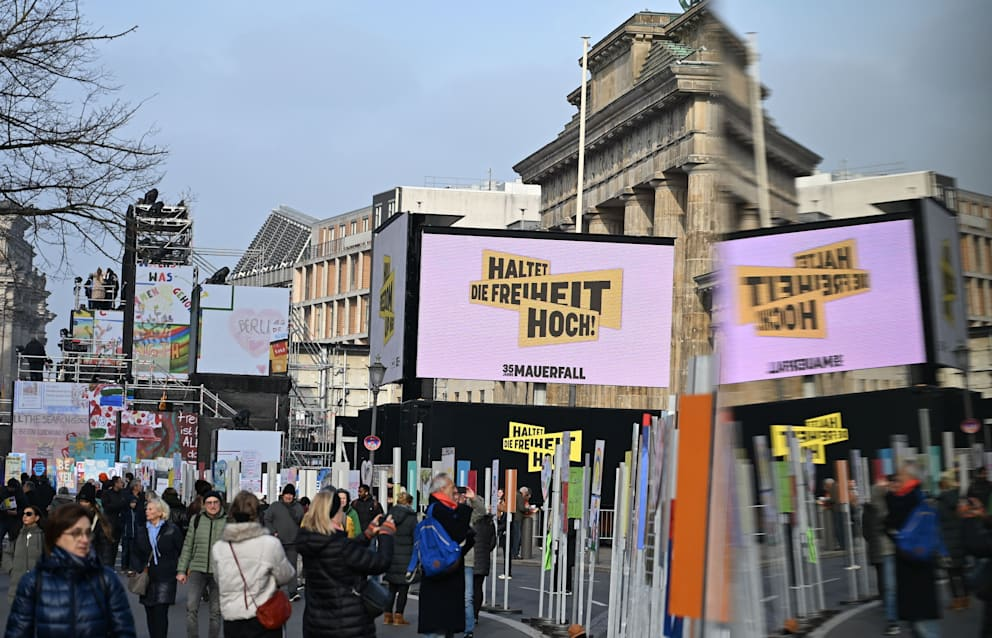
It’s been nearly 40 years since the fall of the Berlin Wall but you can still buy pieces of it in the German capital as souvenirs. Are they the real deal?

When the Berlin Wall fell in 1989, it sealed the fate of East Germany. People wasted no time and started hacking away at the monstrosity with hammers and chisels. Those people chipping away at the former border barricade were known as “Mauerspechte,” or wall woodpeckers. By June 1990, most of the Berlin Wall had been taken care of by bulldozers. Only a few sections of it have survived to this day; at the official Berlin Wall Memorial or the East Side Gallery, for example.

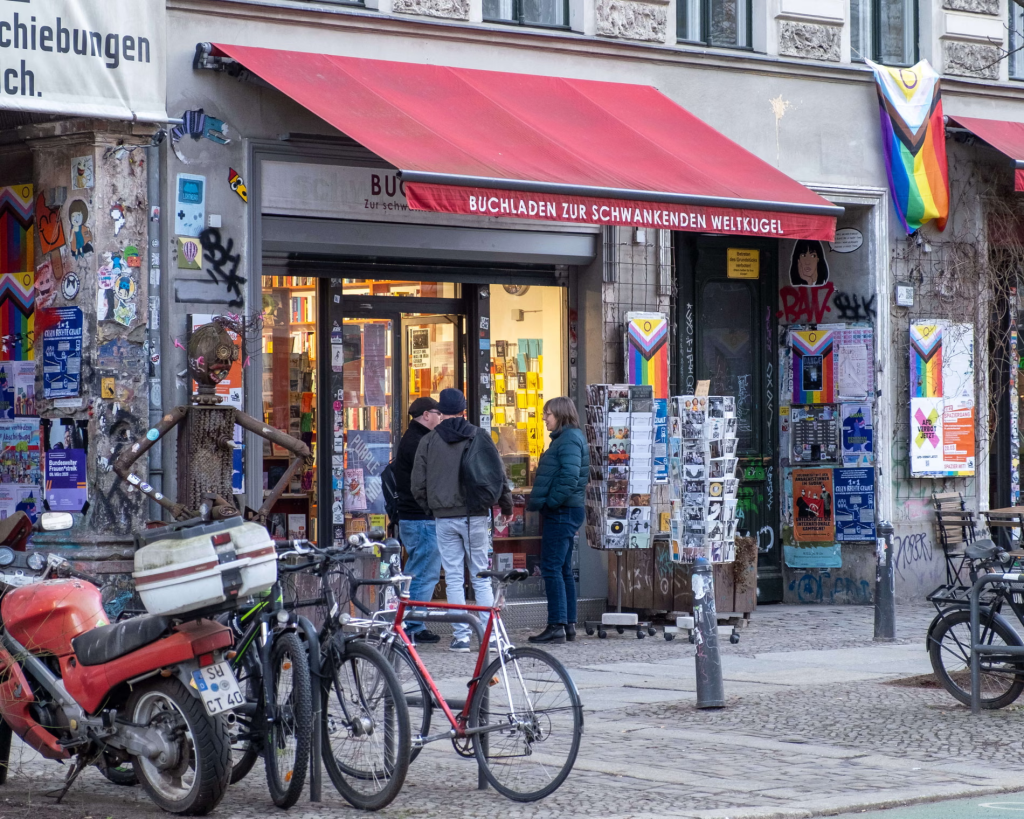
Still, fragments of the Wall keep turning up in large amounts all over the city. The Checkpoint Charlie Museum, souvenir stores and even hotels have thousands of pieces for sale. Almost 40 years since the fall of the wall, supply of the concrete chunks — brightly painted, made into fridge magnets or stuck onto postcards — shows no signs of slowing down. But, how can that be? Could these pieces of rubble perhaps come from much less significant and historical origins?

The best time to cross the Elbe was in November…

When fog obscured the visibility along the river.

Refugees had to endure freezing temperatures, scaling barbed-wire fences and hiding from soldiers on patrol. Getting caught meant a one-way ticket to one of East Germany’s special prisons — if you were not shot…

How Germany’s “death Strip” Became A Sustainable Lifeline.

How did they gather all that information without everybody carrying handheld surveillance monitors?

You know, like we do now?

Very impressive.

Stasi: How the GDR kept its citizens under surveillance – Do all intelligence agents live like James Bond? Not those who worked for East Germany’s Ministry for State Security (Stasi). A new book reveals the mundane lives of the agents.

“Comrades, we must know everything!”

“Free money”

Brilliant. This is better than free lunch!

Why didn’t anyone ever think of this before?

Free money for all: Germany’s basic income experiment – One of the world’s most extensive studies on unconditional basic income was held in Germany. What does the experiment reveal?

… It is seen as a redistribution of wealth through taxes. In the activists’ calculation, Germany’s top earners — 10% of the population — would end up contributing a part of their income to everyone else. They estimate that 83% of the population would thereby have access to more money. The remaining 7% mid-earners would be unaffected by the redistribution scheme.

In times of rising populism, the basic income activists believe that this is a way to combat the population’s dissatisfaction due to wealth inequality.

German of the day: Zwangsarbeit

That means forced labor.

IKEA’s motto: “Everything is possible if you think in opportunities.”

IKEA to compensate East German prisoners for forced labor – The German branch of IKEA has pledged millions to compensate victims of the former Communist East German regime, who were forced to make furniture components in the GDR.

German of the day: Erics Lampenladen

The means Eric’s Lamp Shop (Eric Honecker’s Lamp Shop).

Das waren Zeiten. That means those were the days.

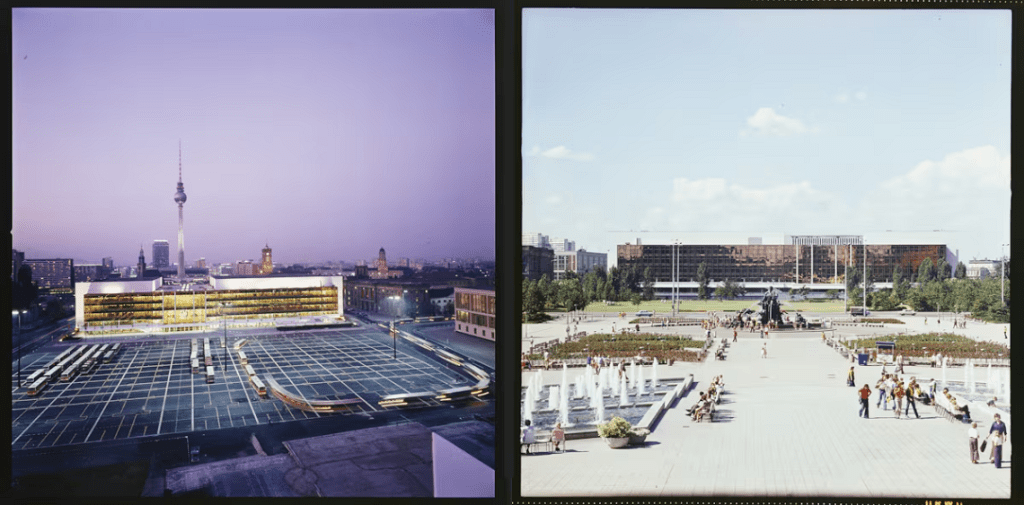
A demolished communist palace and other rubble: How Berlin is managing its GDR buildings and monuments – An exhibition commemorates the demolition of the former parliament building in the German capital in 2008, an example of the persistent erasure of traces of socialism in the city.

Pre-Game Show

It only makes sense to warm up with a little senseless violence before the real, official senseless violence begins.

May demonstration in Berlin: police report riots. “Bottles and pyros” thrownAt least one stone was thrown at police during a demonstration in Berlin on the eve of May 1 with around 3,300 participants. One woman was arrested.

On the night of May 1, demonstrators attacked police officers in Berlin-Kreuzberg. During a left-wing queer-feminist demonstration on Sunday evening, participants threw bottles and firecrackers at the police.

Democracy: It Ain’t Much

But it’s still better than a Nazi dictatorship and a totalitarian communist regime. I guess.

Study: Germans more satisfied with democracy as a form of government – Public satisfaction with democracy in Germany has risen over the past two years, while in some cases extreme right-wing attitudes have declined significantly. At the same time, hatred of migrants, women, Muslims and other groups in Germany has increased and become widespread. In addition, stronger desires for authority can be observed in the wake of the pandemic. These are key findings of the representative “Leipzig Authoritarianism Study.”