Ain’t no “might” about it, Fareed

If push comes to shove over here, I mean.

Why Germany might let Europe fall
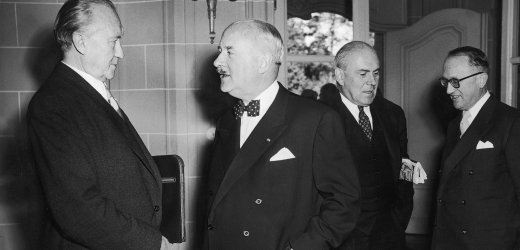
The old structure of Europe rested on an extraordinary degree of German abnegation of its own interests.  The Germans believed their national interest lay in subordinating itself in every way to Europe’s broader interest.  That was what Europe was built on.

Today what people are basically asking is: “Is Europe’s debt going to be centralized or not?” In other words, is Europe going to be willing to say, “All our debt is pooled together and theoretically, as a single entity, we’ll pay it back.”

The key to this commitment is Germany. Germany is the only country that can pay.

The key to Europe’s future is how Germany conceives of its interests.

So once it gets real ugly, and it’s going to get a whole lot uglier yet, the last guy out please remember to turn off the lights.

PS: This gives “Old Europe” and “New Europe” a whole new meaning, don’t it?
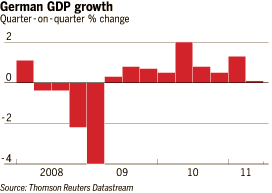
GDP?

Does that stand for German Doldrums Party or something? Sorry, I’m still in my election time mode.

I’ve heard of the SPD and the FDP and even the KPD. But who are these guys and why are they starting to make the economy suck again? Is it time to call a rating agency yet?

“It is a regime shift. The period of exuberant growth is now behind us.”

Oh My God We’re All Gonna Die Yet Again Once More Again This Time For Real Already

Historic? Damned right it’s historic (the debt deal – if it actually passes).

“In the first stage, it includes $917 billion in spending cuts and other deficit reduction now, as well as a $900 billion increase in the debt ceiling.

In the second stage, a special joint committee of Congress will recommend further deficit reduction steps totaling $1.5 trillion or more by the end of November, with Congress obligated to vote on the panel’s proposals by the end of the year.

In addition, across-the-board cuts are automatically enacted if Congress fails to pass the special committee’s recommendations.”

I can only hope that what seems to be one of the Spiegel‘s worst fears will actually come true and the US government has now begun a process that will “shrink itself to a skeletal state.” That just sounds too good to be true, though.

“Es gibt kein Licht am Ende des Tunnels.”

Oh My God We’re All Gonna Die Again Already

Well there we have it. Der Spiegel itself makes it official and that picture down there proves it or something.

The American economy is caving in. We’re tanking. We’re toast. It’s all over but the crying. All bets are off. We’re on the river of no return. We’re dead meat. Buddy, have you got a dime? How about any of you other guys out there other than Buddy? Down and out in [place any American city name you want here]. Yes, we can. I mean no, we can’t.

Thanks, Spiegel. How refreshing (not). But how so very predictable. And consistent.

Es ist ein grässlicher Tag für die USA: Die Supermacht steht vor der Staatspleite, jetzt bricht auch noch das Wirtschaftswachstum ein.

But We Mentioned Human Rights

You got your values, then you got your interests. Then you have the value of your interests. Then you have the interest you get on the value of those interests.

So, in other words, always look after your own interests if you want good value.

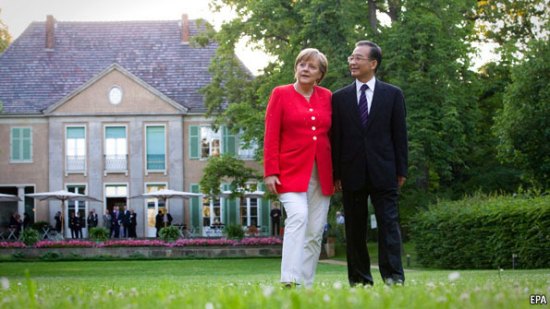
Chinese Premier Wen Jiabao and German Chancellor Angela Merkel also targeted an increase of bilateral trade to 200bn euros ($284bn; £178bn) over the next five years.

Germany is by far China’s biggest trading partner in the European Union.

China and Germany are the two biggest exporters in the world. 

Everything Is So Wonderfulawful Here

Things have never been better here in Germany, we are told. And yet the German nation still can’t seem to get up off the collective couch (the psychiatrist’s kind).

This guy has an interesting take on Germany’s latest “season of angst” or why a prosperous nation has this obsessive need to turn on itself (and those around it).

His bewilderment is uncalled for however, I find. I can only wonder why he wonders. The Germans were, are and always will be collectively schizophrenic, in their own peculiar (cute?) little way. They are permanently krankgeschrieben (off sick) and that couch is, well, where they live.

Yet it is very hard to find anyone here who is happy about this state of affairs. Unlike the great Rhineland industrial booms of the 1950s and 1970s, this one is provoking Germans to turn against their government, against Europe, against technology and growth, against outsiders. It is an inward-looking, self-questioning moment in a country that the rest of Europe very badly needs to be involved in affairs outside its borders.

Debt Expert Deutschland

SPIEGEL ONLINE: Mr. Ritschl, Germany is coming across like a know-it-all in the debate over aid for Greece. Berlin is intransigent and is demanding obedience from Athens. Is this attitude justified?

Ritschl: No, there is no basis for it.

SPIEGEL ONLINE: Most Germans would likely disagree.

Ritschl: That may be, but during the 20th century, Germany was responsible for what were the biggest national bankruptcies in recent history. It is only thanks to the United States, which sacrificed vast amounts of money after both World War I and World War II, that Germany is financially stable today and holds the status of Europe’s headmaster. That fact, unfortunately, often seems to be forgotten.

SPIEGEL ONLINE: What happened back then exactly?

Ritschl: From 1924 to 1929, the Weimar Republic lived on credit and even borrowed the money it needed for its World War I reparations payments from America. This credit pyramid collapsed during the economic crisis of 1931. The money was gone, the damage to the United States enormous, the effect on the global economy devastating.

SPIEGEL ONLINE: The situation after World War II was similar.

Ritschl: But right afterwards, America immediately took steps to ensure there wouldn’t be a repeat of high reparations demands made on Germany. With only a few exceptions, all such demands were put on the backburner until Germany’s future reunification. For Germany, that was a life-saving gesture, and it was the actual financial basis of the Wirtschaftswunder, or economic miracle (that began in the 1950s). But it also meant that the victims of the German occupation in Europe also had to forgo reparations, including the Greeks.

“He warns the country should take a more chaste approach in the euro crisis or it could face renewed demands for World War II reparations.”

More Miserable Management

In Germany, I mean.

I just wanted to share these highly German on-the-job motivational sayings with you, for no particular reason.

“Bread molds. Shit stinks. What can you do?”

“I’d like to go on vacation the way that you go to work.”

“I don’t have problems, I have employees.”

“Please shut the door. Or can’t you do that either?”

“Regular failure is also a form of reliability.”

“Ich kann Sie nur auf den Topf setzen. Drücken müssen Sie alleine.”

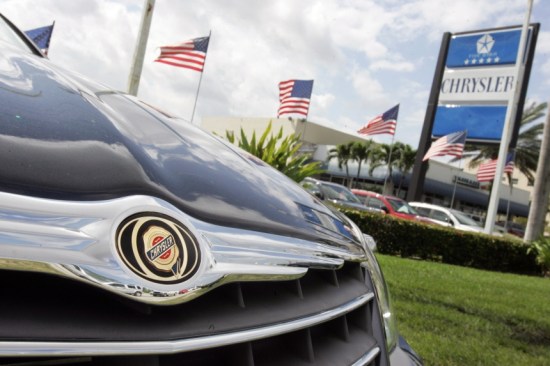
Dumb Americans buying big cars again

But some of them aren’t all that dumb because they are the ones buying the big German ones. That’s the essence of the article anyway.

Inexplicable, really. German intellectuals everywhere are aghast at the United States failing to do what it is supposed to do yet again. Despite Der Spiegel‘s recent pronouncemnt of the end of US-Amerika as we know it (in black and white and color too), US-Amerikaner are suddenly buying big fat politically correct automobiles as if there were no tomorrow.

Or maybe that is the explanation. Perhaps this is our last collective gasp as a nation before the whole culture (excuse me, I meant lack of culture) implodes with a tremendous groan and rolls over to die, I dunno, in Nevada or someplace. Everybody must sense instinctively that this will be our last chance to drive off into the sunset of our American oblivion in our monstrous ‘merican automobiles in hyper-heroic, High Noon style.

Or maybe… Maybe the experts at Der Spiegel (and experts in general) are just too stupid to poor piss out of a boot.

Der Autoabsatz in den USA boomt.

We never get tired of being admired

Yeah, Herr Brüderle, you guys are the best thing since sliced toast. You’ve done everything right, right?

But please, enjoy it now, while you still can, fast. Because here’s what might just happen next: Mr. Sarkozy putting your money where his mouth is (“Germany and France will never let the euro fail) and your temper tantrum behind the scenes at Davos might be an indication that you have already been pushed down the road you didn’t think you would have to travel:Spending whatever it takes to bankroll your near-bankrupt euro neighbors.

And should it come to that, let’s see how much admiration you’ll be getting from German taxpayers back home.

Germany is getting boxed into a corner. Somehow, the ideas that the bailout-funding European Financial Stability Facility needs to be much bigger, that it should buy government debt, and that the interest rates charged on aid need slashing, have all dodged Frankfurt opposition and moved to the top of the bond market’s agenda.