German of the day: Aller Anfang ist schwer

That means every beginning is hard.

And this one was hard to believe. And hard to follow.

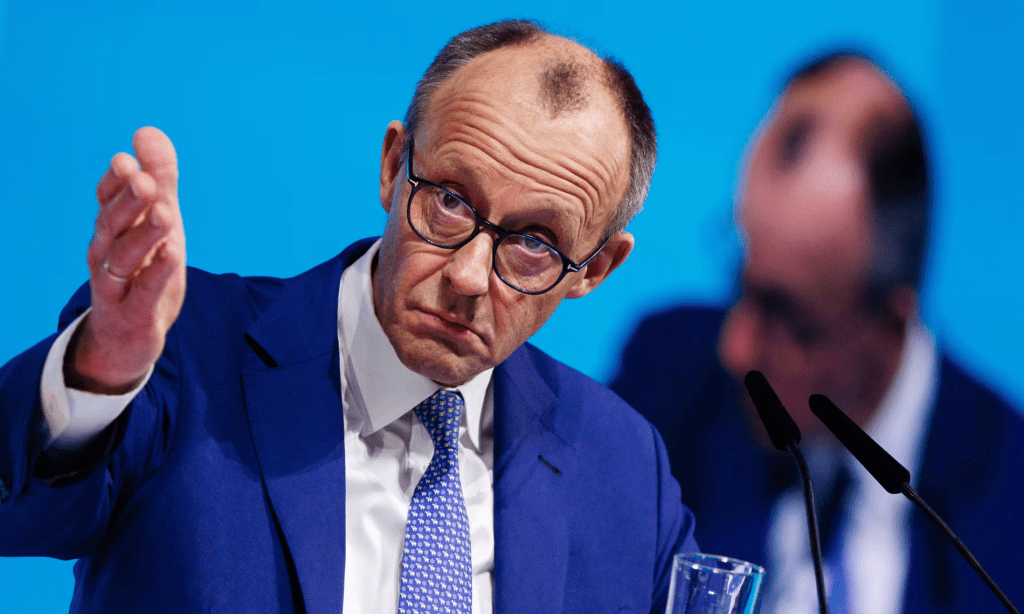
Germany’s Merz becomes chancellor after surviving historic vote failure – Conservative leader Friedrich Merz has won a parliament vote to become Germany’s next chancellor at the second attempt.

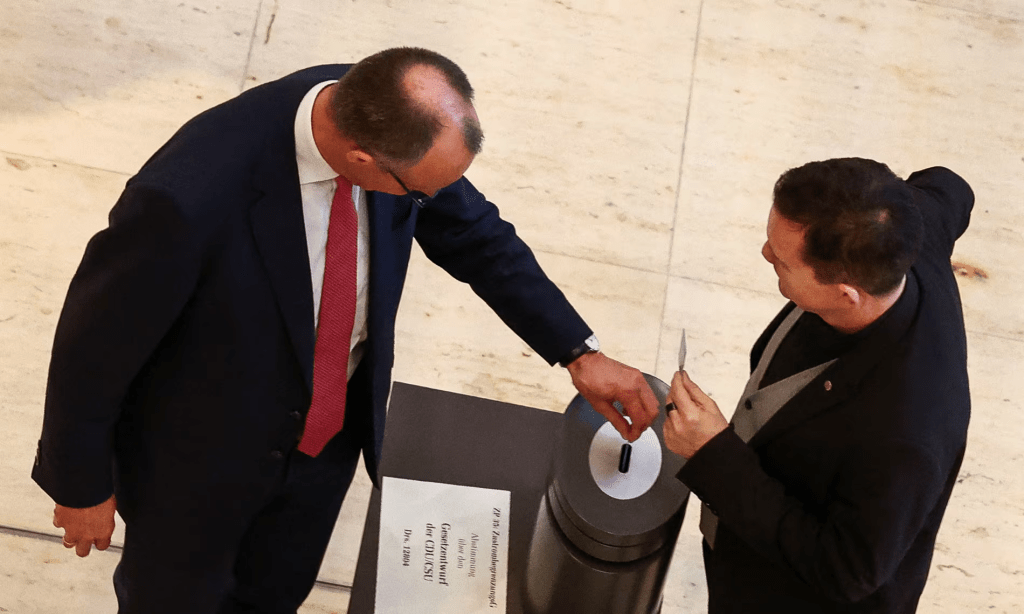
Merz had initially fallen six votes short of the absolute majority he needed on Tuesday morning – a significant blow to his prestige and an unprecedented failure in post-war German history.

As it was a secret ballot in the 630-seat Bundestag, there was no indication who had refused to back him – whether MPs from his centre-left coalition partner or his own conservatives.

No place to run

Except into debt?

“Blessed are the young for they shall inherit the national debt.”

German parliament approves Merz’s historic spending surge – Germany’s parliament approved plans for a massive spending surge on Tuesday, throwing off decades of fiscal conservatism in hopes of reviving economic growth and scaling up military spending for a new era of European collective defence.

The approval in the Bundestag hands conservative leader Friedrich Merz a huge boost, giving the chancellor-in-waiting a windfall of hundreds of billions of euros to ramp up investment after two years of contraction in Europe’s largest economy…

“The politician’s greatest asset is credibility. With these embarrassing actions, Mr Merz, you have already completely squandered yours. The voters feel betrayed by you, and rightly so.”

English of the day: Debt overhall

That means to go bat shit crazy further into debt. Unnecessarily.

German taxpayers “contribute” a billion euros a year now. German politicians burn most of it. They have all the money they need. They just refuse to cut spending à la DOGE. This is a “conservative” planning to do this, mind you.

German parties agree on historic debt overhaul to revamp military and economy – The parties hoping to form Germany’s next government on Tuesday agreed to create a 500 billion euro infrastructure fund and overhaul borrowing rules in a tectonic spending shift to revamp the military and revive growth in Europe’s largest economy.

Friedrich Merz’s conservatives and the Social Democrats (SPD), who are in negotiations to form a coalition after a national election last month, will put their proposals to the German parliament next week.

German of the day: Schlagabtausch

That means an exchange of blows. Or a debate, if you prefer.

German Chancellor candidates clash on Trump, the far-right and NATO – In the first duel ahead of the February 23 election, Merz portrayed Scholz as a ditherer who had led Germany into economic crisis, while the Social Democrat presented himself as an experienced leader in command of the details…

Merz, far ahead in the polls and the favourite to become Germany’s next chancellor, expressed reluctance to raise taxes or borrow to reach the NATO alliance’s defence spending target of 2% of gross domestic product, far short of the 5% Trump is demanding.

You can sure say that again

But why should such a wonderful development be seen as something to warn about?

The US is ‘no longer the America we used to know,’ warns Germany’s Merz.

Merz’s warning comes amid a whirlwind of personnel and agency slashes both within the U.S. federal government and to foreign aid since Trump took office. Since assuming the presidency, Trump’s administration has sent mass emails offering “deferred resignations” to all federal workers, sacked multiple federal watchdogs, and gotten rid of dozens of prosecutors who were involved in criminal cases related to the Jan. 6, 2021 Capitol attack.

The country has also frozen foreign aid and announced moves to put nearly all staff members at the U.S. Agency for International Development on paid leave.

Trump has also announced ambitions to take control of the Gaza Strip, of Greenland and of the Panama Canal, not ruling out the use of military force.

“Startlingly aggressive?”

I’d say it’s more like “refreshingly different.”

Merz doubles down on gambit with German far right in combative speech – Prospective chancellor takes startlingly aggressive line against those protesting against gamble with AfD.

The German conservative opposition leader, Friedrich Merz, whose party is widely tipped to win this month’s general election, defended his hardline migration proposals after a wave of protests accused him of breaching the time-honoured “firewall” between the far right and centrists.

In an uncompromising speech to a party congress of his Christian Democratic Union (CDU) in Berlin, Merz said he was confident they would win the 23 February vote “with a very good result”, well ahead of the anti-immigration, anti-Islam Alternative für Deutschland (AfD), which has been consistently placing second in the polls.

Five days after passing a non-binding resolution on border policy with the votes of the far right – marking a historic breach of a taboo – Merz renewed a promise to bar any formal cooperation with the AfD in future.

“We will not work with the Alternative für Deutschland – not before [the election], not after – never,” he said to a lengthy standing ovation from delegates.

German of the day: Abweichler

That means dissenters.

As in dissenters within your own party. In this case, Germany’s CDU.

Germany’s parliament rejects radical migration plan – Greens and SPD earlier refused to support the Influx Limitation Act amid fierce criticism from Merkel over Merz’s cooperation with AfD…

The highly-controversial proposal, put forward by the CDU/CSU opposition party which leads in the polls, failed to secure a majority in the Bundestag, despite the backing of the far-right Alternative für Deutschland.

German of the day: Antrag

That means motion. As in proposal.

German immigration motion passes, breaking taboo on cooperation with AfD – Narrow passage of controversial CDU-CSU motion ends longstanding boycott on cooperating with far-right party.

The German parliament has narrowly passed a motion urging tough restrictions on immigration that was highly controversial because it was backed by the far-right Alternative für Deutschland party.

The motion was brought by the conservative opposition CDU-CSU and backed by, among others, the AfD, breaking a longstanding taboo on cooperation with the anti-immigration party.

German of the day: Mehrheit

That means majority.

Despite Scholz’s criticism (German Chancellor Olaf Scholz, SPD): majority of SPD voters support Merz’s asylum ban, according to poll – Scholz had protested vehemently against the CDU’s push for a turnaround on migration. A survey now shows that 66% of Germans support Merz – as do the majority of SPD voters.

The climate really is changing…

In Germany. When it comes to climate change, I mean.

Endlich (finally).

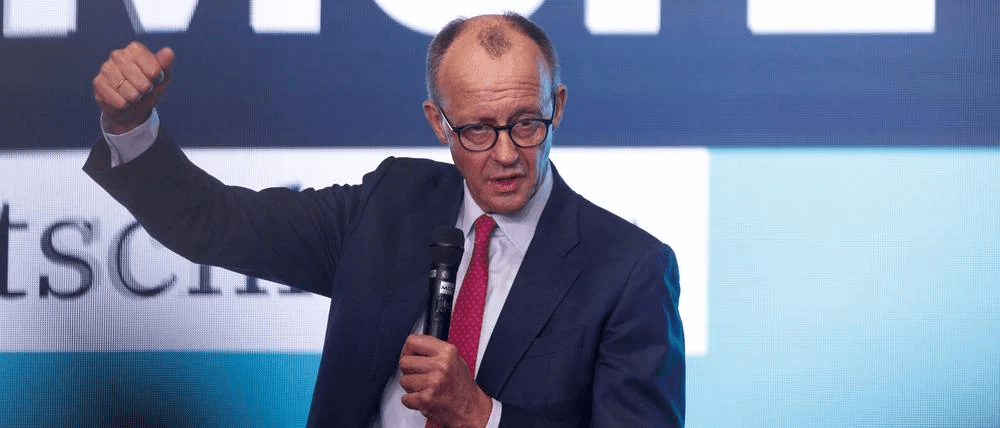
Germany’s likely next chancellor vows to put economy before climate – Conservative chancellor candidate Friedrich Merz railed against the climate policies of the left-leaning parties he’ll likely have to govern with.

Germany’s economic policies have been “almost exclusively geared toward climate protection” during the reign of Chancellor Olaf Scholz, Merz said during a campaign speech in the western industrial city of Bochum on Monday. “I want to say it clearly as I mean it: We will and we must change that.”