German (Carbon) Footprints in The Sand

What are we cheering about again? (This is another one of those Green Shirt terror posts.)

In a democracy, you can say A, but you can also say B, just as you can rely on the assumption that nothing has to last forever. Everything can be changed, amended, courses reversed. In short, the very life and soul of democracy is that there are always other options.

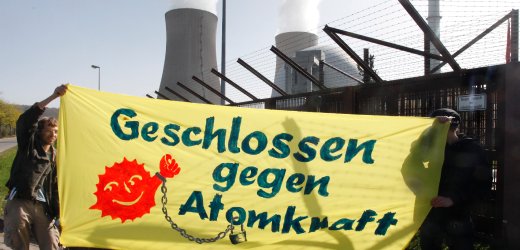
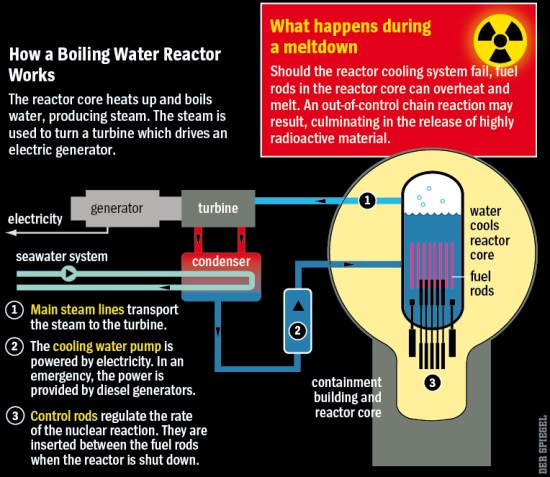
Germany’s federal government is now abusing that basic rule in a scandalous way. There can be no doubt that the country needs to be looking at a smart mix of different energy sources for the future, and that developing viable alternatives to atomic power is an urgent necessity. Yet the manner in which the federal government has rushed to its decision to put a definitive stop to the use of nuclear energy by 2022 runs counter to all rules of democratic procedure. It began when, for politically motivated and tactical reasons alone, the government went back on the agreement made last fall — just seven months ago — to extend the life span of nuclear power plants. After the Japanese plant Fukushima began leaking radiation, it felt compelled to cede to public pressure by making a rapid move away from atomic power. Backtracking in the blink of an eye, the government moved so quickly partly out of fear of the Greens, and entirely without discussion or reflection.

… Germany has shown no respect for the energy policies of other E.U. countries, and particularly no trace of consideration for the East-West split that exists in Europe over nuclear power. Instead, Germany has chosen to go it alone on this issue, assuming a kind of avant-garde, “moral high ground” role that is not always going to play well elsewhere.

Die Bundesnetzagentur schlägt Alarm: Wegen des Atomausstiegs befürchtet die Behörde bereits in der kommenden Woche zu Pfingsten Schwierigkeiten beim Stromtransport.

PS: And lest we forget…

Cukes, Kooks and Nukes

I tell you, DANGER is everywhere you look these days. If it’s not deadly organic cucumbers (sorry, Spain, we didn’t mean to ruin your cucumber industry with a false alarm like that, no hard feelings, OK?), it’s freakin’ Ikea alarm clock attacks by “The Easily-Broken Kids Room Furniture Liberation Army” in the Benelux (thanks, Joe).

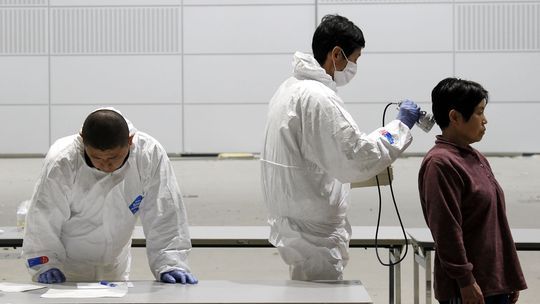
And then of course there’s the ongoing, ever-growing radiation alarms after the Japan Nuclear Crisis in, uh, London and New York.

Stop the world I want to get off or something.

“Whatever the radiation in Tokyo at the moment, you can be fairly sure it is lower than natural background levels in many parts of the world.”

Organic Cucumber Phase-Out Recommended

As if Switzerland’s announcement of a plan to follow Germany down the path toward a nuclear phase-out had not been shocking enough (other nervous European countries are now most certainly to follow), the alarming outbreak of enterohemorrhagic Escherichia coli (EHEC) in Germany traced to organic cucumbers grown in Spain has led to wide-spread calls for an organic cumumber phase-out as well.

“We now know that organic cucumbers are more deadly than Fukushima,” said one highly concerned Brussels bureaucrat. “This incident has opened our eyes to the total helplessness of organic cucumber operators, I mean growers, everywhere. We Europeans can no longer deny that an accident of this magnitude is indeed possible so it only stands to reason that the only way to deal with a crisis like this is to stop eating organic cucumbers altogether.”

PS: Thanks for the Hinweis, Ole Phat Stu.

German Vocabulary of the Day

Alleingang: Going it alone.

Although every German knows that things go invariably terribly wrong whenever Germans do this (go it alone), they sometimes simply just can’t help themselves (think the recent UN Libya resolution episode, for instance) and let this atavistic throwback throw them back to behavior (misbehavior) they will bald (soon) regret. For the latest case in point see Ausstieg.

Ausstieg: This means to exit, phase-out. Germans are the born Aussteiger (exit-ers or escapists), but this is getting ever harder and harder for them to do. Executive Director Nobuo Tanaka of the International Atomic Energy Agency, IAEA (not IKEA), for instance,  has warned Germany about going their nuclear phase-out alone (see Alleingang). Germany’s policies here affect all of Europe, he says, and “it’s not about a German problem, it’s an overall European problem.”

Blackout: This means blackout. German power companies are now warning that should the Ausstieg and Alleingang described above be implemented too quickly and too efficiently (a grave possibility in Germany), they will not be able to guarantee an uninterupted power supply for their customers in Southern Germany during the so-called “winter” months.

Die Netzfirmen warnten, wenn nur die im Zuge des Atom-Moratoriums stillgelegten Alt-Meiler weiter vom Netz blieben, fehlten an kalten Wintertagen in Süddeutschland etwa 2000 Megawatt Leistung.

Horror Scenario?

10 euros a month tops? For a “turbo” phase-out of atomic energy in Germany?

According to the Spiegel, that’s what “almost all” German citizens would be willing to pay to get out of the tsunami-plagued industry pronto (German tsunamis are indeed rare, but still). And they mean 10 euros a month per German household, by the way, not for the whole country.

That certainly is reassuring (sort of) after hearing all these Horrorszenarien (horror scenarios) being circulated out there by crackpot organizations like the Federal Association of German Industry (BDI) these days. They warn, for instance, that a quick German nuclear power halt could raise electricity prices here by as much as 30 percent (that would be more than 10 euros a month I think, but still).

I am sure that “almost all” German citizens would be willing to shell that out too.

But, then again, I am also sure that invading reptilian humanoids disguised as human beings are secretly controlling the fate of the human race.

Es darf nichts kosten (it just can’t cost anything).

PS: Thanks for the link, Joe.

No good NIMBY-pamby protesters!

Are we having an energy revolution yet?

Although there is a long way to go before construction can begin on the high-voltage transmission lines, the “regional resistance” that the experts colored on their map has already begun to materialize.

There are obstacles everywhere. Either the landscape is so densely populated that it is poorly suited for big infrastructure projects, or it is so devoid of people that it should be preserved precisely for this reason.

The tactics of the power-line opponents are simple and perfectly understandable. The more arguments that can be presented against the project, the more likely it is that the future route will run further away from one’s own community and closer to the neighboring village instead.

Fortunately for the opponents, German law offers plenty of ways to keep the power masts at a good distance.

Saving birds and bats from the power lines, protecting gliders, a festival of bureaucracy. It’s all here, people.

You can tell this guy’s not German

Sure, his opinion may have been published in the Spiegel (The German People’s Cube), but this otherwise reasonable and balanced assessment of nuclear energy in the New Age of Post-Fukushima Germany has some major flaws in it, all of them having to do with thinking it possible that the German response to Fukushima could ever be “thoughtful and considered, instead of emotional and political.”

Many people have already formed solid opinions and only take into account what supports their views. (This is called confirmation bias, by the way.) But many of these beliefs are irrational and only fed by the many figures, measurements and limits being made public, which hardly anyone can make sense of.

This can be seen very clearly in the current situation in Fukushima. The Americans have recommended that all citizens evacuate the area within an 80-kilometer (50-mile) radius of the stricken power plant. The Germans have moved their embassy to Osaka. Even people who are really well informed have left Tokyo in the belief that you can never be careful enough.

Though I can understand this reasoning, it’s wrong. What’s more, it sends a devastating message to the Japanese who have to stay. They have started to distrust their own government, and fear is spreading. This is a terrible side effect of this excessive concern — and the panicked reaction — in Germany.

Indeed, it is clear that the major long-term issues with an accident at a nuclear power station are not medical; instead, they are political, psychological and economic. Given these circumstance, the German response to the Fukushima accident needs to be thoughtful and considered, instead of emotional and political. It should be based on a consideration of energy needs for the next several decades and a careful assessment of benefits and risks of alternative energy sources. If such an analysis is done, I suspect nuclear energy will come out in a favorable light.

PS: Thanks for your comment on How do you keep the hysteria going?, A.K. Strange how that very thought crossed my mind too. More people died in this one smashup than have died (or most likely will die) due to the Fukushima catastrophe. You don’t and won’t see anybody getting hysterical here about driving too fast because of this (speed is always involved in accidents like this).

Nein, Danke! We’ll import nuclear energy instead!

This is where the European unity part comes in, I guess (and the electricity still has to come out of the Dose/wall socket somehow, doesn’t it?).

Ever since the nuclear power plant moratorium has kicked in, Germany has begun importing more foreign energy than it exports, most of this having been generated at French nuclear power plants. This is where the ideological wheels hit the road, people. Are we having Realpolitik yet?

It’s typically German somehow: Loudly wash your hands of the matter while letting someone else do the dirty work for you.

And speaking of Realpolitik, I can’t wait until the “paying for all of this” part kicks in. There won’t be a moratorium on that one. It won’t be too long until the next wave of hysteria hits the fan again, in other words.

Davon profitieren vor allem französische AKW.

How do you keep the hysteria going?

It’s clearly getting tougher and tougher with each passing day. When you’re well into your third week of daily reports about the Fukushima SUPER-GAU (disaster beyond all expectations) and that nuclear worst case scenario just simply won’t happen, even the most loyal alarmist starts getting a little pooped out. The Spannung (tension) just won’t steigen (mount) anymore.

I mean, we’ve already had the German atomic turnaround and the German Green triumph and the old German nuclear reactors are already shut off (and won’t be turned back on again) and the entire German nuclear power industry will be shut down next before all too long too so like what’s left to get excited about? Nothing? But what’s that got to do with anything? There was nothing to get excited about in the first place.

Poor devils, they’re scrambling and hustling as best they can but the pickings are awfully slim. They’re trying it today with 2285 missing fuel element ball thingies at a German nuclear research center. Talk about boring.

Like I said, slim pickin’s. But hey, it’s a Monday. See what they throw at us tomorrow.

Es klingt wie ein verspäteter Aprilscherz: Das Forschungszentrum Jülich vermisst 2285 Brennelementekugeln.

PS: Thanks for the link, A.K. – Diese kollektive Besoffenheit über Fukushima, diese unglaubliche Dummheit, dieses Ausrasten eines ganzen Volks haben mich eines Besseren belehrt.

Heine, der Emigrant in seiner Matratzengruft, hat alles richtig gesehen.

http://zettelsraum.blogspot.com/2011/04/biografien-ein-deutscher-dialog-zettel_03.html

Don’t Read This

If you want to keep your Fukushima radiation hysteria level high, that is.

Another German contrarian opinion. Here are one or two interesting points (sorry, non-German readers):

The measurements alone reveal nothing about danger or risk. Higher radioactivity in the atmosphere, measured in various places in Japan, give us a snapshot but not a coherent picture. The doses of radiation are not constant and fluctuate dramatically.

But no one in Japan who has eaten contaminated food will die as a consequence of the radiation exposure now measured, it is not strong enough.

The residents of Tokyo are currently less exposed (to dangerous levels of radiation, considered to start at 100 millisievert) than a traveller on a flight from New York to Tokyo and back–that would be 200 millisievert.

These comparisons show how a perceived risk and the actual danger can drift apart. Being panic-stricken in German won’t help. The Japanese show impressively how to deal cool-headed with a critical situation. They will master this crisis, regardless of how it turns out.

Diese Relationen zeigen, wie ein gefühltes Risiko und die tatsächliche Gefährdung auseinanderdriften können. Panik, wie sie manchen in Deutschland befällt, hilft nicht weiter. Die Japaner zeigen eindrucksvoll, wie besonnen sie mit der kritischen Situation umgehen. Sie werden diese Krise meistern, ganz gleich, wie sie ausgeht.