Well We Can’t Excel At Everything

Like when it comes to anti-Semitism and bad old fashioned anti-Jewish thought crime.

Honestly, let’s put this latest study in perspective and maybe not paint the Germans as being the Hollywood Nazis they aren’t for once (but just this once).

Sure, 20 percent is a lot. But you know that you know you thought it was higher (or wanted it to be). And “the study — which draws on several different surveys and other research — puts Germans in the middle of the pack in Europe, showing more latent anti-Semitism in countries such as Poland, Hungary and Portugal, and less in Italy, Britain, the Netherlands and France.”

And what happens to that 20 percent once you subtract the extremist right/Islamic fringe and those who think like and/or support them? I’m all for subtracting them, by the way, but we don’t live in a perfect world. What can I say? It’s a never ending story.

Ob auf Fußballplätzen, im Netz oder in islamistischen und rechtsextremen Milieus – Judenfeindlichkeit ist in der deutschen Gesellschaft noch immer gegenwärtig.
Die Deutsche Seele

A little German never hurt anybody. I’m too lazy to translate this, in other words (Thea Dorn’s interesting observations about “The German Soul” this week in Die Zeit):

Wir Deutschen selbst sind die einzigen, die notorisch nicht wahrhaben wollen, wie viele unserer Ängste samt der daraus resultierenden Verhaltensweisen von einer typisch deutschen Mentalität zeugen: Jedem Briten ist klar, dass es sich beim “Waldsterben”,  das die Gemüter in den achziger Jahren erschütterte, um einen urdeutschen Spleen gehandelt hat. Kein Franzose versteht, mit welch plötzlicher Radikalität unser Land den Ausstieg aus der Atomkraft vollziehen will. Die Amerikaner waren perplex, als Deutschland unlängst sein Ja zum militärischen Libyen-Einsatz verweigerte. Wir selbst und die Welt würden uns besser verstehen, wüssten wir noch, dass ein deutsches Universal-Lexikon bereits im Jahre 1747 wortreich den “jetzigen Verfall der Wälder in Deutschland” beklagte und Martin Luther mit dessen noch älterer Befürchtung zitierte, dass es Deutschland “vor dem jüngsten Tage” an “wildem Holze” mangeln werde. Dass die im Vergleich zu anderen Völkern überstark empfundene Angst vor einer atomaren Verseuchung aufs Engste mit der deutschen Reinheitssehnsucht zusammenhängt, der schon immer jede Verunreinigung, die sich nicht mit Schrubber und Seife bekämpfen lässt, ein Albtraum war. Dass der vermeintlich neue deutsche Pazifismus seinen größten lyrischen Ausdruck bereits 1779 fand, als Matthias Claudius dichtete: “‘s ist Krieg! ‘s ist Krieg! O Gottes Engel wehre, / Und rede Du darein! / ‘s ist leider Krieg! – und ich begehre / Nicht schuld daran zu sein!” Nur weil wir all dies vergessen haben, können wir heute unsere uralten Ängste als Fortschrittssignale ausgeben.

Germany Will Lead!

But only from behind. It’s another one of those German schizoid personality disorder things.

When history dictates humility, and modesty proves so profitable, reticence endures.

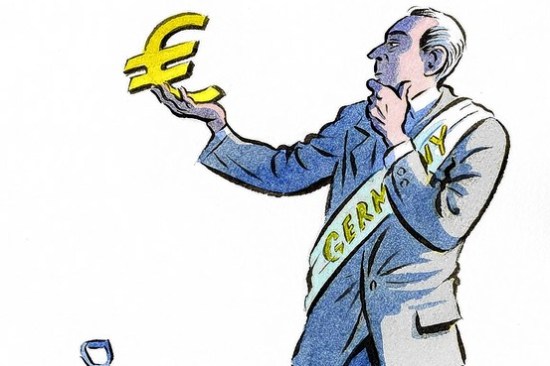
Germans tell the pollsters they fear for their money—and then add that they like both Europe and the euro. They sense that it is cheaper to throw up firewalls than to pay for the devastation of the blaze. They bridle at rewarding the vices of the “Club Med” countries. But their real horror is to be left alone in Europe once more.

Our Curricula Can’t Cover Everything

Happy German Unity Day or something.

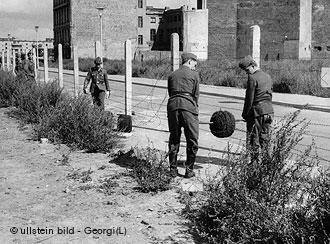
The GDR is part of school curricula – at the end of the 10th grade, after the unit on World War II. Some teachers say they just never get to the GDR, because their students need more time to digest all of the heavy history that came before it. Other teachers and parents simply don’t want to relive their past.

“When I give tours like this now, [two decades] after the end of the GDR, I’m amazed at how little is known about it.”

The GDR wasn’t so bad, her godmother said, as long as you didn’t criticize the system; you could have a normal family life just like in the West.

But in general, many young people are unfamiliar with East Germany: a majority doesn’t know who built the Berlin Wall or whether Willy Brandt was a politician in the East or the West.

“The division of Germany and the postwar period are probably some of the most documented times in history. There are endless shelves full of books on the subject,” Hillmer said. “But the collective historical memory is at zero. All these countless anniversary events aren’t changing anything.”

“The main finding of our study is that young people today, from both the East and the West, are not really able to differentiate between democracy and dictatorship.”

Shooting yourself in the foot 101

It’s become a well-loved custom here, Germany politicians making complete fools of themselves by using completely unnecessary Nazi comparisons and/or terminology that every German third grader knows not to use.

This time it’s the SPD’s Matthias Platzeck (the SPD is really on a role these days) who used the term “annexation” when referring to German reunification, the same word that was used to describe the Nazi takeover of Austria in World War II. Platzeck is from the mystical German East, by the way.

Now everybody’s upset and stuff. Dumb a#!*´s.

“I don’t know what there is to celebrate.”

Fine Young Bureaucrats

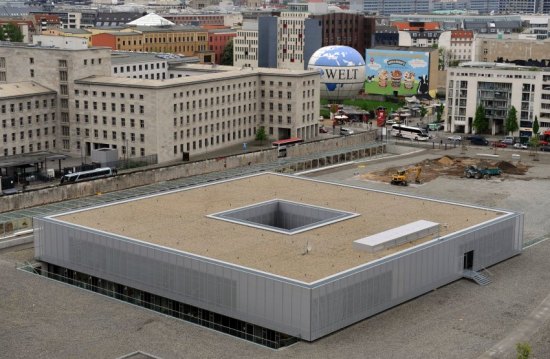
The new “Topography of Terror” documentation center opened in town today.

Who exactly were the men who planned and administered the Nazi crimes?

The index cards cover an entire wall, several hundred of them in pink, beige or green, containing names, dates of birth and handwritten notes. They are the details of some of the 7,000 former employees of the Reichssicherheitshauptamt, the amalgamation of the feared SS paramilitary group and Gestapo secret police force — the men who worked at the very epicenter of the Nazi terror regime.