And the latest survey (Umweltbewusstsein in Deutschland 2010) says:
62 percent of Germans asked want more goverment involvement with regards to environmental protection.
80 percent want more legislation promoting energy efficient homes and electrical appliances.
90 percent believe that industry needs to become more environmentally friendly.
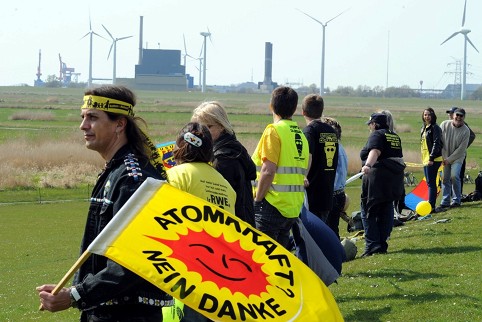
Strangely, however, the study also found out that the demographic group most concerned about environmental protection (Green voters) was also the demographic group leaving the biggest so-called carbon footprint.
It appears that environmentally engaged Greenists often enjoy a relatively high income and consume accordingly, often taking “climate-damaging” vacation flights, for instance.
Poorer regular folk types, on the other hand (these are the folks who start working with fourteen or sixteen to help finance the Green voters’ often quite lengthly college educations in German egalitarian society), can’t afford to go on such vacations quite as often, drive less, stay at home more and even purchase more regional products, thus making their ecological footprints smaller.
A spokesman for the survey regrets this discrepancy between „Bewusstsein und Sein” (consciousness and action or practice) but appears to be a realist (or Realo, as they sometimes say here) and is placing his hopes and bets on the next generation of digital natives to do more for the environment by implementing more of something he calls technologische Innovationen (technical innovation).
“Dabei seien es jedoch gerade die Bevölkerungsschichten mit dem größten Umweltbewusstsein, die den größten ökologischen Fußabdruck hinterließen.”








 Observing Hermann