Our Wind Farms Would Work Just Great

It’s just that we don’t have the cables to bring the energy to shore (nor the money to lay them).
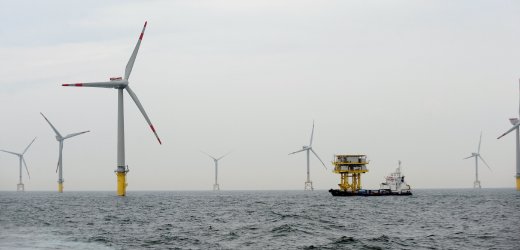
The network operator building those giant offshore wind farms planned to be a “supporting column” in Germany’s coming-one-day-but-not-in-any-way-near-there-yet energy turnaround, is no longer able to continue “work as usual.”

Like the Dutch government before them, having learned that offshore wind power is too expensive and that it cannot afford to subsidize the entire cost, the good folks at TenneT TSO GmbH are now about to throw in the towel, seemingly unable to find financing in the private sector that would allow them to continue their over cost and behind schedule project (it’s probably them damned durn banks doing this again, or that 1%).

The connection from Water World (Wind World?) back to Planet Earth has turned out to be more complicated and expensive than politically correct planners had originally thought, in other words, provided they had even thought about it at all.

But don’t worry, Green Shirt ideologues have already assured us that “If Tennent can’t swing the offshore development, somebody else can.” Money seems to be no object here, you see. When it’s not yours, I mean.

“Wenn Tennet den Offshore-Ausbau nicht schultern kann, müssen andere ran.”
German Solar Energy Firms Still Waiting For Sun

And it’s November now, too. Ever spent a November in Germany?

The once “model company” Roth & Rau is the latest victim of… Was eigentlich (of what)?

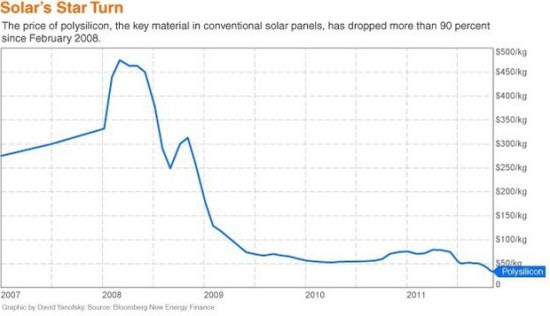
“Solar companies have relied on tax credits or other forms of subsidy for their customers to buy and install the product.” These subsidies are now drying up in Germany. Hmm. Might there be a connection here?

“The logic was that as the price of oil goes up it generally benefits the oil companies but also creates more perceived need for solar products. When oil prices went down it generally hurt oil companies but created less urgency for solar products.” Well, that dynamic doesn’t seem to apply anymore.

Maybe this will all change again once the sun comes out. And once most of the solar energy companies out there have gone the way of the dinosaur.

Die Solarbranche steckt in einer schweren Krise: Die Nachfrage ist nach Förderkürzungen in mehreren wichtigen Märkten wie Deutschland und Italien eingebrochen. Gleichzeitig steigt das Angebot, weil vor allem in Asien etliche neue Fabriken eröffnet wurden.

Wake Me When The Revolution Is over

Der Spiegel itself is asking these days: Are we having a successful green energy plan yet?

Uh, let me think. Nope.

Why is it that whenever Germany’s Environment Minster “explains to foreign politicians that his highly industrialized country aims to decommission all of its nuclear power plants by 2022 and obtain at least 80 percent of its energy from renewable sources by 2050, he is only rarely met with utter denial — at least not among his fellow environment ministers?”

I’ll tell you why. It is either because a) they are in denial themselves or b) they are too polite to laugh in his face.

A Bad Beginning – Broken Promises – Unanswered Questions

New Angst Study Producing More New Angst

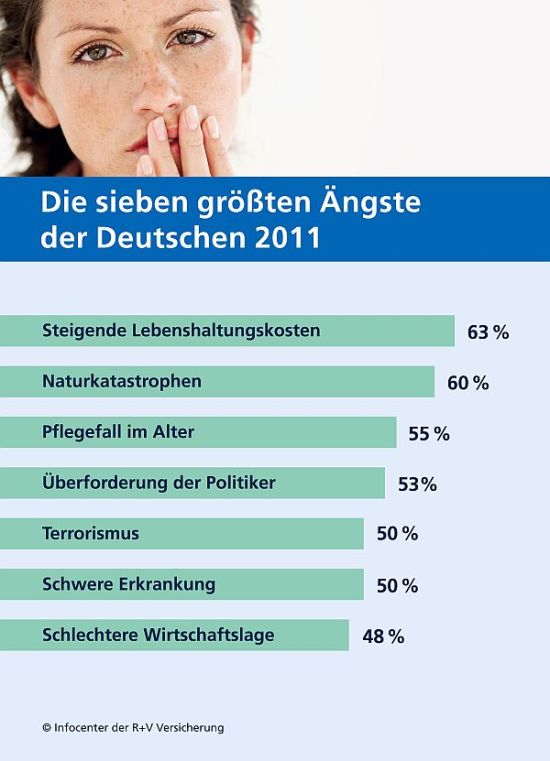
A new study from the R+V Insurance Company (hmmm, an insurance company) indicates that Germans have a whole new list of things to scare the Hosen off them that they didn’t have last year. Is there a pattern developing here or something?

Some of this year’s top favorites (so far) are ecological catastrophes (a perennial hit), the “super worst case scenario” that took place after the earthquake in Japan, the so-called EHEC scandal (go organic sprouts!) and those bloody and yucky revolts still going on down there in the Arabian World.

But what really scares them most is, well, their money. Or the thought of losing it, I should say. Along with their fear of rising energy costs (hmmm, where might those rising energy costs be coming from?), over 70 percent of Germans asked are scared to death of the imminent bankruptcy of a few of them there EU countries down south which will cost the German taxpayer dearly.

Hey. No angst, no fun.

70 Prozent der Deutschen befürchten, dass die drohende Pleite einiger EU-Länder den deutschen Steuerzahler teuer zu stehen kommt – keine Angst erreichte 2011 höhere Werte.

RWE Jobs Next

German utility RWE AG (RWE.XE) Tuesday said it swung to a net loss in the second quarter of 2011, driven mainly by additional costs related to Germany’s decision to exit nuclear energy by 2022 and a tax on nuclear fuel.

The early closure of reactors also resulted in an earnings shortfall, because RWE sold forward the electricity that should have been produced in its two shuttered reactors. To meet its supply obligations the company now has to produce that electricity in more expensive plants or buy power on the market, both of which hurts generation margins.

Bad Jobs Must Go

Wow. Even the Brave New Non-Nuclear World (in Germany) demands its tribute.

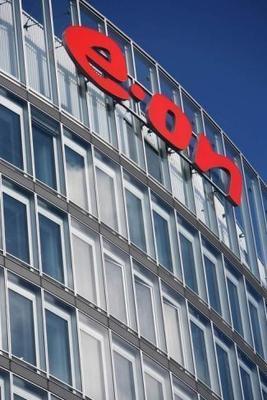
10,000 jobs at Germany’s energy giant Eon will have to go, for instance. But these folks will gladly take on this burden because its what “the people” want. Unfortunately, only about one third of those gladly taking on the burden will be German employees, but you can bet that there will be  further opportunites for them to excel in the very near brave new future.

Das sind mehr als zehn Prozent der gesamten Belegschaft. Damit würde der Sparkurs des Konzerns viel härter ausfallen als bisher bekannt.

Time To Say Goodbye

To all those jobs in the German nuclear power industry, I mean. It’s phase-out time in more ways than one over here.

It’s coming out that E.ON, Germany’s largest energy provider, is now to go on an extreme austerity diet and is about to “restructure,” as they like to say, know what I’m saying? They’re even talking about closing down the big new headquarters they just moved into a year ago.

But hey, it’s all worth it. No pain no gain or something. And don’t worry, there are no other hidden fallout issues here, either.

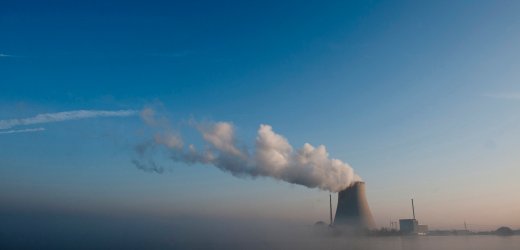
Of 17 German nuclear power plants, half are now turned off; all of them will be shut by 2022. That’s a loss of 22 billion euros in profits.

A Country Named Sue

You sue, I sue, we all do (sue). And here I thought Germany was the land of Konsens (consensus – not common sense). At least when it comes to doing this nuclear phaseout thang, I mean. Fooled again.

OK, it is logical and predictable that Germany’s power companies now have hurt feelings and are preparing to take legal action against the government’s decision to shut down their nuclear power plants because, well, the government is shutting down their nuclear power plants.

But what about all the thousands of lawsuits being prepared by power-line, wind energy and other regional resistance group apponents the nation over set to flood the lawsuit market once these big honkin’ power-line thingies start going up? You know, the power-lines that will transport the good offshore wind farm energy from the north to the bad industrial south?

Why can’t we (as in you) learn to live together in simple peace and harmony? Now that the nuclear power dragon has finally been slain, I mean. Come on, folks. Join hands, form a circle, sit down and talk.

Specifically, they will invoke Article 14 of the German constitution, which addresses the question of whether the companies’ assets are being expropriated, and if they are therefore entitled to compensation. After that, the amount of compensation would be negotiated in civil courts. According to internal calculations, the industry envisions a potential sum of €20 billion ($29 billion). The burden would ultimately fall on taxpayers.

“Frau am Steuer…das wird teuer!”

“A woman at the wheel, that’ll cost you!”

Who would have thought that? According to Germany’s Federal Agency for Electricity, the German electricity grid is in a thoroughly chaotic condition these days. No one can explain why. And the cost of purchasing needed electricity (nuclear generated) at the European Energy Exchange has already gone up 10 percent and further increases are expected to follow soon. It’s bizarre. It’s almost as if some crazy person had shut down eight nuclear power plants here or something.

Yup, Angie Merkel’s Fukushima-driven German angst Atomaustieg (nuclear phase-out) may have indeed been absolutely necessary and of critical urgency (opinion polls, folks, you gots to give the people what they want), but hysteria does have its price. Even in Germany, I mean. But who cares? I know the Germans pretty well and I am convinced that they are all going to be more than willing to pay radically higher electricity bills in order to avoid the, uh, tsunami threat on the home front.

What I really don’t understand is the economics at play here. There is clearly an overabundance of hysteria in this country, right? Shouldn’t that make the price of hysteria, like, cheaper or something? I’d ask an economist but you know how the adage goes: For every economist there is an equal and opposite economist.

“Das Bundeskartellamt erwartet als Folge des Atomausstiegs steigende Strompreise. An der Strombörse sind die Preise bereits um zehn Prozent gestiegen.”