Germany warning China again

China still not giving a lā shǐ.
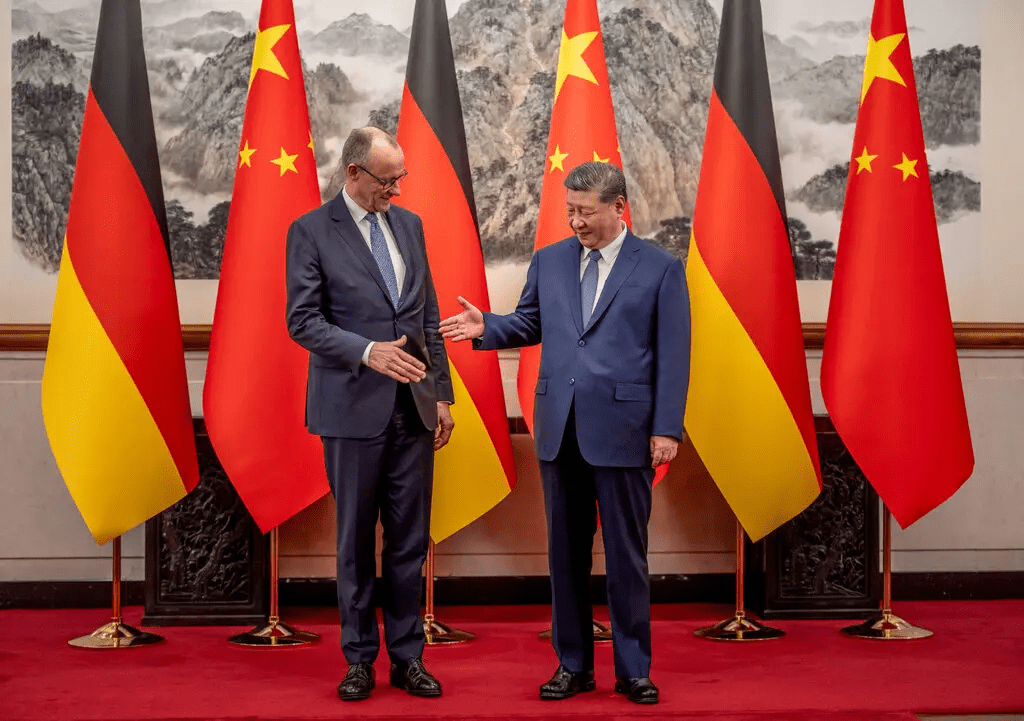
Germany’s Leader Delivers a Blunt Warning to China on Trade – Chancellor Friedrich Merz laid out his complaints in a frank message to his hosts on a trip to Beijing that China had designed to showcase their relationship.

Chancellor Friedrich Merz of Germany arrived in China on Wednesday with an outstretched hand and a list of complaints for his hosts, asking for closer diplomatic ties but also relief from economic policies that he said were impeding “fair competition.”
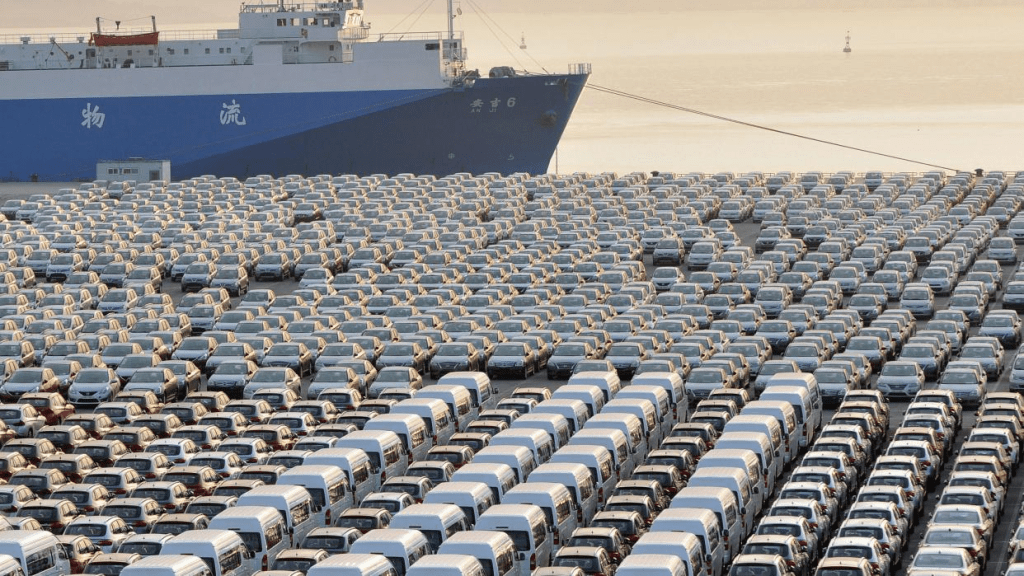
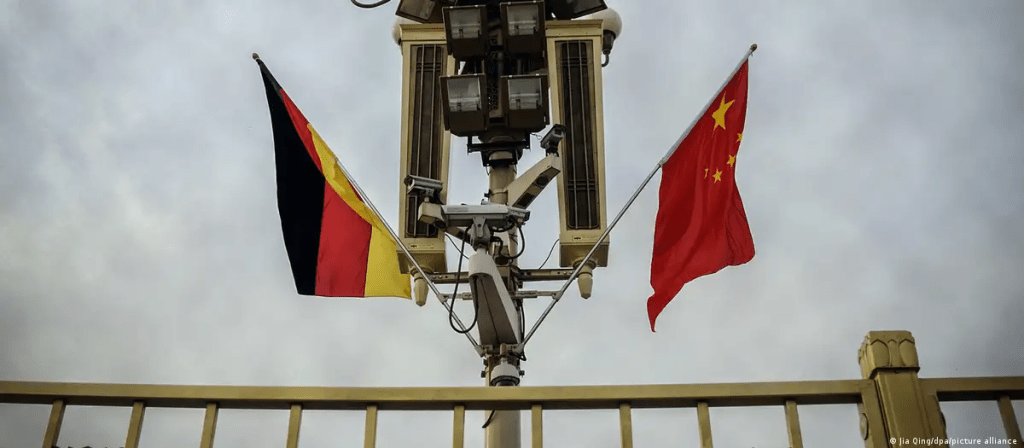
Germany + China = Shock

For Germany.

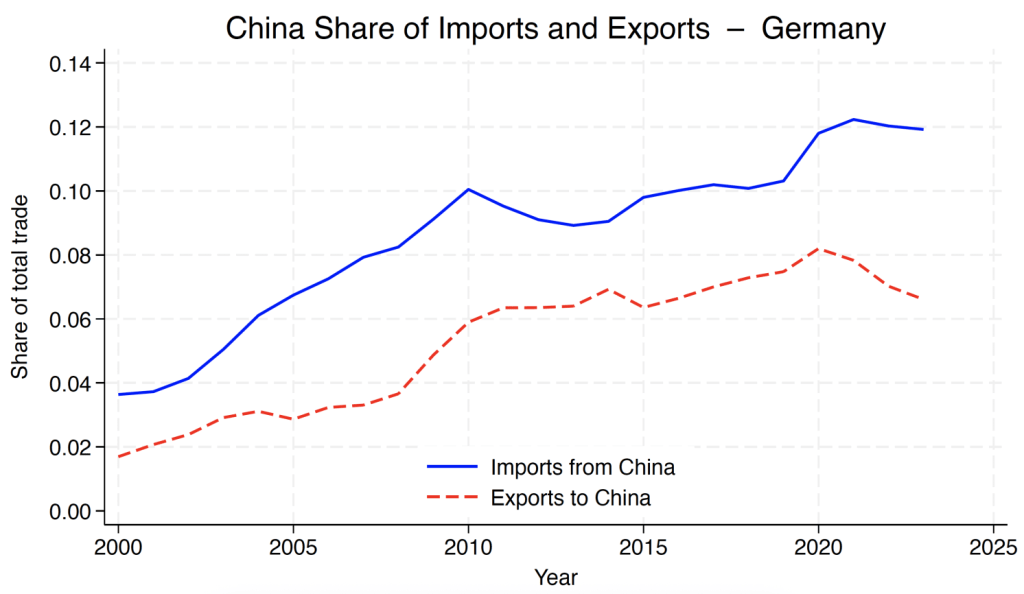
“The China shock is here,” the German Economic Institute declared last year. Indeed, 2025 will go down as the year in which it could no longer be denied. Germany’s trade deficit with China reached a record level of €87 billion—an increase of €20 billion compared to the previous year. And German exports to China continue to be in free fall. The United States, France, the Netherlands, Poland, and Italy have by now become more important export markets for Germany than China.

Maybe not the best top trading partner to have.

A Tale of Two Headlines

“German business lobby warns of unfair trade practices by China” vs. “China overtakes US to become Germany’s top trading partner.”

China has overtaken the US as Germany’s most important trading partner, according to figures released by Germany’s Federal Statistical Office (Destatis) on Friday.

The sum of exports and imports between the two countries last year totaled €251.8 billion ($296.6 billion), a 2.1% increase, according to Destatis.

China was Germany’s most important trading partner from 2016 all the way through to 2023. In 2024, the US briefly held the title.

German Chancellor Friedrich Merz is also set to visit China next week, where he is set to discuss trade and other topics.

Shock treatment about to begin in Germany

China shock treatment.

If the Chinese can’t displace the American workforce anymore, then they’ll displace another one (or two, or three…).

The China shock hits Germany – Trade with China displaced large parts of the American workforce in the 2000s, but Germany did not experience a similar shock at the time…

Go with the mass layoffs, Germany

Mass layoffs for peace? Absolutely. It’s only the right thing to do.

Especially if you’re on the left.

Russian oil or mass layoffs: A German town’s conundrum – In Schwedt, life flows through an oil refinery. If it doesn’t get help — or restart Russian imports — people worry their jobs will be gone.

German of the day: Umgehen

That means to circumvent.

Punitive tariffs: Audi apparently plans production in the USA – According to media reports, Audi is planning to build cars in the USA in order to avoid import tariffs. Until now, Audi has been serving the US market via imports, but the Ingolstadt-based car manufacturer is now confronted with the 25 percent tariffs announced by US President Donald Trump in recent weeks.

According to the report, Audi is looking at three US sites and could also use production capacities of the Volkswagen Group – the manufacturer has not yet wanted to comment on the media reports.

We will not give in!

We’ll just give up. Probably next week some time.

But we will not give in!

Germany leads defiance of Trump car tariffs, saying it ‘will not give in’ – President Donald Trump targets imported cars and car parts with a 25% tax in his latest tariffs.

Other major world economies have vowed to retaliate, with France’s president branding the move “a waste of time” and “incoherent”, Canada calling it a “direct attack”, and China accusing Washington of violating international trade rules.

A self-inflicted hostage-taking situation?

Why is it that big German automakers are worried about Chinese retaliation?

Because they voluntarily put themselves in the position to be retaliated against. Think Germany’s voluntary dependency on Russian gas recently. That didn’t work out very well either. But for whatever reason, this is what Germans do.

Germany launches 11th-hour bid to avert trade war with China – Germany wants the EU to set tariffs on electric vehicles at a low level to avoid severe retaliation from Beijing…

Germany’s position was “problematic,” he said: While big German automakers still entertain good ties with Beijing, that’s not necessarily the case for smaller businesses, meaning “the German economy as a whole has an interest in a more assertive policy towards China.”