Electricity Scarce In Germany These Days For Some Reason

Germany’s power operators have requested that reserve generators at a power plant in southern Germany and two plants in Austria be activated because, well, the lights are fixin’ to go out here (it’s c-c-cold).

But don’t think for a moment that this has anything at all to do with eight of Germany’s 17 nuclear reactors having been switched off because of an earthquake in Japan last year because it doesn’t. You got that?

We do not have a problem of supply, of quantity, it’s principally a question of stabilizing the network.”

Phase Out vs. Cash In

“Fukushima changed my attitude towards nuclear energy,” she said.

Now, though, it would appear that German industry is relying on government assistance to pursue the construction of nuclear power plants abroad.

Four applications for government export guarantees on nuclear power plant projects are currently under consideration. Known as Hermes guarantees, the program protects German companies from non-payment on overseas deals. The four projects are located in Finland, Great Britain, China and India.

“The nuclear phaseout must also apply to export guarantees.”

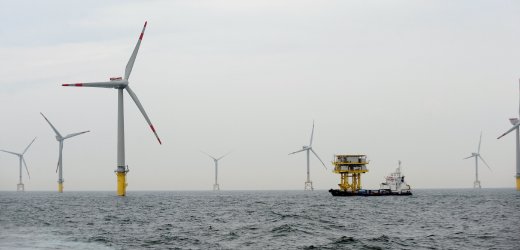
Our Wind Farms Would Work Just Great

It’s just that we don’t have the cables to bring the energy to shore (nor the money to lay them).

The network operator building those giant offshore wind farms planned to be a “supporting column” in Germany’s coming-one-day-but-not-in-any-way-near-there-yet energy turnaround, is no longer able to continue “work as usual.”

Like the Dutch government before them, having learned that offshore wind power is too expensive and that it cannot afford to subsidize the entire cost, the good folks at TenneT TSO GmbH are now about to throw in the towel, seemingly unable to find financing in the private sector that would allow them to continue their over cost and behind schedule project (it’s probably them damned durn banks doing this again, or that 1%).

The connection from Water World (Wind World?) back to Planet Earth has turned out to be more complicated and expensive than politically correct planners had originally thought, in other words, provided they had even thought about it at all.

But don’t worry, Green Shirt ideologues have already assured us that “If Tennent can’t swing the offshore development, somebody else can.” Money seems to be no object here, you see. When it’s not yours, I mean.

“Wenn Tennet den Offshore-Ausbau nicht schultern kann, müssen andere ran.”

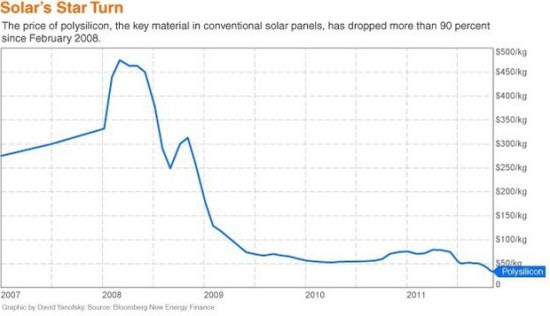
German Solar Energy Firms Still Waiting For Sun

And it’s November now, too. Ever spent a November in Germany?

The once “model company” Roth & Rau is the latest victim of… Was eigentlich (of what)?

“Solar companies have relied on tax credits or other forms of subsidy for their customers to buy and install the product.” These subsidies are now drying up in Germany. Hmm. Might there be a connection here?

“The logic was that as the price of oil goes up it generally benefits the oil companies but also creates more perceived need for solar products. When oil prices went down it generally hurt oil companies but created less urgency for solar products.” Well, that dynamic doesn’t seem to apply anymore.

Maybe this will all change again once the sun comes out. And once most of the solar energy companies out there have gone the way of the dinosaur.

Die Solarbranche steckt in einer schweren Krise: Die Nachfrage ist nach Förderkürzungen in mehreren wichtigen Märkten wie Deutschland und Italien eingebrochen. Gleichzeitig steigt das Angebot, weil vor allem in Asien etliche neue Fabriken eröffnet wurden.

Wake Me When The Revolution Is over

Der Spiegel itself is asking these days: Are we having a successful green energy plan yet?

Uh, let me think. Nope.

Why is it that whenever Germany’s Environment Minster “explains to foreign politicians that his highly industrialized country aims to decommission all of its nuclear power plants by 2022 and obtain at least 80 percent of its energy from renewable sources by 2050, he is only rarely met with utter denial — at least not among his fellow environment ministers?”

I’ll tell you why. It is either because a) they are in denial themselves or b) they are too polite to laugh in his face.

A Bad Beginning – Broken Promises – Unanswered Questions

Japanese Typhoon May Shut Down More German Nuclear Power Plants If They Can Still Find Any In Operation

It’s all over. All over again already, I mean. German press reports have confirmed that typhoon Roke has reached Fukushima ITSELF.

Worse still, the dreadful storm has wreaked havoc there, having damaged one of the facility’s surveillence cameras. It may have even knocked it down. German citizens in or around Japan would be asked to leave the area immediately if there were any there to be asked to do so but there aren’t, so they won’t be. German citizens at home are asked to remain there, at home, until further notice.

It goes without saying that Germany’s nuclear energy policy will certainly be reviewed again although there’s not all that much more nuclear energy left here to policy anymore.

Außer einer durch den Sturm beschädigten Überwachungskamera gab es keine weiteren Schadensmeldungen aus dem bei einem Erdbeben sowie einem Tsunami im März havarierten Atomkraftwerk Fukushima-Daiichi.

Is it Newspeak or Newsspeak?

The Fukushima worst case scenario has now actually happened, in Germany. And the Fukushima worst case scenario is that the Fukushima worst case scenario never happened. Sometimes the truth raises it’s ugly and pointy little head, even here. Only for a second or two, but still.
I read the news today, oh boy. And not that any of you out there really care or anything, but I discovered that even journalists with the best of politically correct intentions can screw up from time to time. In this case it was in a Zeit article entitled Stress und Strahlung (Stress and Radiation) by Hans Schuh*. It was about how, well, something called “psychosocial stress” resulting from the Fukushima incident will now be producing more victims than the radiation did (I think he meant in Japan because psychosocial stress victims have been dropping like flies here in Germany for months now).

Like duh, Hans. Something has to produce victims when the “Super-GAU” everyone was banking on never materialized, right?

My favorite line in the article: In hindsight it has been revealed that with regard to one aspect of the accident’s occurance the world community (he actually means Germany here, of course) was taken in by an error: The “worst case scenario in the fuel cooling basin” never took place.

I’ve got to know, folks: How on earth did this ever get past the Brain Police?

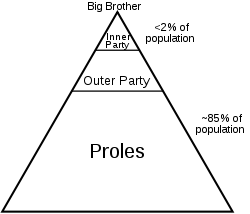
I know how. “The people” will automatically understand that the worst case scenario took place anyway, sort of, irgendwie. They have long been aware of the fact that their reality must be made to comply with your/our ideologically motivated fear agenda, so it ain’t no big thing, this one little slip-up. This type of thing only makes Newspeak stronger, I think, although I can’t claim to be fluent in it yet myself.

Im Rückblick offenbart sich auch, dass die Weltgemeinde in Bezug auf das Unfallgeschehen zumindest in einem Punkt einem Irrtum aufgessen ist: Der “GAU im Abklingbecken”, der global Schlagzeilen machte fand gar nicht statt.”

* You won’t be finding this article online for some reason. I guess it’s not fit for the masses just yet.

News Alert! Here’s the article after all. They publish these online a little later, I guess.

New Angst Study Producing More New Angst

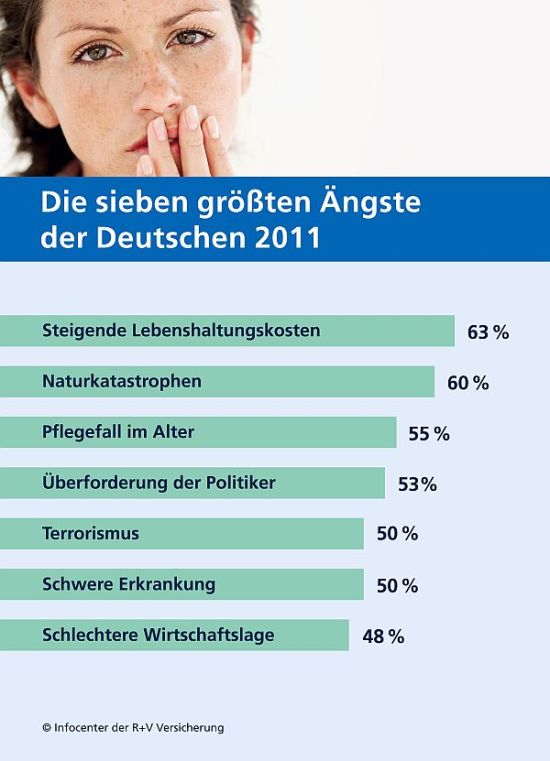
A new study from the R+V Insurance Company (hmmm, an insurance company) indicates that Germans have a whole new list of things to scare the Hosen off them that they didn’t have last year. Is there a pattern developing here or something?

Some of this year’s top favorites (so far) are ecological catastrophes (a perennial hit), the “super worst case scenario” that took place after the earthquake in Japan, the so-called EHEC scandal (go organic sprouts!) and those bloody and yucky revolts still going on down there in the Arabian World.

But what really scares them most is, well, their money. Or the thought of losing it, I should say. Along with their fear of rising energy costs (hmmm, where might those rising energy costs be coming from?), over 70 percent of Germans asked are scared to death of the imminent bankruptcy of a few of them there EU countries down south which will cost the German taxpayer dearly.

Hey. No angst, no fun.

70 Prozent der Deutschen befürchten, dass die drohende Pleite einiger EU-Länder den deutschen Steuerzahler teuer zu stehen kommt – keine Angst erreichte 2011 höhere Werte.

RWE Jobs Next

German utility RWE AG (RWE.XE) Tuesday said it swung to a net loss in the second quarter of 2011, driven mainly by additional costs related to Germany’s decision to exit nuclear energy by 2022 and a tax on nuclear fuel.

The early closure of reactors also resulted in an earnings shortfall, because RWE sold forward the electricity that should have been produced in its two shuttered reactors. To meet its supply obligations the company now has to produce that electricity in more expensive plants or buy power on the market, both of which hurts generation margins.

Bad Jobs Must Go

Wow. Even the Brave New Non-Nuclear World (in Germany) demands its tribute.

10,000 jobs at Germany’s energy giant Eon will have to go, for instance. But these folks will gladly take on this burden because its what “the people” want. Unfortunately, only about one third of those gladly taking on the burden will be German employees, but you can bet that there will be  further opportunites for them to excel in the very near brave new future.

Das sind mehr als zehn Prozent der gesamten Belegschaft. Damit würde der Sparkurs des Konzerns viel härter ausfallen als bisher bekannt.