8000 Jobs For A Better World

For a better dream world, I should say.

You know, for a better dream world without nuclear energy? Germany utility RWE plans to cut costs – and 8000 jobs – as it trys to come to grips with Germany’s decision to phase out nuclear power by 2022 – and then continue to import it´s nuclear power from France and others instead.

These 8000 jobs will just be the start of it, of course.  But aller Anfang ist schwer, as the Germans say: The first step is the hardest. It will get a lot easier firing folks once “the movement” gains movement, I mean progresses.

Germans Puzzled By Rising Electricity Prices

They are also puzzled about the increased number of “mini-blackouts” taking place across the land.

And no one can properly explain these mysterious phenomena, although the Internet portal Verivox gave it a halfhearted try: The increased share in the costs for renewable energy and the ten percent wholesale energy price increase which resulted after the shutdown of eight nuclear power plants this sommer are responsible.

To be fair, electricity prices rise here very year. To be unfair, most German media and the poltical elite refuse to admit that the price increases now taking place are a direct result of their hysterical nuclear phase-out Aktionismus (politicking).

Als Grund gab Verivox die gestiegene Umlage für die erneuerbaren Energien sowie die Erhöhung der Großhandelspreise an, die für rund 15 Euro Mehrkosten im Jahr verantwortlich sein werden. Die Großhandelspreise waren nach der Abschaltung von acht deutschen Atomkraftwerken im Sommer um rund zehn Prozent nach oben geschossen.

Fukushima Goes Broadway

Sort of. Remember Fukushima? That Japanese Super-GAU (nuclear worst case scenario) that, well, never happened? You know, the one after that earthquake in Japan that managed to shut down 8 nuclear power plants in Germany (and could you imagine having to explain that to a visitor here from outer space?)?

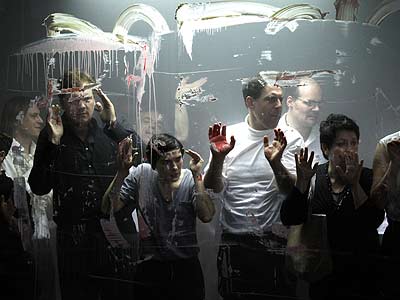
Well, the German intellectually correct caste is bound and determined never to forget (one of their favorite pastimes) and that is why they are now making even more theater about the Fukushima Theater (Theater machen means kicking up a fuss here) by bringing out a worst case scenario theater piece addressing this epoch-making event. It’s called “Kein Licht” meaning No Light. And no, it is not a musical.

Needless to say, this is German highbrow theater vom Feinsten (at its best). And it starts with the title, I find. It’s so ambiguous or something. Although, on the other hand, what else could they call it other than No Light? The freakin’ power plant just got turned off (the loss of light connected with such an action being a logical consequence German nuclear energy opponants have not yet managed to properly address).

But screw the title, the main thing is that this production creates “an atmosphere of total anxiety.” I mean, why else whould a German theater-goer go and see it otherwise? You know, it’s a production with lots of darkness and water and slippery mud and rubber boots and all the other stuff that happens right after a nuclear catastrophe in Japan that never took place. And nudity too, I assume. All German highbrow theater pieces have naked people in them at one point. That’s just what they do here. Although you might think that with the play being called No Light nudity might not have the desired effect, which is supposed to be loud yawning, as far as I can tell.

And the message? Some Künstler say it is an attack upon the media and other fear industrialists (see the Greens & Co.) who are willing to exploit the suffering of others and create panic to increase their sales and thus make a lot of money and/or influence. You know, it’s a critique on those who misuse a serious issue like this to scare others for their own self-aggrandizement and profit. So make sure to buy your tickets early.

Es ist ein Schwall von Texten, die meist in keinem Zusammenhang stehen.

Green Electricity Threatening Energy Turnaround

Yeah, I know. You thought that Germany’s Energiewende (energy turnaround) was synonymous with green or eco-power (I did too). But if you listen to what some scientist types are saying (Rheinisch-Westfälischen Institut für Wirtschaftsforschung or RWI, for instance)–and you won’t, and nobody else will either–the present state of renewable energy in Germany is so clearly deficient and so way too costly (especially when it comes to generating solar energy) that they recommend rethinking the whole big turnaraound thang (not that all that much thinking had gone into it in the first place or anything, that rethinking part was just a figure of speach).

Some of these folks are even starting to call this mess Der große Solarschwindel (The Great Solar Energy Scam). But, like I said, nobody is particularly interested in hearing about things like this. Or do you want the Green Shirts to come knocking on your door one night? And after all, money is no object here. It never is when it isn’t your own.

Es bestehen derzeit in Deutschland so große Defizite in Bezug auf Leitungsbau, Speicherkapazitäten und bei der Vernetzung mit den europäischen Nachbarn, dass es vorerst nicht ratsam erscheint, mit dem Ausbau regenerativer Stromerzeugungskapazitäten fortzufahren.

A Country Named Sue

You sue, I sue, we all do (sue). And here I thought Germany was the land of Konsens (consensus – not common sense). At least when it comes to doing this nuclear phaseout thang, I mean. Fooled again.

OK, it is logical and predictable that Germany’s power companies now have hurt feelings and are preparing to take legal action against the government’s decision to shut down their nuclear power plants because, well, the government is shutting down their nuclear power plants.

But what about all the thousands of lawsuits being prepared by power-line, wind energy and other regional resistance group apponents the nation over set to flood the lawsuit market once these big honkin’ power-line thingies start going up? You know, the power-lines that will transport the good offshore wind farm energy from the north to the bad industrial south?

Why can’t we (as in you) learn to live together in simple peace and harmony? Now that the nuclear power dragon has finally been slain, I mean. Come on, folks. Join hands, form a circle, sit down and talk.

Specifically, they will invoke Article 14 of the German constitution, which addresses the question of whether the companies’ assets are being expropriated, and if they are therefore entitled to compensation. After that, the amount of compensation would be negotiated in civil courts. According to internal calculations, the industry envisions a potential sum of €20 billion ($29 billion). The burden would ultimately fall on taxpayers.

Cukes, Kooks and Nukes

I tell you, DANGER is everywhere you look these days. If it’s not deadly organic cucumbers (sorry, Spain, we didn’t mean to ruin your cucumber industry with a false alarm like that, no hard feelings, OK?), it’s freakin’ Ikea alarm clock attacks by “The Easily-Broken Kids Room Furniture Liberation Army” in the Benelux (thanks, Joe).

And then of course there’s the ongoing, ever-growing radiation alarms after the Japan Nuclear Crisis in, uh, London and New York.

Stop the world I want to get off or something.

“Whatever the radiation in Tokyo at the moment, you can be fairly sure it is lower than natural background levels in many parts of the world.”

No good NIMBY-pamby protesters!

Are we having an energy revolution yet?

Although there is a long way to go before construction can begin on the high-voltage transmission lines, the “regional resistance” that the experts colored on their map has already begun to materialize.

There are obstacles everywhere. Either the landscape is so densely populated that it is poorly suited for big infrastructure projects, or it is so devoid of people that it should be preserved precisely for this reason.

The tactics of the power-line opponents are simple and perfectly understandable. The more arguments that can be presented against the project, the more likely it is that the future route will run further away from one’s own community and closer to the neighboring village instead.

Fortunately for the opponents, German law offers plenty of ways to keep the power masts at a good distance.

Saving birds and bats from the power lines, protecting gliders, a festival of bureaucracy. It’s all here, people.

You can tell this guy’s not German

Sure, his opinion may have been published in the Spiegel (The German People’s Cube), but this otherwise reasonable and balanced assessment of nuclear energy in the New Age of Post-Fukushima Germany has some major flaws in it, all of them having to do with thinking it possible that the German response to Fukushima could ever be “thoughtful and considered, instead of emotional and political.”
Many people have already formed solid opinions and only take into account what supports their views. (This is called confirmation bias, by the way.) But many of these beliefs are irrational and only fed by the many figures, measurements and limits being made public, which hardly anyone can make sense of.

This can be seen very clearly in the current situation in Fukushima. The Americans have recommended that all citizens evacuate the area within an 80-kilometer (50-mile) radius of the stricken power plant. The Germans have moved their embassy to Osaka. Even people who are really well informed have left Tokyo in the belief that you can never be careful enough.

Though I can understand this reasoning, it’s wrong. What’s more, it sends a devastating message to the Japanese who have to stay. They have started to distrust their own government, and fear is spreading. This is a terrible side effect of this excessive concern — and the panicked reaction — in Germany.

Indeed, it is clear that the major long-term issues with an accident at a nuclear power station are not medical; instead, they are political, psychological and economic. Given these circumstance, the German response to the Fukushima accident needs to be thoughtful and considered, instead of emotional and political. It should be based on a consideration of energy needs for the next several decades and a careful assessment of benefits and risks of alternative energy sources. If such an analysis is done, I suspect nuclear energy will come out in a favorable light.

PS: Thanks for your comment on How do you keep the hysteria going?, A.K. Strange how that very thought crossed my mind too. More people died in this one smashup than have died (or most likely will die) due to the Fukushima catastrophe. You don’t and won’t see anybody getting hysterical here about driving too fast because of this (speed is always involved in accidents like this).