Although nobody really wants to go, so just pick them up at the gate.
This non-apology tour is just like last year’s non-apology for the migrant madness tour, only different. “Denial is not just a river in Egypt anymore.” – Angie.
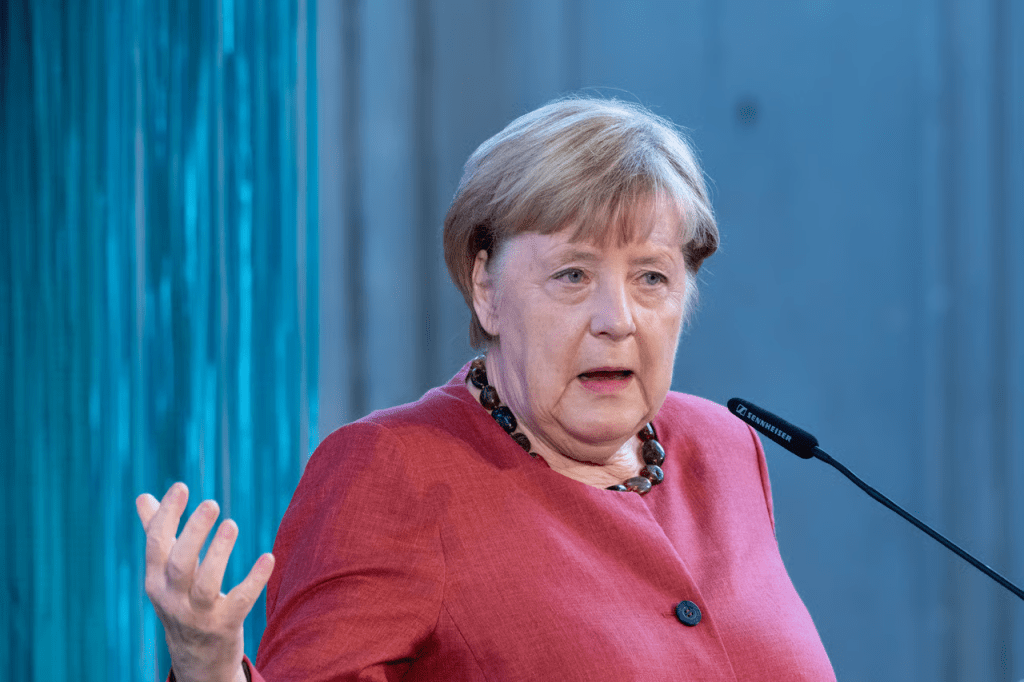
Angela Merkel’s non-apology tour – The former chancellor refuses to reckon with her fraught legacy on the war in Ukraine, instead invoking Covid and a missed chance for talks.
Berlin calls for strengthening defenses without falling into Putin’s “escalation trap” – The German Minister of Defense, Boris Pistorius, said Sunday that Germany must strengthen its defense capabilities, particularly against drones, while avoiding falling into what he called “the escalation trap” set by the Russian president Vladimir Putin.
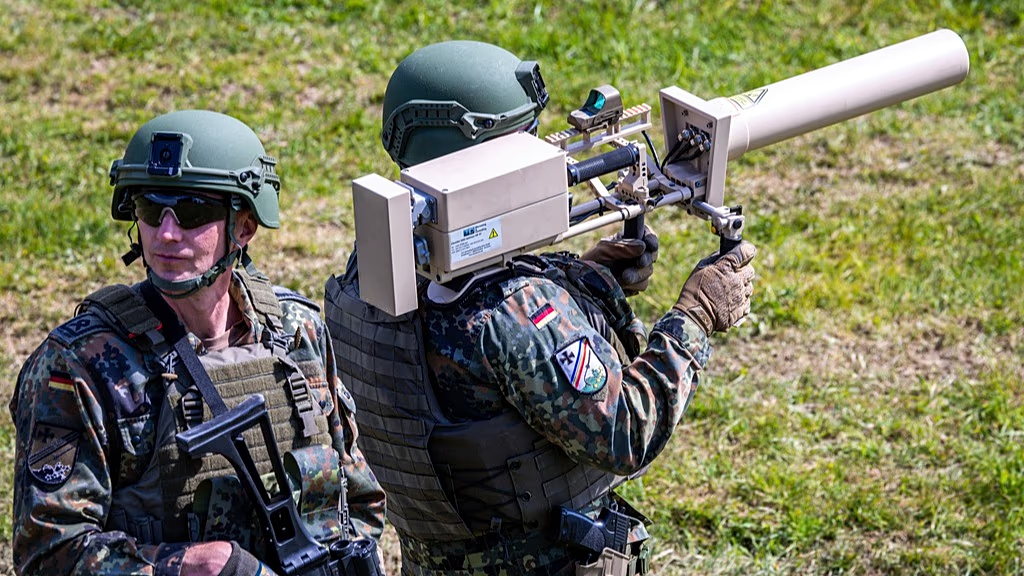
During a defense exercise in Hamburg, the minister stressed the need for Berlin to invest in anti-drone and electronic jamming systems, as incursions into European airspace have increased since the start of the war in Ukraine.
“We must build strong defenses, but without responding precipitously to every provocation. This is exactly what Putin wants: a spiral of reactions that would lead to a direct confrontation,” Pistorius warned.
Test reactions and agitate – According to security authorities, the recent drone flights in Schleswig-Holstein are not so much for espionage as for other purposes. The perpetrators presumably also want to send a warning...
Last week, drones flew over a power plant in Kiel, the university hospital, the Thyssenkrupp marine division’s factory premises, the state parliament in Kiel, and other buildings.
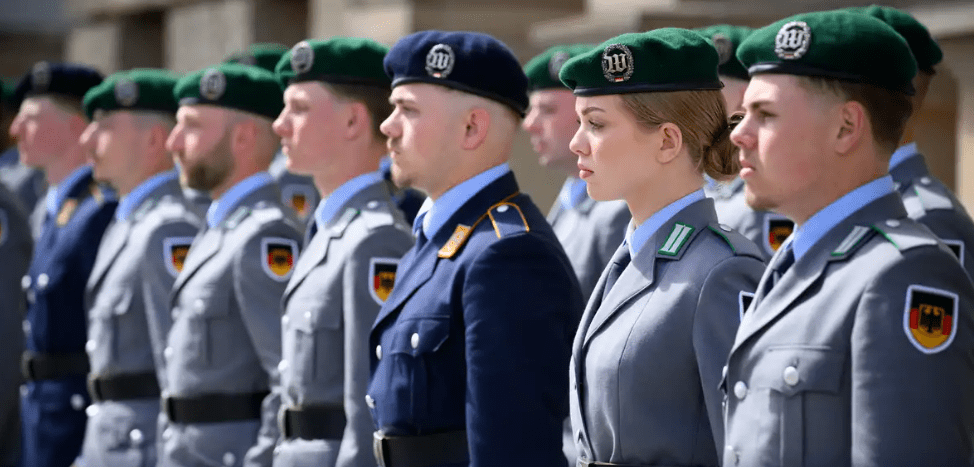
Germany debates return to compulsory military service – As Germany adapts to a volatile geopolitical landscape, attention has turned to filling the ranks of its armed forces. Among Germany’s youth, attitudes towards the Bundeswehr have been shifting…
A new draft law aims to boost Bundeswehr troop numbers by surveying 18-year-olds — mandatory for men, voluntary for women.
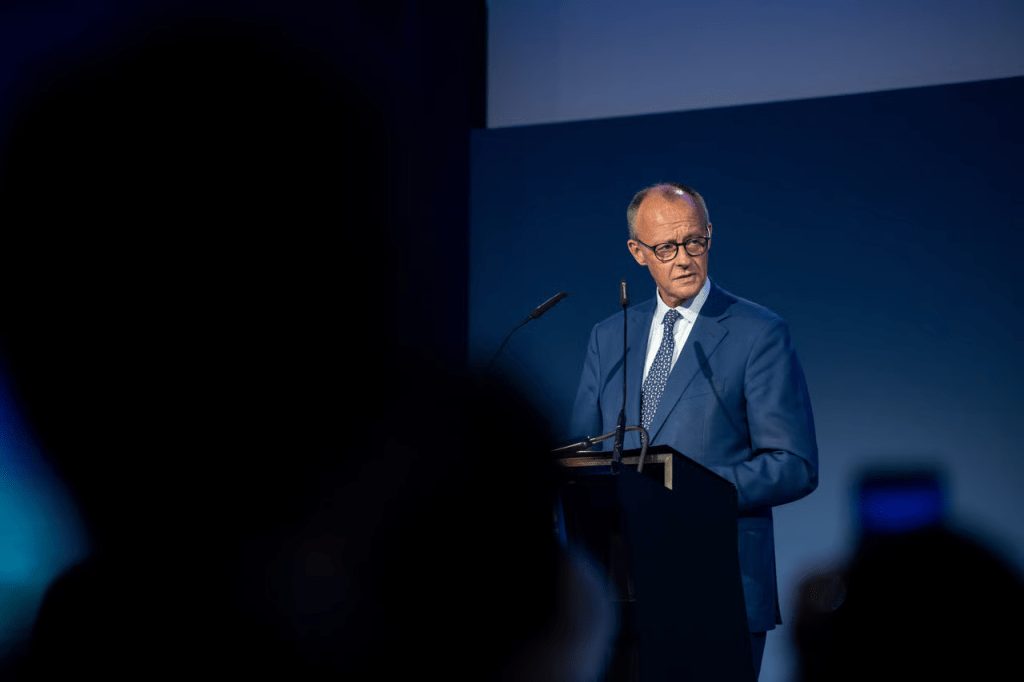
Germany’s Merz warns against ‘false nostalgia’ over US alliance – The chancellor’s comments show European leaders are girding for a future in which the transatlantic alliance is no longer the bedrock on which the continent’s defense and economy stand.
“We must face the fact that our relationship with the U.S. is changing, The U.S. is reassessing its interests — and not just since yesterday. And so we in Europe must also adjust our interests, without false nostalgia.”
Duh. Because the Bundeswehr cannot shoot them down.
They don’t have the means.
Russian spy drones over Germany: Why the Bundeswehr cannot shoot them down – Russia uses surveillance drones over eastern Germany to monitor Western arms deliveries to Ukraine. German authorities are struggling to counter these espionage activities.
Russian surveillance drones are conducting reconnaissance flights over eastern Germany to track arms shipments to Ukraine, with over 530 drone sightings recorded in the first three months of this year alone, according to Western intelligence services.
They track the ever-changing routes of European military transports to identify which weapons will soon reach Ukraine, where new war equipment will be delivered, and when new ammunition will arrive at the front.
The best part is that there are never any consequences… Right? Even when spending the money you don’t have is never actually spent.
Germany’s borrowing spree plans face a reality check – Investors would be wrong to overstate concerns about a debt surge by the country.
Germany has had an abrupt awakening on the need to increase defence spending. The country enjoyed an oversized peace dividend for years: before the Berlin Wall fell, west Germany spent almost 3 per cent of GDP on defence. In the three decades after 1993 that ratio dropped to around 1.2 per cent annually. Military capabilities fell commensurately.
Since Russia’s attack on Ukraine and the election of a US president given to venting misgivings about European allies, a hectic scramble has ensued to make up for lost time. As chancellor, Olaf Scholz declared a “Zeitenwende” (or historical turning point) and parliament approved a €100bn debt-financed special fund for defence spending…
Nevertheless, markets would be wrong to overstate the German debt surge. The government’s ambition will probably be thwarted when the plans get in contact with reality. Appropriating borrowing permission is much easier than actually spending it. Scholz’s military special fund is a case in point. Up to April, halfway through its life, only around a quarter of the money has been disbursed.
But we’re just stretched too thin at the moment for the past forty years.
Germany likely too stretched to provide troops for Ukraine, foreign minister says – Johann Wadephul’s comments come as the U.S. and European nations discuss security guarantees for Kyiv as a core element of any potential peace deal.
But please keep doing whatever you’re doing by keeping Europe out of this.
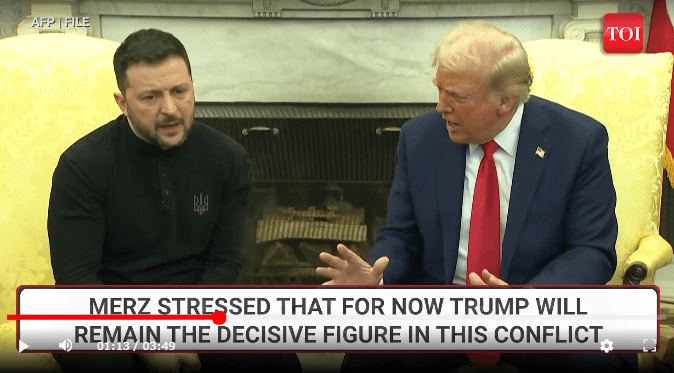
German Chancellor Merz Backs Trump Peace Push, Calls For Trilateral Meeting With Putin – German Chancellor Friedrich Merz has backed Donald Trump’s push for a peace deal with Ukraine, saying a swift settlement could outweigh a ceasefire. In interviews, Merz revealed Trump pledged U.S. security guarantees for Kyiv and urged a trilateral summit with Putin, Zelensky, and Europe’s involvement. While EU leaders push for a role, Washington remains the decisive force, with Kremlin aides cautious and U.S. allies pressing Europe to step up.
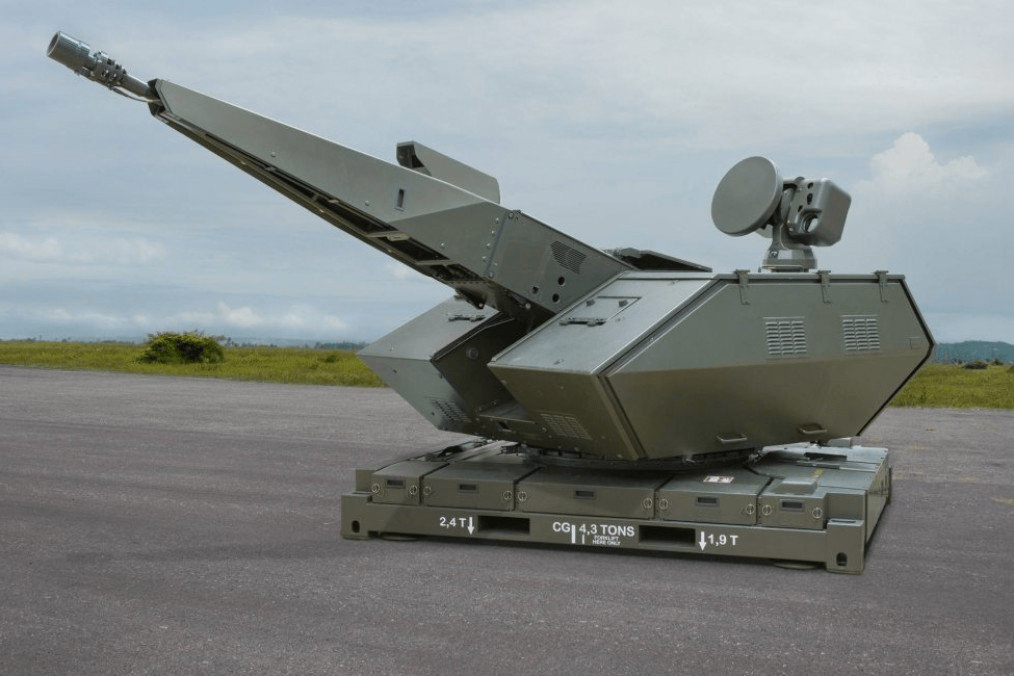
Germany’s Drone Killer in Action: Ukraine Deploys Skynex to Destroy 7 Russian Shaheds Overnight – The Ukrainian Air Force has released footage showcasing the successful operation of the German-made Skynex air defense system against Russian Shahed-type loitering munitions.
According to Ukraine’s Air Force Command on July 12, the Rheinmetall-developed Skynex anti-aircraft artillery complex has demonstrated consistent effectiveness in intercepting enemy unmanned aerial vehicles (UAVs).
The time and location of the intercepts were not disclosed, but officials confirmed the system’s performance has met operational expectations.



 Observing Hermann