We will tax them in the brothels, we will tax them on the street, we shall never surrender!

This is yet another example of German Steuergerechtigkeit (tax justice) in action.

The city of Bonn has introduced a parking meter for prostitutes working on the street. They are now required to pay 6 euros in tax per night to carry out their trade. And they must show their tickets to tax inspectors sent to check (and some of these guys will check again and again and again). This is only fair or something as the girls in the brothels already have to pay.

Hmmm. Is this a progressive tax or a regressive tax? Is it a corporate tax or more like property tax? It’s not a pole tax, is it? An incum tax?

Es drohen Bußgelder bis zu 100 Euro.

“Egalitarians create the most dangerous inequality of all – inequality of power. Allowing politicians to determine what all other human beings will be allowed to earn is one of the most reckless gambles imaginable. Like the income tax, it may start off being applied only to the rich but it will inevitably reach us all.”
RWE Jobs Next

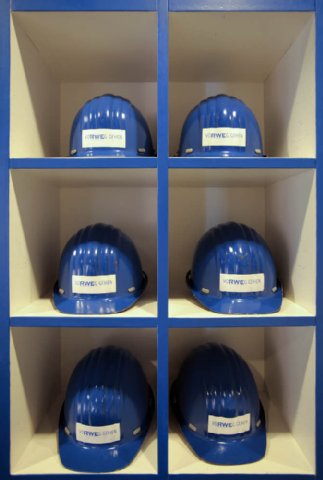
German utility RWE AG (RWE.XE) Tuesday said it swung to a net loss in the second quarter of 2011, driven mainly by additional costs related to Germany’s decision to exit nuclear energy by 2022 and a tax on nuclear fuel.

The early closure of reactors also resulted in an earnings shortfall, because RWE sold forward the electricity that should have been produced in its two shuttered reactors. To meet its supply obligations the company now has to produce that electricity in more expensive plants or buy power on the market, both of which hurts generation margins.

Time To Say Goodbye

To all those jobs in the German nuclear power industry, I mean. It’s phase-out time in more ways than one over here.

It’s coming out that E.ON, Germany’s largest energy provider, is now to go on an extreme austerity diet and is about to “restructure,” as they like to say, know what I’m saying? They’re even talking about closing down the big new headquarters they just moved into a year ago.

But hey, it’s all worth it. No pain no gain or something. And don’t worry, there are no other hidden fallout issues here, either.

Of 17 German nuclear power plants, half are now turned off; all of them will be shut by 2022. That’s a loss of 22 billion euros in profits.

Germany’s Latest Contribution To The Arab Spring

These must be special Panzer for Peace or something, these 200 ultra-modern Leopard battle tanks Germany is now prepared to supply to Saudi Arabia.

This is a dramatic reversal of Germany’s decade-long policy of not furnishing that zany authoritarian kingdom with heavy weapons and is clearly designed to send a strong message to freedom-loving Arab protesters everywhere (the Saudi military recently helped put down protests in Bahrain, if you recall).

Whether that is the right message or not, that’s another question.

According to the Stockholm International Peace Research Institute (SIPRI), the main buyers of German weapons systems in the years 2006 through 2010 were:

    Greece (with a share of 15 percent)

    South Africa (11 percent)

    Turkey (10 percent)

    South Korea (nine percent)

    Malaysia (seven percent)

SIPRI said that Germany advanced from fifth to third place among the biggest arms sellers between 1998 and 2009, even though a previous center-left government pledged in 2000 to pursue a “restrictive'” policy on exporting defense technology.

Guns R Us

How magnanimous or something. Now that NATO is running out of munitions to use in the Libya conflict (go Europe!), Germany has decided not to obstain from sending weapons to its allies.

The positive response to the politically sensitive demand is another concession to its allies by the German government, which has been heavily criticized in recent weeks because of its Security Council abstention in the March vote, which resulted in a resolution authorizing the use of force to protect Libya’s civilian population. Russia and China also abstained.

“NATO allies must pool funds or face decline: Gates”

Green Electricity Threatening Energy Turnaround

Yeah, I know. You thought that Germany’s Energiewende (energy turnaround) was synonymous with green or eco-power (I did too). But if you listen to what some scientist types are saying (Rheinisch-Westfälischen Institut für Wirtschaftsforschung or RWI, for instance)–and you won’t, and nobody else will either–the present state of renewable energy in Germany is so clearly deficient and so way too costly (especially when it comes to generating solar energy) that they recommend rethinking the whole big turnaraound thang (not that all that much thinking had gone into it in the first place or anything, that rethinking part was just a figure of speach).

Some of these folks are even starting to call this mess Der große Solarschwindel (The Great Solar Energy Scam). But, like I said, nobody is particularly interested in hearing about things like this. Or do you want the Green Shirts to come knocking on your door one night? And after all, money is no object here. It never is when it isn’t your own.

Es bestehen derzeit in Deutschland so große Defizite in Bezug auf Leitungsbau, Speicherkapazitäten und bei der Vernetzung mit den europäischen Nachbarn, dass es vorerst nicht ratsam erscheint, mit dem Ausbau regenerativer Stromerzeugungskapazitäten fortzufahren.

German Recycling Destroying Umwelt

Bad consumer! Environmental groups are alarmed and warning that the entire German reusable bottle system as we know it may soon be on the verge of collapse. And it’s all because of you, ihr Flaschen (“you bottles,” a German idiom for losers). You’re recyling the wrong bottles (the plastic ones, these are “bad”).

Horror of horrors or something. Just when Big Green Brother finally got you to robotically return your bottles to the reusable bottle robots located at your local supermarket, like you should, for your own good, you start buying more plastic returnables (thinking that these are as “good” as good old glass ones), causing the share of environmentally friendly bottles in circulation to sink from 70 to 50 percent. If this continues, the whole system will become “unprofitable,” whatever that means.

It seems that Fearless Leader’s five-year plan actually called for a percentage of 80 percent of environmentally friendly bottles to be in circulation so you have all failed miserably and will now have to be reprogrammed at your own cost again so that you know better and start buying the good glass recyclable bottles instead. And returning them to the robots (the machine ones). After you have emptied them, I mean (the bottles). Ah, the hell with it. They’ll explain it all to you better later.

Eine bessere Kennzeichnung und ökologisch differenzierte Steuer werden verlangt.

Germans To End Opposition To New Overhead Power Lines Overnight

As reported earlier, in order to avoid stunting the growth in Europe’s largest economy after its decision to shut down nuclear power forever, Germany must now carry out a massive expansion of it’s electricity-delivery network.

The overhead power lines which will be necessary to connect new offshore wind farms in the north to the factory-rich south and to allow the high-volume energy transfer from French nuclear reactors to cover the shortfall as Germany phases out its own reactors (they only provide a mere 23 percent of the country’s current energy demand) are, however, “unsightly and yucky,” as all Germans know. And they will also probably cause cancer, too (the next DANGER, but that will be another story later, guaranteed).

Fortunately for the German nation, it’s altruistic, selfless citizens have spontaneously decided to sacrifice their own petty personal concerns and grievences in regard to these power lines and win one for the collective common good by immediately ending all opposition to the construction of said yucky power lines and promising to never ever bitch or moan about them ever again, honest.

And if you believe that you can build your overhead power line on some prime Florida swamp land I’ve got for sale for you right here.

A grid upgrade is essential, and Germans must end their opposition to new power lines overhead, energy economics professor Christoph Weber said.