Reality Bites Biting Again

Are we having a mutiny yet?
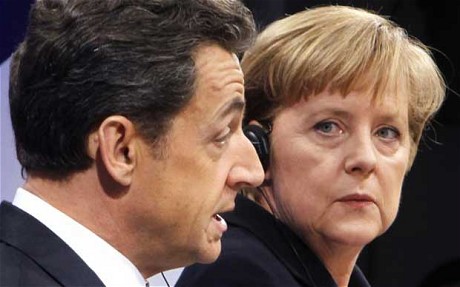
The seething discontent in Germany over Europe’s debt crisis has spread to all the key institutions of the state. “Hysteria is sweeping Germany.” Uh, hysteria is always sweeping Germany. So what’s the big deal this time?

It’s not all that big, really. On September 7, a 440 billion euro EU bail-out fund (EFSF) package (empowering the EFSF to buy bonds pre-emptively and recapitalize banks) goes to the Bundestag and to the country’s constitutional court for a ruling on it’s legality.

German media reported that the latest tally of votes in the Bundestag shows that 23 members from Mrs Merkel’s own coalition plan to vote against the package, including twelve of the 44 members of Bavaria’s Social Christians (CSU). This may force the Chancellor to rely on opposition votes, risking a government collapse.

So? It will pass, of course, because it doesn’t really matter what the man on the street thinks, hysteria or not. This is just another case of what happens when political dreams collide with reality. When the dreamers aren’t held accountable for what they dream, I mean. Happens all the time. No accountability, no problem. Let’s face it: Everybody’s living in the Matrix here and everybody loves it.

“Behind Winston ‘s back the voice from the telescreen was still babbling away about pig-iron and the over fulfilment of the Ninth Three-Year Plan.”
Seven Years Of Famine Or Something

No short-term pain, no long-term gain.

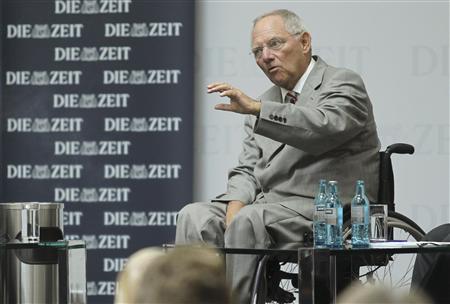
“There might well be seven lean years ahead for the world economy,” German Finance Minister Wolfgang Schaeuble said in a speech at a meeting of Nobel laureates at the University of St. Gallen in Switzerland.

What he really meant was seven years of fiscal consolidation (austerity measures) in Europe (and elsewhere?). This is the key to long-term growth, he says. My, how, uh, German or something.

Jiminy Crickets. As if the ten plagues of late hadn’t been bad enough already, now the Germans themselves (they own Europe, you see, and are recreating it in their own image) are going to inflict the Pharaohs of the EU with seven years of boils, hail, locusts and darkness. In the form of austerity measures, I mean. Or maybe they won’t. Hard to say for sure. Could be that monkeys will fly out of their butts instead.

Muddy Waters knew the deal:

On the seventh hour, of the seventh day,
on the seventh month, the seventh economic witch doctor say:
“He’s born for good luck, and I know you see;
Got seven hundred euros, and don’t you mess with me.

Germany To Save Europe

Or maybe not, hard to say for sure.

But according to billionaire investor and currency-crushing “Man Who Broke the Bank of England” and therefore absolute expert on the subject George Soros (HIMSELF), “Only Germany can reverse the dynamic of a European decay. Germany and other countries with an AAA rating (sorry USA, better luck next time) have to approve some sort of euro-bond regime. Otherwise, the euro will implode.” And nobody wants an implosion around here or anything, I don’t think.

Soros also thinks that German Chancellor Angela Merkel’s reaction to the sovereign-debt crisis has been too slow. Like duh? Even non-billionaire types know that. But hey, it’s just like back home I tell ya, somebody’s got to not do it (got not to do it?).

Die aktuelle Krisenstrategie mit Krediten für Griechenland und einem von verschiedenen Ländern garantierten Rettungsschirm (EFSF) sei untragbar, schrieb Soros. So müssten Italien und Spanien mehr Zinsen für ihre Staatsanleihen zahlen, als sie selber von Griechenland für Stützungskredite erhalten.


Leaderless in Seattle

No, I mean in Europe.

Gee, this sounds just like back home. The president of the Federal Association of German Banks has strongly criticized European leaders in general and German leaders in particular for their lack of leadership in all things debt crisis.

They just let things drift along and then get driven themselves, he says. Like I said, just like back home.

“If the euro really does end up in trouble then it won’t be because of Greece, the EU’s weakest member. The monetary union will then fail because Germany, its strongest member, won’t fulfill its leadership role and says what needs to be done.”

“Wenn der Euro tatsächlich Probleme bekäme, dann nicht wegen Griechenland, dem schwächsten Mitglied. Die Währungsunion würde dann scheitern, wenn Deutschland als stärkstes Mitglied seiner Führungsrolle nicht gerecht wird und sagt, wo es lang geht.”

PS: Speaking of leadership, or the lack of it, the yes we cans seem to be dropping like flies these days.

Pirouettes and Unpredictability

We Germans call the shots here in Europe, sort of.

It’s just that we don’t know what we’re going to be calling next.

“Anybody out there still think Germany is running Europe — or for that matter can or will dominate it in time?

The question fits the moment after the German refusal to vote in favor of allied military intervention in Libya, the government’s pullout from nuclear energy largely for reasons of emotion and domestic political calculation, and its willingness last week to put off possibly decisive steps to end Greece’s debt misery.

Over a period of just about three months, that is a lot of unpredictability and policy pirouettes for allies who might have thought German leadership, on the upside, would be rational, competent and closely bound to the West.”

Debt Expert Deutschland

SPIEGEL ONLINE: Mr. Ritschl, Germany is coming across like a know-it-all in the debate over aid for Greece. Berlin is intransigent and is demanding obedience from Athens. Is this attitude justified?

Ritschl: No, there is no basis for it.

SPIEGEL ONLINE: Most Germans would likely disagree.

Ritschl: That may be, but during the 20th century, Germany was responsible for what were the biggest national bankruptcies in recent history. It is only thanks to the United States, which sacrificed vast amounts of money after both World War I and World War II, that Germany is financially stable today and holds the status of Europe’s headmaster. That fact, unfortunately, often seems to be forgotten.

SPIEGEL ONLINE: What happened back then exactly?

Ritschl: From 1924 to 1929, the Weimar Republic lived on credit and even borrowed the money it needed for its World War I reparations payments from America. This credit pyramid collapsed during the economic crisis of 1931. The money was gone, the damage to the United States enormous, the effect on the global economy devastating.

SPIEGEL ONLINE: The situation after World War II was similar.

Ritschl: But right afterwards, America immediately took steps to ensure there wouldn’t be a repeat of high reparations demands made on Germany. With only a few exceptions, all such demands were put on the backburner until Germany’s future reunification. For Germany, that was a life-saving gesture, and it was the actual financial basis of the Wirtschaftswunder, or economic miracle (that began in the 1950s). But it also meant that the victims of the German occupation in Europe also had to forgo reparations, including the Greeks.

“He warns the country should take a more chaste approach in the euro crisis or it could face renewed demands for World War II reparations.”

Über Euro Über Alles?

Time for a new European currency yet?

“The real threat to the euro isn’t that a weak peripheral country like Greece might withdraw in an effort to devalue its way to competitiveness, but rather that Germany might want to pull out.”

This guy makes a very interesting point. He goes into what he defines as the three main problems that have led Greece, Portugal, Ireland and Spain (not yet, but soon) to the dismal position they are now in and suggests that because of the coming bailout fatique, the only way to save the union is, well, to divide it. This could best be done by introducing an Über Euro in the non-bailout nations.

“Germany’s incentive to leave grows with each bailout, and Berlin could ultimately make a simple calculation that extrication will be less costly than continuing the sacrifice needed to keep the euro.”

To avoid this, one could strike a grand bargain by creating this new currency. “These nations then announce that all obligations between their citizens will henceforth be denominated in the new currency, the Über Euro, which would eventually be managed by the Bundesbank. The Über Euro would initially be set at a value of perhaps 1.3 euros, setting the stage for an export boom for countries that continue to use the euro. This would allow the remaining eurozone members to restore their competitiveness without having their financial systems go bankrupt; it also would allow Germany to sell the plan as saving Europe without breaking up the EU.”

“Should the remaining euro countries continue irresponsible fiscal policies, the European Central Bank (which would continue to be their central bank), would slowly monetize their debt. The euro would continue to depreciate against the Über Euro and perhaps end up as junk currency. …The ECB’s stature would be diminished and its balance sheet probably trashed.”

Sounds like a good plan to me (for world domination?). But I’m not very good with money, either.

There is no inherent reason the European project cannot proceed with two currencies and the citizenry may force this outcome.

PS: Beware, Greece. As the Wall Street Journal puts it, there’s a Wolfgang at your door.

“Die Noch-Supermacht”

Like S&P, Germany ITSELF believes that it’s time for “the yet superpower” to start saving big time and pronto. And I for one would listen (you know, like listening to E. F. Hutton when they used to talk?) because the Germans have had a whole lot of experience in giving good advice like this as of late. Just look at how their recommendations have helped Greece, for instance.

“The danger is that the Americans are still lulled into a false sense of security.”

“Möglich, dass Obama dann (nach der Wiederwahl) wirklich anfängt zu sparen.”

Humanitarian effort here? Nein Danke!

In Libya, maybe. But only if you ask nicely.

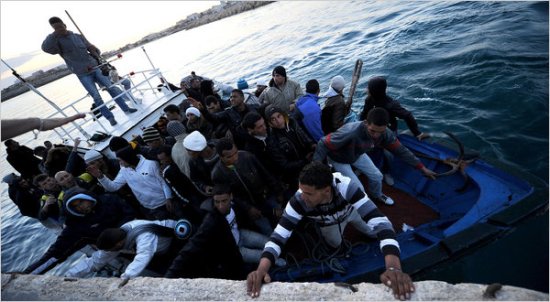
Uh oh. Germany is lecturing about responsibility again (immigrants from North Africa are trying to make their way to Europe for some strange reason these days and the EU is showing EU solidarity again).

Germany criticized Italian officials for undermining the Schengen Agreement, which established passport-free zones, and said Italy should handle the immigrants on its own.

“Within this European solidarity, it is necessary for each individual country to first face its responsibility,” Germany’s interior minister, Hans-Peter Friedrich, said in a television interview.

Libya: Frankreich reagierte mit Spott auf Deutschlands Pläne: Die Bereitschaft Berlins zu einem humanitären Hilfseinsatz in Libyen sei wie eine “mündliche Nachprüfung”, sagte Verteidigungsminister Gérard Longuet am Dienstag vor der französischen Nationalversammlung.

Our D-I-V-O-R-C-E

Becomes final today. Me and little Sar-ko-sy will be goin’ away…

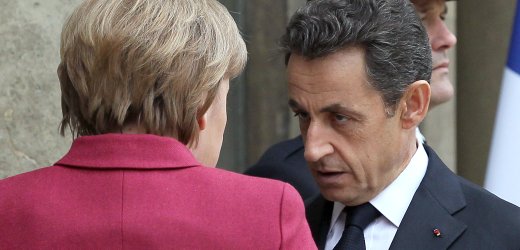
So much for France and Germany as the inseparable couple at the heart of Europe.

The issue here is not direct German military participation. Everyone would have understood if that was not possible. But how could Germany not support a UN resolution backed by its principal European partners, the United States and the Arab League?

Like so many contemporary European politicians, they (in the German government) follow rather than lead public opinion.

“We calculated the risk. If we see that three days after this intervention began, the Arab League already criticises [it], I think we had good reasons.” While French and British pilots risk their lives in action, the German foreign minister is virtually encouraging the Arab League to make further criticism.

Latest Angst Update:
++ Ticker Ticker++Several German container shipping companies have stopped going to eastern Japanese ports including Tokyo for the time being amid fears of radiation++ Ticker Ticker ++Fukushima radiation detected in Germany!!!

And thanks for this cool Angst Republic link, A.K.