Wandel durch Handel

Hey, that rhymes!

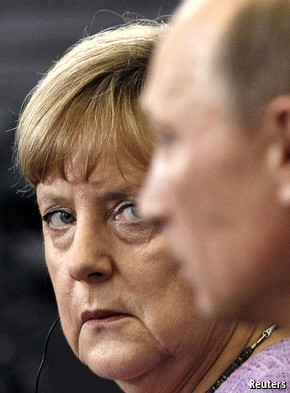
Merkel
It means “change through trade” and applies of course to German trade with Russia. And that policy certainly seems to be working great these days, don’t you think?

There’s more Wandel going on in Russia (and in what’s left of a certain country bordering it) than even the Germans can Handel.

Sanctions and other measures must come step by step, giving Mr Putin chance after chance to stop further escalation.

Give Profit A Chance

Germans just want to live in peace and harmony with Russia, people. Regardless of this Crimea episode or not, I mean. Of course they don’t mind living with the profit coming out of Russia, either. But still.

Russia

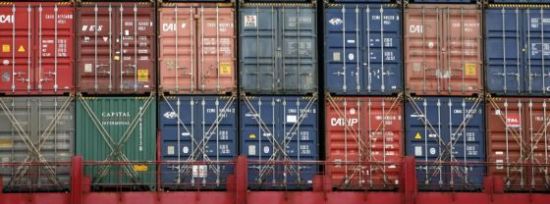
Here’s a fun fact for you: Germany accounts for a third of the EU’s total exports to Russia. So, well, let’s let Europe speak with one unified voice concerning this matter. As long as it is a voice with a strong German accent, I mean.

The Committee on Eastern European Economic Relations, a lobby group representing big businesses, says that 300,000 German jobs depend on trade with Russia, 6,200 companies with German owners are active in Russia, and German companies have invested €20 billion there. No surprise, then, that the committee’s boss calls sanctions “senseless”.

Germany Still Exporting Too Much Stuff

The German export surplus is still threatening the rest of Europe, the European Commission says.

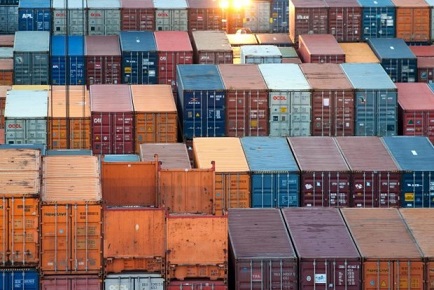
Exports

Berlin disagrees, of course, pointing out that it imports tons of stuff, too.

Germany imports 24 percent of Russia’s natural gas exports, for instance, more than any other European country. It also has an 8.7 percent share of Russia’s foreign trade. Germany is also Russia’s biggest oil market, taking almost 700,000 barrels a day back in 2012. No dependency here. So quit the moaning already, Brussels, and let us get back to work.

“Der Handlungsbedarf ist erheblich angesichts der Größe der deutschen Wirtschaft.”

UN Called In To Protect German Cultural Treasure That Gets You Drunk As Shit

The Reinheitsgebot may be “intangible” here, but the beer behind it sure isn’t.

Beer

German beer brewers have applied to Unesco for their Reinheitsgebot law to join a list of “intangible heritage” that includes Spanish flamenco and Turkey’s Kirkpinar oil-wrestling festival.

Are the blue helmets on the way yet?  Blau also means drunk in German, by the way.

But, as Simpson points out, the Reinheitsgebot law’s inception wasn’t about purity. “It was created to free up the baking grains so that there was less competition with the bakers,” Simpson said. “The bakers were up in arms because they felt the brewers were taking all the grains so the Reinheitsgebot restricted the grains that the brewers could use to malt, strictly malted barley.”

Where Have All The Exports Gone?

The ones that used to go to the euro zone, I mean. Wo sind sie geblieben?

German imports tumbled at their fastest rate in two years in April and exports fell, adding to evidence that Europe’s largest economy is beginning to feel the chill from the euro zone debt crisis.

Hey, I’m all for austerity, too, Germany. But when your European partners are too austere to buy your German products, what happens then?

That’s when Plan B kicks in (the German master plan is well thought out, you know, the diabolical #!?§#!s): Exports to non-EU markets are now on the rise.

“German companies feel that foreign demand isn’t as dynamic as it used to be as the global economy is entering a weaker phase. The weakness originates in the euro area, where the debt crisis can no longer be felt only through budget cuts and austerity but increasingly creates uncertainty about economic prospects, which is reflected in weaker investment.”

German trade with Iran still wunderbar

“Reports indicate Germany’s exports to Iran have reached near the two-billion Euros mark in the first half of 2010.”

“The figure represents a 14 percent rise in Iranian imports from Europe’s largest economy, compared to the same period last year.”

Bei deutschen Behörden und der Industrie stoßen die Pläne der EU-Kommission auf Empörung. Dort werden die Sanktionen gegen Iran als zu massiv und unprofessionell gewertet.