International Solidarity with England

Nine cars went up in flames last night in Berlin.
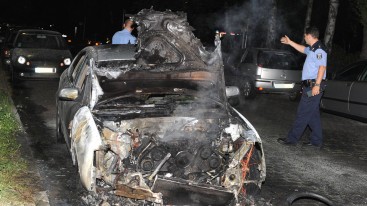
The part that I don’t get: Police say every second burning is politically motivated.

Does that mean that the other half gets ignated just for fun?

No, I stand corrected. I don’t get any of this.

Von einer breit organisierten Tätergruppe aus der linken Szene könne nicht ausgegangen werden, sagte Stefan Redlich, Leiter des Dezernats für politisch motivierte Kriminalität beim Berliner Staatsschutz. Vielmehr seien Einzelne bei den politisch motivierten Taten und Trittbrettfahrer bei den persönlich motivierten Taten verantwortlich.
 

Leaderless in Seattle

No, I mean in Europe.

Gee, this sounds just like back home. The president of the Federal Association of German Banks has strongly criticized European leaders in general and German leaders in particular for their lack of leadership in all things debt crisis.

They just let things drift along and then get driven themselves, he says. Like I said, just like back home.

“If the euro really does end up in trouble then it won’t be because of Greece, the EU’s weakest member. The monetary union will then fail because Germany, its strongest member, won’t fulfill its leadership role and says what needs to be done.”

“Wenn der Euro tatsächlich Probleme bekäme, dann nicht wegen Griechenland, dem schwächsten Mitglied. Die Währungsunion würde dann scheitern, wenn Deutschland als stärkstes Mitglied seiner Führungsrolle nicht gerecht wird und sagt, wo es lang geht.”

PS: Speaking of leadership, or the lack of it, the yes we cans seem to be dropping like flies these days.

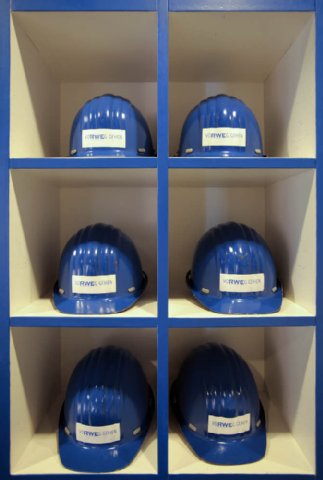
RWE Jobs Next

German utility RWE AG (RWE.XE) Tuesday said it swung to a net loss in the second quarter of 2011, driven mainly by additional costs related to Germany’s decision to exit nuclear energy by 2022 and a tax on nuclear fuel.

The early closure of reactors also resulted in an earnings shortfall, because RWE sold forward the electricity that should have been produced in its two shuttered reactors. To meet its supply obligations the company now has to produce that electricity in more expensive plants or buy power on the market, both of which hurts generation margins.

Time To Say Goodbye

To all those jobs in the German nuclear power industry, I mean. It’s phase-out time in more ways than one over here.

It’s coming out that E.ON, Germany’s largest energy provider, is now to go on an extreme austerity diet and is about to “restructure,” as they like to say, know what I’m saying? They’re even talking about closing down the big new headquarters they just moved into a year ago.

But hey, it’s all worth it. No pain no gain or something. And don’t worry, there are no other hidden fallout issues here, either.

Of 17 German nuclear power plants, half are now turned off; all of them will be shut by 2022. That’s a loss of 22 billion euros in profits.

Too Much Sunshine Here

Too much sunshine here? You know how everybody always likes to bitch and moan about the weather all the time? Well they do over here (when not bitching and moaning about the climate).

And they do so with good reason, too. The summers in Germany are often, like this summer, “suboptimal.”

But that doesn’t mean you don’t have to shoot for a little variety now and then when it comes to the weather bitches and moans (bitches and moaners?). The latest spin is that the first half of this year was the sunniest yet on record. And this too is a bad thing, I think.

This means, uh, I don’t know what it means (does the weather ever mean anything?). Or is this climate again already we’re talking about here (climate is meaningful, I think, right?)?

No, this just means that you can bitch and moan all the more about the current crappy weather because you’re being reminded about how much sunnier it was just a few weeks/months ago.

Seit 120 Jahren hat es nur ein heißeres erstes Halbjahr gegeben, so der Deutsche Wetterdienst. Er warnt zugleich vor künftigen Wetterextremen durch den Klimawandel.

Pirouettes and Unpredictability

We Germans call the shots here in Europe, sort of.

It’s just that we don’t know what we’re going to be calling next.

“Anybody out there still think Germany is running Europe — or for that matter can or will dominate it in time?

The question fits the moment after the German refusal to vote in favor of allied military intervention in Libya, the government’s pullout from nuclear energy largely for reasons of emotion and domestic political calculation, and its willingness last week to put off possibly decisive steps to end Greece’s debt misery.

Over a period of just about three months, that is a lot of unpredictability and policy pirouettes for allies who might have thought German leadership, on the upside, would be rational, competent and closely bound to the West.”

Guns R Us

How magnanimous or something. Now that NATO is running out of munitions to use in the Libya conflict (go Europe!), Germany has decided not to obstain from sending weapons to its allies.

The positive response to the politically sensitive demand is another concession to its allies by the German government, which has been heavily criticized in recent weeks because of its Security Council abstention in the March vote, which resulted in a resolution authorizing the use of force to protect Libya’s civilian population. Russia and China also abstained.

“NATO allies must pool funds or face decline: Gates”

Everything Is So Wonderfulawful Here

Things have never been better here in Germany, we are told. And yet the German nation still can’t seem to get up off the collective couch (the psychiatrist’s kind).

This guy has an interesting take on Germany’s latest “season of angst” or why a prosperous nation has this obsessive need to turn on itself (and those around it).

His bewilderment is uncalled for however, I find. I can only wonder why he wonders. The Germans were, are and always will be collectively schizophrenic, in their own peculiar (cute?) little way. They are permanently krankgeschrieben (off sick) and that couch is, well, where they live.

Yet it is very hard to find anyone here who is happy about this state of affairs. Unlike the great Rhineland industrial booms of the 1950s and 1970s, this one is provoking Germans to turn against their government, against Europe, against technology and growth, against outsiders. It is an inward-looking, self-questioning moment in a country that the rest of Europe very badly needs to be involved in affairs outside its borders.

Green Electricity Threatening Energy Turnaround

Yeah, I know. You thought that Germany’s Energiewende (energy turnaround) was synonymous with green or eco-power (I did too). But if you listen to what some scientist types are saying (Rheinisch-Westfälischen Institut für Wirtschaftsforschung or RWI, for instance)–and you won’t, and nobody else will either–the present state of renewable energy in Germany is so clearly deficient and so way too costly (especially when it comes to generating solar energy) that they recommend rethinking the whole big turnaraound thang (not that all that much thinking had gone into it in the first place or anything, that rethinking part was just a figure of speach).

Some of these folks are even starting to call this mess Der große Solarschwindel (The Great Solar Energy Scam). But, like I said, nobody is particularly interested in hearing about things like this. Or do you want the Green Shirts to come knocking on your door one night? And after all, money is no object here. It never is when it isn’t your own.

Es bestehen derzeit in Deutschland so große Defizite in Bezug auf Leitungsbau, Speicherkapazitäten und bei der Vernetzung mit den europäischen Nachbarn, dass es vorerst nicht ratsam erscheint, mit dem Ausbau regenerativer Stromerzeugungskapazitäten fortzufahren.

Stress and the City

A shocking new study has come to the completely unexpected conclusion that German city dwellers are more “stressed-out” than their country bumpkin counterparts.

Researchers at the Zentralinstitut für seelische Gesundheit (too stressful to translate) found that a certain ganglion of the limbic system adjoining the temporal lobe of the German city brain involved in emotions of fear and aggression (the amygdala) was more fearful and aggressive than your every day German hick’s amygdala is, itself already much more fearful and aggressive than other human amygalas anywhere else in the world you can possibly think of.

“Who would have thought that?” one researcher asked another researcher, brutally shoving him aside in impatient disdain to confront the next one. “I grew up in Berlin and we’re not at all aggressive. That’s a myth. Or it’s just a show. Or do you think you’re big enough to tell me you think that we are?”

Städter erkranken häufiger an Depressionen, Angststörungen, Schizophrenie.