To Mini-Mr. Nothing himself. Wow, and to think that he flew all the way over from Germany just to receive this nothing. But it was “profound” nothing, after all. And that’s certainly better than nothing. So think nothing of it.
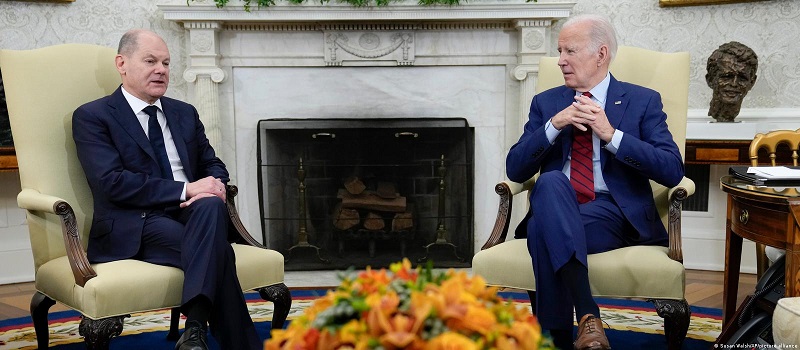
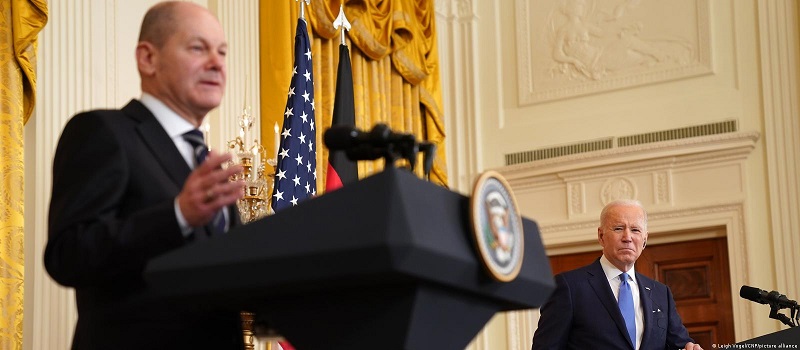
Biden thanks Scholz for ‘profound’ German support on Ukraine – German Chancellor Olaf Scholz and President Biden praised trans-Atlantic unity and vowed to keep up their joint cooperation to support Ukraine during Scholz’s visit to the White House.
Didn’t they just have, like, forty years or something of “feminist foreign policy” under Angela Merkel? And wasn’t Urusla von der Leyen a big German Exportschlager (top export) in the EU feminist foreign policy department?
Look where that got them. But hey, this Annalena Baerbock really strikes me as someone who can finally get this feminist foreign policy stuff down pat. Something tells me that feminist foreign policy is now going to bring peace to Ukraine overnight. All you have to do is ask for it! A man would have never thought of doing this.
Germany announces new “feminist foreign policy” – Germany’s centre-left government on Wednesday announced new feminist guidelines to shape its diplomacy and development work including the creation of a new role for an “ambassador for feminist foreign policy”.
Germany will lobby to ensure women’s concerns are more in focus worldwide, that women are better represented and that the country’s generous development funds are allocated more to projects that tackle gender inequality, according to the guidelines.
Do they mean the Energiewende (the Green renewable “energy turnaround”)?
Oh. They’re only talking about Wirecard. Yeah. That one was pretty cool too. Peanuts compared to the Energiewende fraud, though. But still.
The tech company Wirecard was embraced by the German élite. But a reporter discovered that behind the façade of innovation were lies and links to Russian intelligence.
Olaf Scholz has not delivered on his sweeping vision for a more modern, more active German military.
And anybody who thinks will ever live up to their promises about defense spending is a fool.
Chancellor Olaf Scholz summarized his country’s approach to the war in Ukraine. “Despite all the pressure to take action,” he said, “caution must take priority over hasty decisions, unity over solo actions.” The line provided Scholz’s most explicit defense to date of Germany’s cycle of denial and delay.
A year ago, Scholz announced a special investment fund of more than 100 billion euros to strengthen the German military, but less than a third of those euros have been assigned to contracts. Defense Minister Boris Pistorius recently aired concerns that Germany’s stockpiles have been depleted by its generous transfers to Ukraine. These comments strain common sense when most of the “special funds” remained unspent until December, when lawmakers finally approved the first procurements. This month, Scholz also abandoned plans to establish a National Security Council, a body that would have been well suited to manage an expanded role in the defense of Europe.
A German politician’s unfortunate slip twenty years ago, “children instead of Indians,” certainly didn’t work.
Demographics can be a bitch.
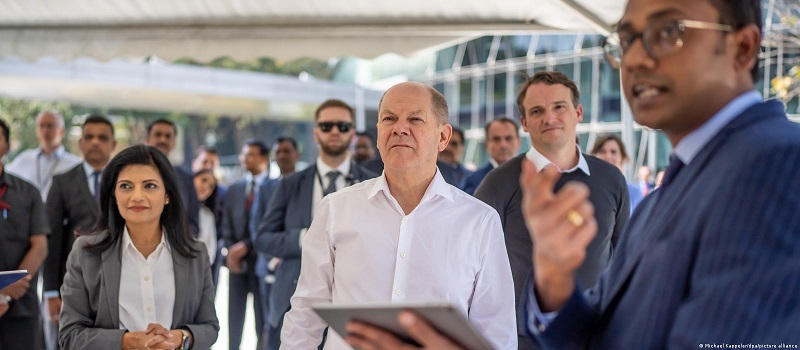
Germany aims to ease visa process for India’s IT workers – Berlin wants to encourage information technology experts from India to come and work in Germany. The plan would be to make it easier for them to come to the country with their families.
German Chancellor Olaf Scholz said on Sunday that his government wants to ease the path for information technology experts from India to obtain work visas in Germany.
While Germany faces a shortfall in skilled worker numbers, India cannot always provide jobs for its large, young population.
Ukraine updates: Germans see arming Ukraine as involvement.
A poll conducted by Germany’s DPA news agency suggests many Germans disapprove of arming Ukraine in its war against Russia. Meanwhile, Russia’s Medvedev denied the country was running out of missiles.
Fifty-one percent of the respondents thought arming Ukraine meant being part of the war, an argument that Russia has been pushing. Meanwhile, 37% disagreed with the statement.
Germany has approved some €2.6 billion ($2.75 billion) worth of weapons and armaments since the start of the war.
Forty percent of those polled considered the amount of weapons support from Germany to be too much, 22% thought it was too little, and 23% thought it was just the right amount.
That means Sunday sermons. As in political sermons that sound nice to those giving them but never lead to anything other than nonbinding resolutions.
Like the one German Foreign Minister Annalena Baerbock gave yesterday at the United Nations – the world’s most popular venue for Sonntagsreden.
Germany’s foreign minister Annalena Baerbock addressed the United Nations General Assembly before a vote for a U.N. resolution upholding Ukraine’s territorial integrity and calling for a cessation of hostilities after Russia’s invasion. Every country, she argued, had a duty to send a clear signal that the war was coming to an end. Addressing the 30 to 40 countries likely to abstain from the resolution, including China, India and South Africa, she noted: “Today each of us has to make a decision to stand in isolation with the oppressor or stand together for peace.”
The U.N. General Assembly then approved a nonbinding resolution Thursday that calls for Russia to end hostilities in Ukraine and withdraw its forces, sending a strong message on the eve of the first anniversary of the invasion that Moscow’s aggression must stop.
The resolution, drafted by Ukraine in consultation with its allies, passed 141-7, with 32 abstentions.
Warning: This is taken from yet another regularly occuring German article about how German bureaucracy is way out of control and somebody needs to finally do something about it but no one ever will of course because everybody here in Germany knows this is precisely the way the Germans like to have it.
Germany’s aging bureaucracy risks undermining ambitions – From immigration to the energy transition, the success of Germany’s biggest economic priorities relies on an increasingly older, paperbound bureaucracy getting its act together.
Turtles from America are spreading – North American freshwater turtles have arrived in Europe with the pet trade. Three species are now native to Baden-Württemberg. For local turtles, the immigrants could become a danger.
And these weren’t the first animal imperialists either. The next thing you know they’ll move up to house pet level and American German Shepards will start taking over.






 Observing Hermann