German unemployment rises slightly less than expected in August – The number of unemployed people in Germany rose slightly less than expected in August, labour office figures showed on Friday.
In seasonally adjusted terms, the jobless figure grew by 4,000 to 2.996 million, while analysts polled by Reuters had predicted an increase of 5,000.
Row over weight of half a loaf leaves German baker with €15,000 bill – A customer complaint over just 10 grams of missing bread forced the Bavarian baker to install new weighing equipment across his shops.
The punch line: German politicians can’t seem to figure out why companies aren’t willing to invest in Germany anymore.
Germany’s auto industry loses over 42,000 jobs in six months – Germany’s struggling automotive industry is facing further pressure as employment in the sector continues to decline.
According to Germany’s Federal Statistical Office (Destatis), the number of people employed at automotive manufacturing companies fell by 42,300, or 5.8%, in the first six months of the year compared with the same period in 2025.
Following the decline, employment in Germany’s automotive industry dropped to 691,500. This is the lowest level recorded since 2005.
It sure is a good thing that German businesses are never run that way.
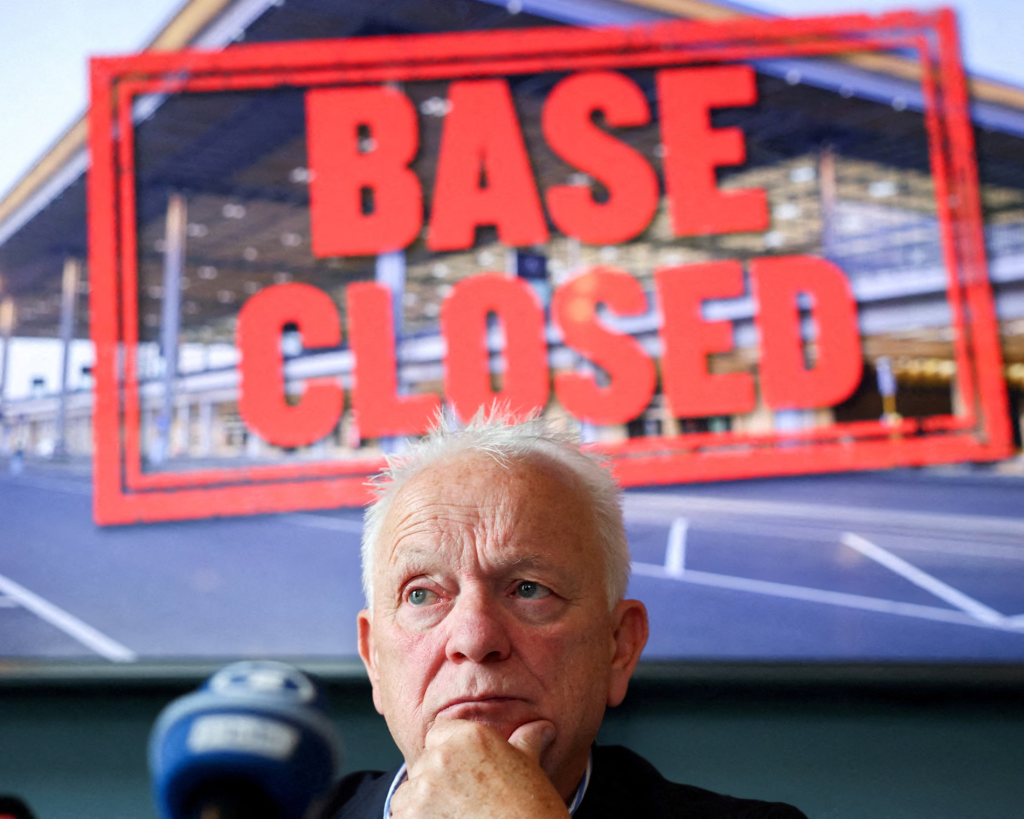
Ryanair to shut Berlin base as it blames rise in German aviation tax – Trade union criticises airline’s plan to halve passenger numbers to the city as ‘purely profit-oriented…’
“German aviation is broken. The government admits that it is uncompetitive, yet there is no strategy to cut aviation taxes or high airport fees – despite Ryanair warning that Germany would lose traffic, connectivity, jobs and trade.
“Since 2019, Ryanair has been forced to close its bases in Frankfurt, Dusseldorf and Stuttgart … in addition to stopping all flights to Dresden, Leipzig and Dortmund.” It said the closures had led to the loss of 13 aircraft from those bases.
The German trade union Verdi criticised Ryanair’s plans as a “purely profit-oriented corporate strategy”.
German Business Sentiment Dives to Lowest Since 2020 as War Hits Outlook – Sentiment is at its lowest level since the Covid-19 pandemic, when lockdowns and restrictions hammered businesses.
Richest countries in 2026: New measure of wealth pushes France and Germany out of top ten – Europe dominates global wealth rankings, but what it actually means to be a “rich country” depends heavily on how prosperity is measured and who benefits from it.
You can use any new measure you want, Germany will always be number one.
Or something. But wouldn’t one step have been enough? Just cut off the money. That would do the trick.
German leaders plan to cut red tape in just 200 steps – When it comes to tackling bureaucracy, why stop at just a measure or two? Premiers of Germany’s 16 states want to go further — so they drafted a 200-point plan to ease the country’s bureaucratic burdens.
The leaders of Germany’ 16 states on Thursday agreed on a 200-point plan to modernize government services.
The country is notorious for its bureaucracy, which limits much official communication to mail and, sometimes, fax. Chancellor Friedrich Merz has made addressing it a priority for the coalition government.
Pay close attention: NOTHING will ever change here.
If you want to properly deregulate, create a new deregulation bureaucracy first. We don’t want anybody to get fired or anything.
Germany’s new deregulation chief vows to be more subtle than Elon Musk – State modernisation minister Karsten Wildberger promises to bring about digital age in country clinging to fax machines.
What’s not to like? This isn’t rocket science for businesses here. For businesses that are still here, I should say.
Germany’s biggest sports retailer considers moving production to China – Intersport eyes spare Chinese manufacturing capacity as Nike and Adidas back away from the country amid trade war.
One of the world’s largest sporting goods retailers is considering shifting production to China, just as brands including Nike and Adidas move production out of the country in response to US tariffs.
‘Crazy’ data rules hit German plans to boost army reserve – Reservists’ association says Berlin has lost contact with almost a million potential reservists.
Strict data protection laws are hindering Germany’s efforts to swell the ranks of the armed forces of Europe’s largest nation, its reservists’ association has warned.
Patrick Sensburg, head of the Reservist Association of the German Armed Forces, said tough German and EU privacy rules meant it could not keep in contact with close to a million people who might help boost the country’s reserve forces as it seeks a stronger role in European defence and security…
Sensburg, a former member of parliament from Merz’s ruling Christian Democrats, added that while some might be unwell or uninterested, if even only a quarter of the 1mn agreed to serve it would be enough to meet the target for reservist numbers.
He said it was absurd that the body responsible for collecting Germany’s annual television fee could contact citizens a few weeks after they had moved house, while he had no way of tracking down people whose names were in the association’s records.