Historical Documents

Now that Guantanamo is history

The latest shocking documents Der Spiegel obtained from WikiLeaks just don’t seem to have that, yawn, special shocking punch they used to have. Not that the other leaks were really all that especially shocking either, but still.

Gee, I sure hope this doesn’t mean that WikiLeaks is history now too.

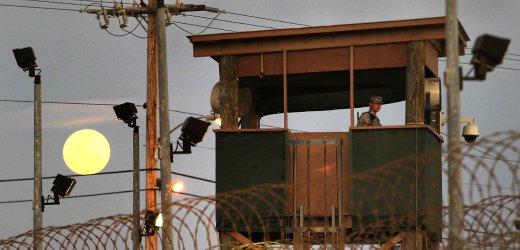
A working group has been reviewing the detainee assessments since January 2009 and has in some cases reached different conclusions to those contained in the files. Thus, the documents that have been obtained do not represent the US government’s current assessments.

PS: Thanks for the Saint Julian link, Joe. My, how transparent.

“Die Noch-Supermacht”

Like S&P, Germany ITSELF believes that it’s time for “the yet superpower” to start saving big time and pronto. And I for one would listen (you know, like listening to E. F. Hutton when they used to talk?) because the Germans have had a whole lot of experience in giving good advice like this as of late. Just look at how their recommendations have helped Greece, for instance.

“The danger is that the Americans are still lulled into a false sense of security.”

“Möglich, dass Obama dann (nach der Wiederwahl) wirklich anfängt zu sparen.”

No good NIMBY-pamby protesters!

Are we having an energy revolution yet?

Although there is a long way to go before construction can begin on the high-voltage transmission lines, the “regional resistance” that the experts colored on their map has already begun to materialize.

There are obstacles everywhere. Either the landscape is so densely populated that it is poorly suited for big infrastructure projects, or it is so devoid of people that it should be preserved precisely for this reason.

The tactics of the power-line opponents are simple and perfectly understandable. The more arguments that can be presented against the project, the more likely it is that the future route will run further away from one’s own community and closer to the neighboring village instead.

Fortunately for the opponents, German law offers plenty of ways to keep the power masts at a good distance.

Saving birds and bats from the power lines, protecting gliders, a festival of bureaucracy. It’s all here, people.

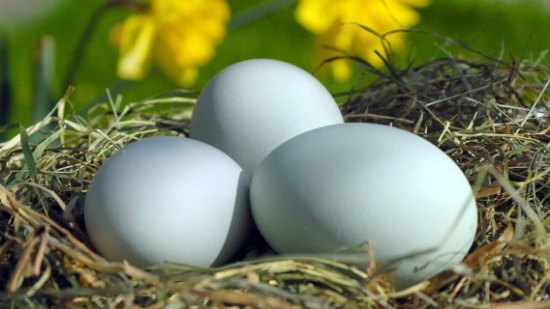
Green Eggs and Ham

Particularly nervous about this, that and the other thing these past few weeks, Germans are now being frightened by their very own Easter eggs.

Greenpeace eggtivists have determined that up to 20 percent of eggs sold in Germany have been contaminated with the dreaded and deadly genetically modified “herbicide tolerant soja bean” or so-called “Gen-Soja” chicken feed. You know, the chickens that lay the eggs eat this scourge of chickenkind first?

Green Germans have reacted accordingly and have now begun to have their chickens produce organically correct and green (literally green) eggs instead.

Sam!
If you will let me be,
I will try them.
You will see.

“No Risk Please, We’re Germans”

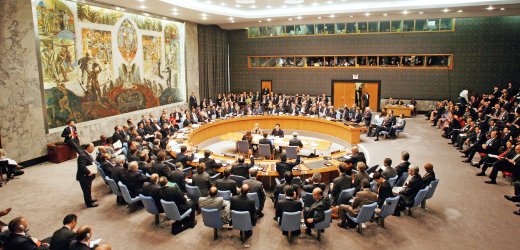
The German skeptics across the political spectrum who continue to describe the actions of the anti-Gadhafi alliance as being “insufficiently conceived” are completely right. The actions were not well conceived. They were born out of necessity, and the first sorties were chaotic because the nations that took action were convinced that they lacked the time to think things through.

They were not out to cleanly and permanently regulate the affairs of Libya through the use of force. They were intent on preventing a bloodbath within a few hours with an untidy, last-minute campaign. Given these circumstances, the idea that Westerwelle could have been the foreign minister of a permanent Security Council member — equipped with veto power — is extremely unsettling.

Germany seems determined to torpedo the international community’s newfound resolve. 

Good Bank Bad Bank

Amerikanische Banken sind böse, deutsche sind gut.

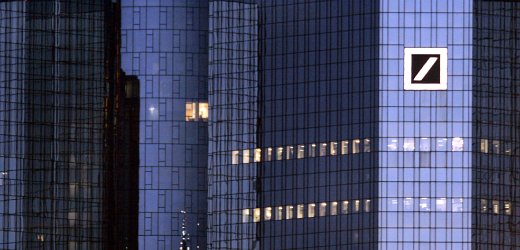
Deutsche Bank AG, whose bets against subprime mortgages helped it weather the financial crisis, pressed to sell a $1.1 billion collateralized debt obligation to clients in 2007 as the co-head of its CDO team foresaw a market slump, a U.S. Senate panel found.

Lippmann (not the co-head but then-top CDO trader), whose bets against the housing market were also described in Michael Lewis’s “The Big Short,” had repeatedly tried to warn co-workers and clients in 2006 and 2007 about the poor quality of the mortgage securities underlying many CDOs, according to the report. The return on his bets against mortgages “was the largest profit obtained from a single position in Deutsche Bank history.”

“Keep your fingers crossed but I think we will price this just before the market falls off a cliff.”

So how do German financial experts react to the big short CDO scam and the crisis that followed? How else? American banks have to take the responsibility for what happened.

“Im Nachgang der Finanzkrise müssen sich amerikanische Banken verantworten.”

U-Turn, I-Turn, We All Turn

Turn, as in spinnen (to spin or, in this case, to be mental). This is another one of those only-in-Germany ones.
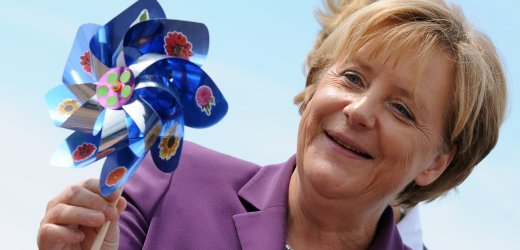
How long has it been since the latest greatest German Wende (turnaround)? Read some of these:

The U-turn on nuclear policy Chancellor Angela Merkel announced last month following the Fukushima accident will involve a massive expansion of renewable energies — as rapidly as possible. She is giving the public what it wants. But the shift will nevertheless provoke a major backlash. Germans may love their green energy, but they also have a growing proclivity towards not-in-my-backyard (NIMBY) lawsuits and referenda.

Many are now asking themselves if the transition to renewable energies will ruin the nation’s countryside.

Germany’s Federal Agency for Nature Conservation is already warning that in the rush to expand renewable energies, nature and wildlife conservation is being put on the back burner.

Germany’s opposition to wind power is well organized. The website windkraftgegner.de (wind power opponents), lists more than 70 protest campaigns.

Opposition is also mounting against the massive power masts that will be needed to transport clean energy across Germany and Europe.

And on and on and on. I don’t make this stuff up, people. Now they’re takin’ it to the streets to protest against renewable energy.

And the Green party’s grand energy strategy after their magnificent triumph down there in Baden-Wuerttemberg last month? Save power.

“We as Greens need to demonstrate our credibility,” national party co-chair Claudia Roth has said. At the same time, though, the Greens are very often active in the local NIMBY protests against the very kind of projects the party backs.
Humanitarian effort here? Nein Danke!

In Libya, maybe. But only if you ask nicely.

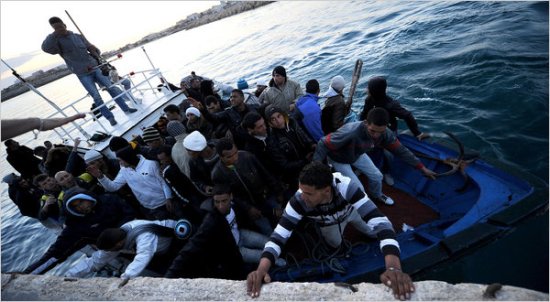
Uh oh. Germany is lecturing about responsibility again (immigrants from North Africa are trying to make their way to Europe for some strange reason these days and the EU is showing EU solidarity again).

Germany criticized Italian officials for undermining the Schengen Agreement, which established passport-free zones, and said Italy should handle the immigrants on its own.

“Within this European solidarity, it is necessary for each individual country to first face its responsibility,” Germany’s interior minister, Hans-Peter Friedrich, said in a television interview.

Libya: Frankreich reagierte mit Spott auf Deutschlands Pläne: Die Bereitschaft Berlins zu einem humanitären Hilfseinsatz in Libyen sei wie eine “mündliche Nachprüfung”, sagte Verteidigungsminister Gérard Longuet am Dienstag vor der französischen Nationalversammlung.