Welfare schmellfare

Oh boy, another non-issue that nobody here is ever going to tackle.

People are all up in arms here about a comment made yesterday by FDP boss/foreign minister Guido Westerwelle. They’re upset because he pointed out that nearly 60 percent of Germany’s federal budget is spent on Sozialausgaben (welfare/social-security payments) and that the whole damned system needs to be properly addressed and debated.

So why is everybody so upset? That’s easy: It’s because early 60 percent of Germany’s federal budget is spent on Sozialausgaben (welfare/social-security payments) and the whole damned system needs to be addressed and debated.

It’s just that they don’t like to be reminded of this, you see. This “debate” he’s talking about should have started some thiry years ago, of course (think, say, of what Bill Clinton did to welfare in the 90s). But it won’t be debated in Germany now either.

And this is just a proposed debate, mind you. Imagine the uproar if somebody here ever actually tried to change anything.

Wir dürfen nicht zulassen, dass der, der arbeitet, der Dumme ist.”

Fawning reviews are fawning reviews

Despite the, well, you know. Hey, plagiarism was gestern (yesterday). Today they call it mixing.

The publication last month of her novel about a 16-year-old exploring Berlin’s drug and club scene after the death of her mother, called “Axolotl Roadkill,” was heralded far and wide in German newspapers and magazines as a tremendous debut, particularly for such a young author. The book shot to No. 5 this week on the magazine Spiegel’s hardcover best-seller list.

Iran paranoid about Google now too

Not unlike German fears about privacy when it comes to Google’s eerie Street-View technology – while gladly developing and using Street-View-type products of their own – Iran’s freely elected government sort of is also frightened about privacy when it comes to one of Google’s other creepy technologies: eMail (and that’s e for evil). And yeah, of course I know that Google didn’t invent eMail. But still.

The Iranian powers that be (or powers that is, if you prefer) are clearly concerned about privacy matters here; keeping their own damned privacy as private as inhumanly possible, that is. Otherwise, everybody out there knows what the hell they’re up to, get it?

So now following the German example, word is out that the Iranians are actually planning to introduce a new eMail technology of their own. It’s code name is MMail, I think (GMail war gestern). Or Mullah-Mail, if you prefer.

Es ist einer der populärsten E-Mail-Dienste in Iran – doch nun will die Regierung Googles GMail-Service offenbar sperren lassen. Laut einem Bericht des “Wall Street Journal” soll stattdessen ein eigenes Mail-System aufgebaut werden.

Where’s my Kuchen?

I want to eat it too.

“If Berlin pursues this new stance*, the Center for European Reform report argues, it will allow Germany to have its cake and eat it. Germany would be contributing to President Barack Obama’s quest for nuclear disarmament, the report says, but could still rely on the NATO countries that deploy the remaining 180 U.S. weapons — Belgium, Italy, the Netherlands and Turkey — to provide it with a security umbrella.”

* Demanding that the remaining American nuclear missles be removed from Germany but still expect the protection of American nuclear weapons.

“Die letzten Nuklearwaffen in Deutschland sind ein Relikt des Kalten Kriegs. Sie haben keinen militärischen Sinn mehr.”

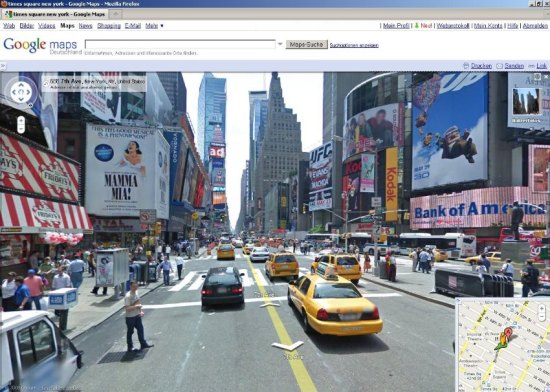
Germans? Hysterical about Google’s Street-View?

How you figure?

That German companies like the map manufacturer Tele Atlas or the small business Panogate (sightwalk.de) in Cologne do the same damned thing that Google does – make fotos of/in cities in order to publish them in the Internet and use them for navigation systems – that doesn’t matter here. What matters here is that a particularly awful and ominous “data octopus” is doing it.

Ob Microsoft (preview.local.live.com), der Kartenhersteller Tele Atlas oder das kleine Unternehmen Panogate (sightwalk.de) aus Köln, sie alle fotografieren systematisch die Städte dieser Welt – mal aus dem Flugzeug, mal aus dem Auto. Auch sie veröffentlichen diese Bilder im Internet oder nutzen sie für Navigationssysteme. Wenn sich die öffentliche Debatte nun auf Google konzentriert, dann wohl nur, weil sich mit diffusen Vorwürfen gegen den vermeintlichen “Datenkraken” leicht Ängste schüren lassen.

It’s quite simple, really. Germans, just like everybody else, really love angst. Only they love it here so much that they acually spell it with a capital A. You know, with an A like they use for Amerika (sorry, US-Amerika, of course).

Fast hysterisch wirken hingegen die Warnungen vor dem Verlust der Privatsphäre. Was ist damit gemeint? Die Privatsphäre der Hausfront? Google und Co. fotografieren grundsätzlich nur das, was jeder Fußgänger auf einer öffentlich zugänglichen Straße sieht.

Iran using tricks?

Really? Who would have thought that? After all these long years, I mean.

It must have been those tricky Avatar 3D glasses that finally tipped the Germans off.

Westerwelle told Deutschlandfunk radio that Iran would be judged by its actions and not by its words, and that only a serious return to negotiations would prevent further measures such as sanctions being imposed on the Islamic Republic.

A star is born

Actually, it’ll end up being around forty or so later this year. Not terribly original, the idea, but still.

Who needs Hollywood, huh? Marlene Dietrich will be the very first US-Amerikanerin star ever to be immortalised on the streets of her home town on a brand new “Walk of Fame” which will be unveiled during the Berlin film festival this coming week.

Ten stars will be awarded a star each year during the festival festivities from here on out, all with a link to Hollywood, I mean German culture.

Like walk the talk already.

Self-intrest rates sure are high in Europe these days

Well they sure are here in Germany (see Greece).

“Germany’s heavy reliance on exports has already been controversial on the international stage, in a similar way to the Western world’s growing frustration with China over its dominance in cheap exports.”

“We can’t go back to the era where the Chinese or the Germans or other countries just are selling everything to us; we’re taking out a bunch of credit card debt or home equity loans, but we’re not selling anything to them,” Obama said.

Privacy?

Ever see Father Knows Best? Well over here it’s the state that always knows best, especially when it comes to dealing in stolen goods.

If Big Bruder wants to buy stolen secret Swiss bank account data on 1,500 alleged tax evaders from an informant, that’s OK here (Germans have always had a Herz für Informanten – a warm spot in their hearts for informers), but with Google, let’s say, by virtue of its very success here in Germany – having reached a substantially larger market share here over its rival search engines than it has elsewhere – this very success places it under immediate suspicion. Informants aren’t even necessary. Privacy is automatically in danger.

And then Big Bruder’s lawmakers, regulators and consumer advocates will invariably come in to “fix it” (fix what isn’t broken), all in the name of privacy of course.

With Google, nobody’s dealing in stolen goods – or are they? No, that’s eBay. But in both cases, whether it’s about Swiss bank accounts or Google’s success, one always has to play it safe here. It’s always guilty until proven innocent. Father knows best.

Google’s border-straddling scale and its brash ambitions raise alarms with some European politicians.