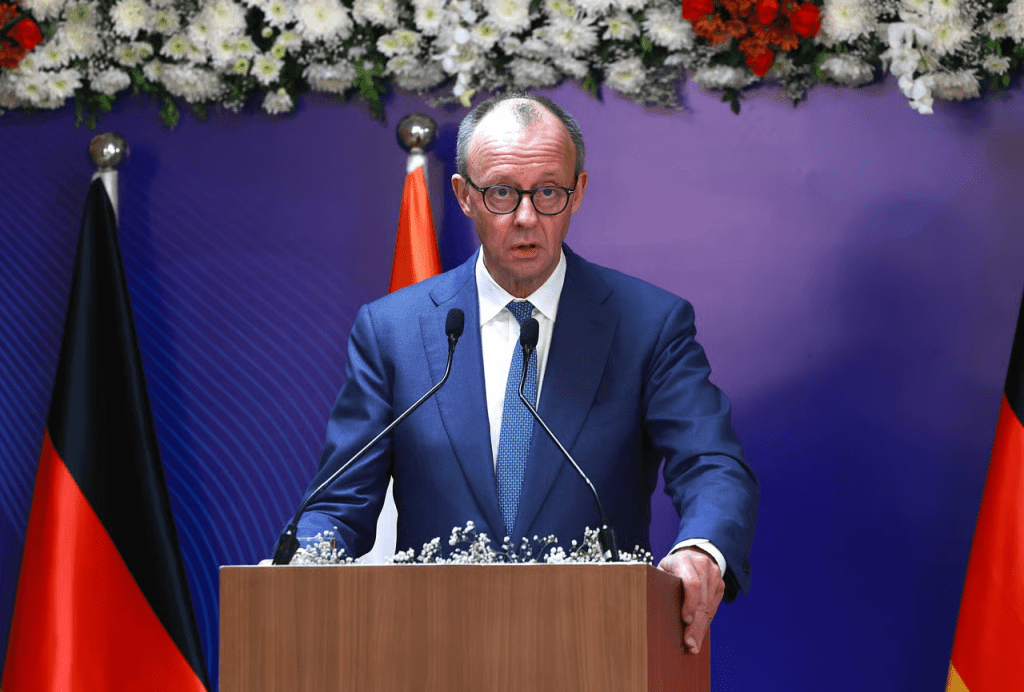
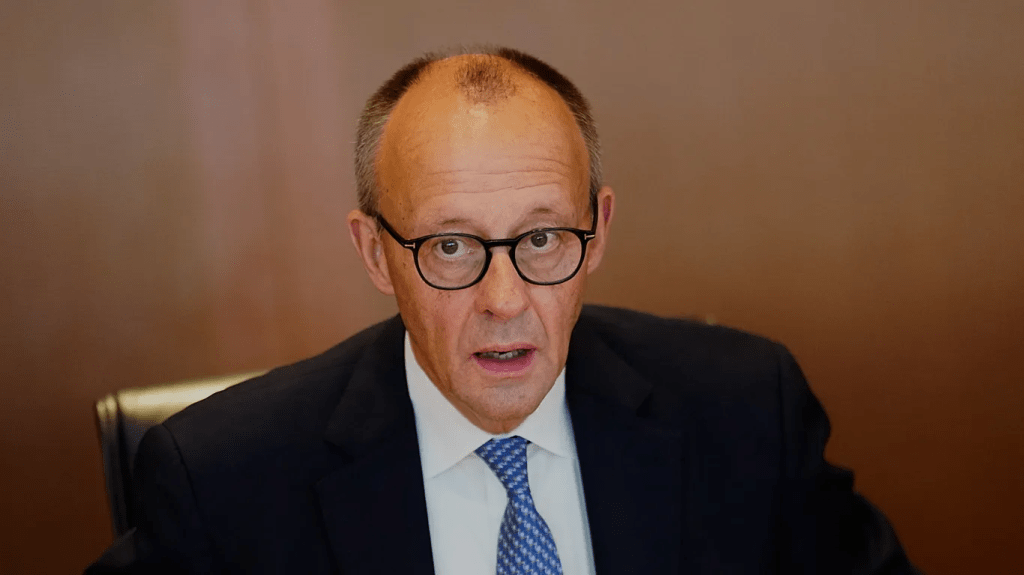
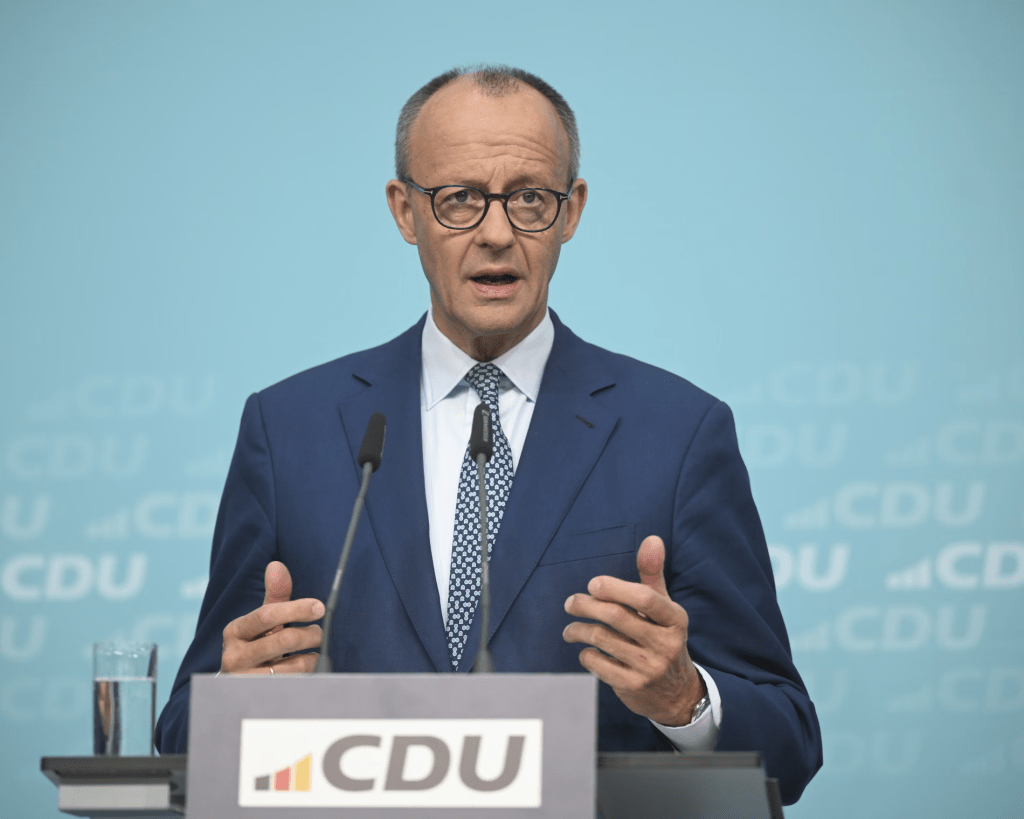
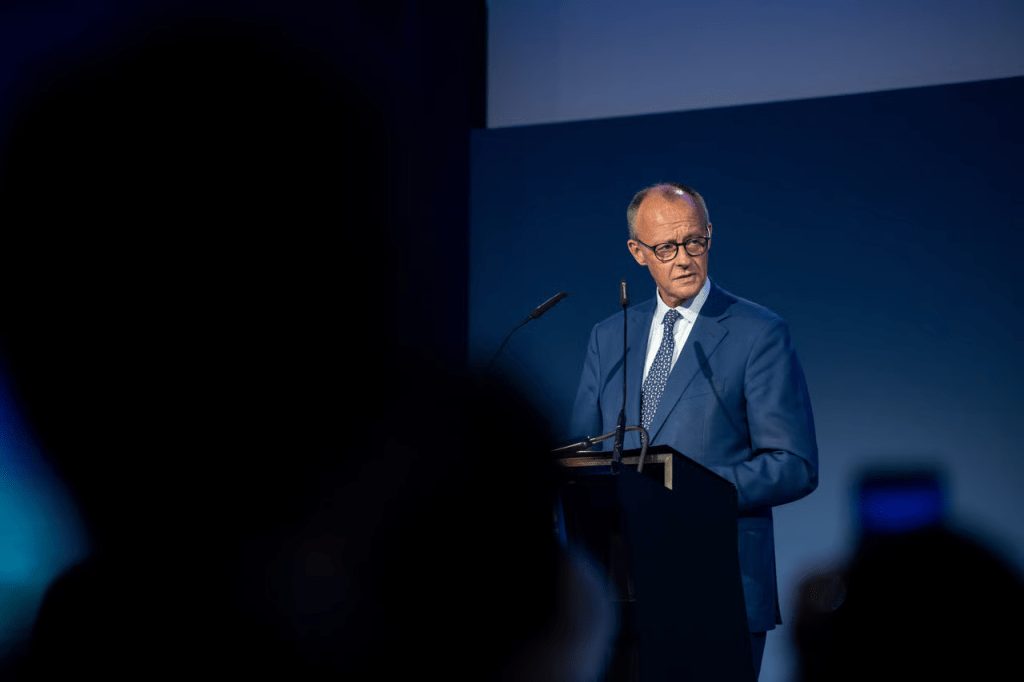
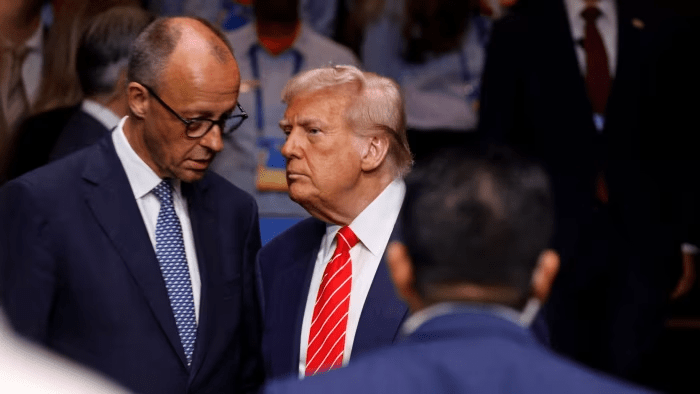
Iran’s regime is finished, says Merz – “I assume that we are now witnessing the final days and weeks of this regime,” German chancellor says as Iranian protests sweep the country.
“If a regime can only stay in power through violence, then it is effectively finished. I assume that we are now witnessing the final days and weeks of this regime.”
If the future of the world is being shaped in Europe then the future looks pretty dim indeed.
The future of the world is being shaped in Europe, says German Chancellor Friedrich Merz – In his speech to his party’s youth wing on Saturday, German Chancellor Friedrich Merz (CDU) clearly distanced himself from the far-right AfD and stressed the importance of Europe and the European Union.
German Chancellor Friedrich Merz (CDU) on Saturday stressed Europe’s strategic importance, saying that the future of the world is being shaped on the continent.
Speaking to the German youth at the Young Union (Junge Union)’s Germany Day conference in Rust, Baden-Württemberg, Merz said this was not just about the European Union but the principles guiding the coexistence of people on the continent.
That means cityscape. And this word is apparently offensive to Germans.
To Germans who are in denial about violence, sexual or otherwise, being committed by… As I said, in denial.
‘Ask your daughters’: Merz defends his call for large-scale deportations – German chancellor accused of taking a page from extremist parties with ‘dangerous’ rhetoric on immigration…
Merz said his priority was “security in public space” and stressed that only if it could be guaranteed “will the [mainstream] political parties win back trust”.
He had drawn flak last week for remarks that critics said hinted that diversity itself was a problem in German cities: “Of course we still have this problem in the cityscape, and that is why the federal interior minister is now working to enable and carry out expulsions on a very large scale,” Merz said on a visit to Brandenburg state outside Berlin.
Chancellor Friedrich Merz says that if Israel is excluded from Eurovision 2026, Germany will not take part. German Chancellor Friedrich Merz is considering boycotting next year’s Eurovision Song Contest if Israel is excluded.
When asked in an interview with public broadcaster ARD on Sunday whether Germany should voluntarily withdraw from participation in the world’s largest live music event next year if Israel is excluded, Merz said: “I would support this. I think it’s a scandal that this is even being discussed. Israel has a place there.”
Germany’s Merz warns against ‘false nostalgia’ over US alliance – The chancellor’s comments show European leaders are girding for a future in which the transatlantic alliance is no longer the bedrock on which the continent’s defense and economy stand.
“We must face the fact that our relationship with the U.S. is changing, The U.S. is reassessing its interests — and not just since yesterday. And so we in Europe must also adjust our interests, without false nostalgia.”
It’s similar to the German spring, summer and winter of reform, only here nothing gets reformed in autumn.
Germany’s Merz faces trouble over ‘autumn of reform’ – Friedrich Merz has decided that the autumn must be the season for tackling Germany’s urgent domestic problems, but that means conflict with his center-left coalition partners.
Chancellor Friedrich Merz’s “autumn of reform” could turn into a season of coalition strife as he plows ahead with his ambitious plan to reform Germany’s welfare state, while bringing in tax reforms to boost the economy.
The challenges are significant: The German economy now faces a third year without GDP growth, the welfare state and pension system are failing to keep up with demographic challenges, and the federal budget has a hole of some €172 billion ($200 billion) for 2027 to 2029.
Germany is now leading the charge on Europe’s anti-immigration turn – Chancellor Merz’s new hardline course promises to accelerate the EU’s rightward pivot on migration as the bloc prepares to implement tough measures.
Past German governments sought to temper Europe’s most hardline impulses on migration. Now, under Chancellor Friedrich Merz, Berlin is vying to lead Europe’s anti-immigration charge.
The stark shift in Germany’s migration stance under its new government promises to accelerate the EU’s hard-right turn on migration as the bloc prepares to implement a series of new measures aimed at drastically reducing the number of asylum seekers entering Europe — and deporting more of those who do make it. As European leaders negotiate on how to put these measures into place, those from some of the EU’s most hardline countries are welcoming Germany’s new role.
Merz ‘delusional’ over US sparing German cars in EU trade deal – Brussels has warned German chancellor not to expect UK-style carve-out for car sector in EU deal with Donald Trump.
Chancellor Friedrich Merz is “delusional” in his expectation that Germany’s car industry will be spared from US tariffs, according to EU officials involved in trade talks with the Trump administration.
Merz has been pressing the European Commission, which manages trade policy on behalf of the EU’s 27 member states, to sign a “framework” deal with Washington aping the US-UK agreement signed earlier this month, which included a special dispensation for cars.
But Brussels officials have privately told Berlin that such an arrangement would not be possible, as reducing German car imports is a big focus for US President Donald Trump, two people briefed on the discussions told the Financial Times.
And this one was hard to believe. And hard to follow.
Germany’s Merz becomes chancellor after surviving historic vote failure – Conservative leader Friedrich Merz has won a parliament vote to become Germany’s next chancellor at the second attempt.
Merz had initially fallen six votes short of the absolute majority he needed on Tuesday morning – a significant blow to his prestige and an unprecedented failure in post-war German history.
As it was a secret ballot in the 630-seat Bundestag, there was no indication who had refused to back him – whether MPs from his centre-left coalition partner or his own conservatives.
“Blessed are the young for they shall inherit the national debt.”
German parliament approves Merz’s historic spending surge – Germany’s parliament approved plans for a massive spending surge on Tuesday, throwing off decades of fiscal conservatism in hopes of reviving economic growth and scaling up military spending for a new era of European collective defence.
The approval in the Bundestag hands conservative leader Friedrich Merz a huge boost, giving the chancellor-in-waiting a windfall of hundreds of billions of euros to ramp up investment after two years of contraction in Europe’s largest economy…
“The politician’s greatest asset is credibility. With these embarrassing actions, Mr Merz, you have already completely squandered yours. The voters feel betrayed by you, and rightly so.”