German of the day: Goldgrube

That means bonanza.

Time to invest in the German defense industry. But you knew that already.

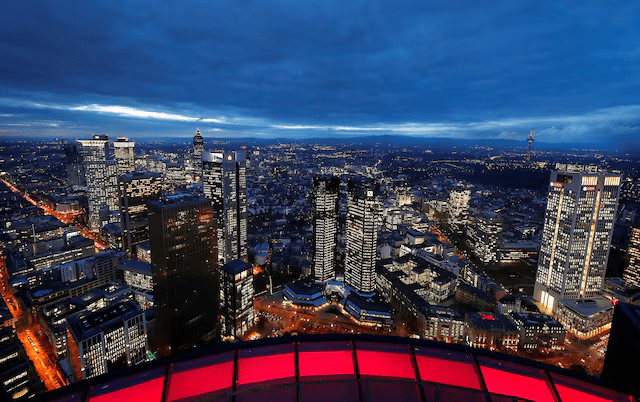
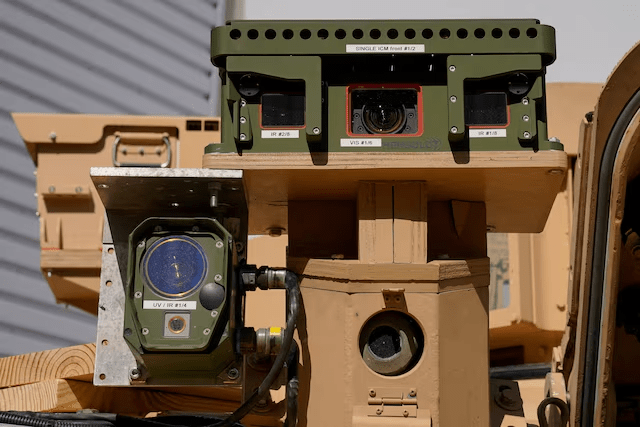
Germany eyes swift moves on defence, investors sniff bonanza – The prospect of a military spending boom by Germany unprecedented since the Cold War sent Europe’s defence stocks soaring after Reuters reported the likely next government was mulling a fiscal sea change for Europe’s biggest economy.

Germany’s likely next chancellor, Friedrich Merz, did not confirm that his conservatives and the Social Democrats were considering setting up special funds worth nearly a trillion euros to finance urgent defence and infrastructure spending.
Let’s talk about Trump

Not about having out of control migration, the highest energy prices in the world, a stifling bureaucracy, no army, a crumbling infrastruture, a lack of skilled workers…

Slamming Trump is something we can all feel good about.

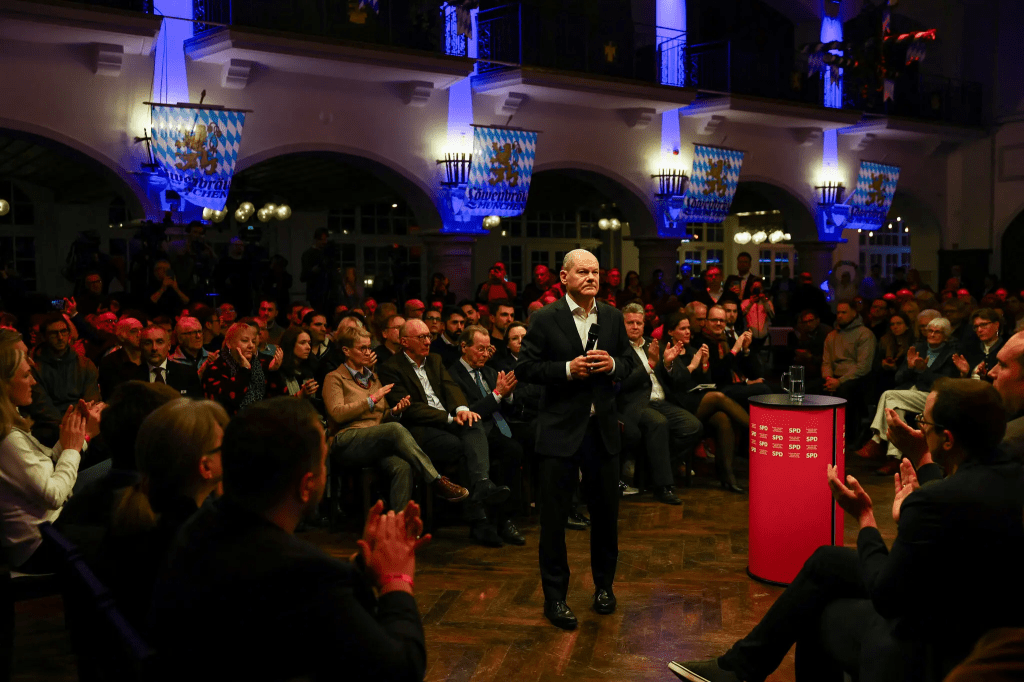
German Election Spotlight Turns to Trump – The American president’s foreign policy, and a divisive speech by his vice president, drew attention away from an attack by a refugee that some expected would fan political tensions over migration.

Germany’s Green economy rocks

It pitches, reels and staggers too.

Talk about having a gross domestic product.

Germany slashes growth outlook in ‘serious’ diagnosis of Europe’s largest economy – The German government on Wednesday slashed its gross domestic product forecast to just 0.3% growth in 2025.

This is down from a previous forecast of 1.1% growth, but broadly in line with estimates from bodies like the International Monetary Fund.

“The diagnosis is serious,” Robert Habeck, Germany’s Economy and Climate Minister, said during a press conference.

Unexpected?

Not if you live in Germany.

It’s the cost of enertgy, stupid.

German industrial output unexpectedly falls in October – German industrial production unexpectedly fell in October, owing mainly to declines in energy production and in the automotive industry, the federal statistics office said on Friday.

Production was down by 1.0% in October from the previous month, the office said.

Investing in Africa may be too risky…

But it’s not as risky as investing in Germany.

German Fortune 500 companies have announced over 60,000 layoffs this year, but the biggest employee cull is still to come – German companies in the Fortune 500 Europe have announced over 60,000 layoffs this year, in a sign of the country’s ongoing economic malaise that has left manufacturers reeling.

Major German employers, including Bosch, Thyssenkrupp, Deutsche Bahn, and Siemens, have this year announced plans to lay off thousands of workers in a bid to combat falling profits following a rocky post-COVID economic landscape.

German of the day: Nostalgie

That means nostalgia.

You know, the sentimental yearning for the happiness of a former place or time? Way back when? In the past?

Germany’s Volkswagen crisis: an ode to nostalgia – Germany’s car manufacturer and long-time economic powerhouse Volkswagen has shaped the lives and memories of generations of Germans. It’s current crisis gives pause to reflect on its importance in Germany’s history.

Sorry, we’re only firing at the moment

Hiring war gestern (was yesterday).

German companies’ hiring plans drop to four-year low, Ifo finds – German companies are less willing to hire new staff than at any point in more than four years, data from the Ifo institute showed on Monday, as weakness in Europe’s largest economy has left its mark on the country’s labour market.

Ifo’s employment barometer fell to 93.7 points in October from 94.0 points in September, the lowest level since July 2020.

Breaking up is hard to do

But somebody has to do it.

Germany’s loveless coalition teeters on brink of break-up – Chancellor Olaf Scholz snubs partners, fuelling speculation of early elections in spring.

Chancellor Olaf Scholz held a much-vaunted “industrial summit” on Tuesday, sitting down with business leaders and union bosses to figure out how to pull Germany out its current malaise. Pointedly left off the guest list: his own finance and economy ministers.

Robert Habeck, the economy minister, responded by unveiling plans for a multibillion-euro, debt-financed investment fund — an idea not previously discussed with cabinet colleagues — while finance minister Christian Lindner simply scheduled his own, rival business summit on the same day…

Speculation is growing in Berlin that the alliance could soon collapse, pulled apart by its own internal contradictions. Several German media outlets have even named a possible date for snap elections — March 9, more than six months ahead of schedule.

Huge funeral attendance

At Germany’s automobile industry burial.

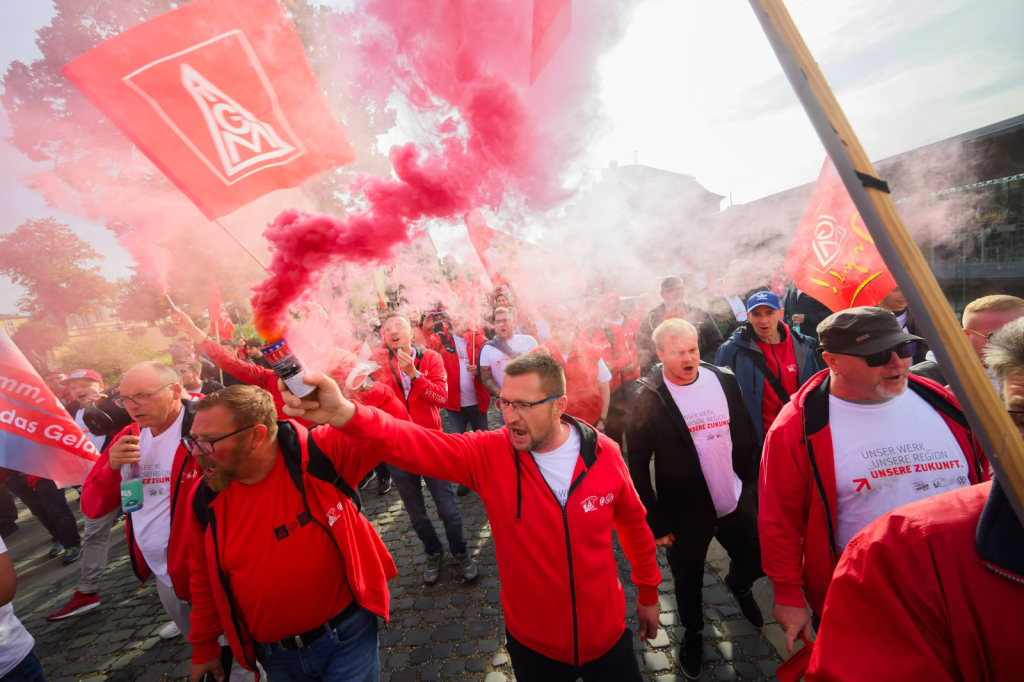
Volkswagen AG workers in Germany will pause production on Monday to join rallies about the automaker’s plans for unprecedented factory closures in the country.

Labor leaders plan to inform employees at 11 German sites about the latest on negotiations with the company. The events kick off a contentious week for Europe’s biggest carmaker, which is expected to post declining sales and profit when it reports third-quarter results on Wednesday…

The automaker has had a rough few weeks since it issued its second profit warning in three months in late September. While its premium brands including Audi and Porsche have been the carmaker’s biggest source of profit in recent years, they’re now struggling. Porsche AG on Friday said it’s weighing cost cuts and reviewing its model lineup after a demand slump in China hit its profits.