Blackout risk – Germany’s gas storage facilities are 94 percent full, but the level is steadily declining in view of the cold weather.
“Everyone is preparing for it…” He pleads for a factual discussion without scaremongering, but warns against possible acts of sabotage – and explains what emergency supplies citizens should stock up on in case of an emergency.
That means nervous breakdown. Having them is a favorite German pastime. These days especially.
Germans on the verge of a nervous breakdown – It’s a sign of the nation’s fraught state of mind that many seriously believe this week’s unlikely plotters could have toppled democracy.
Early Wednesday, thousands of balaclava-clad German police officers fanned out across the country, arresting 25 people and seizing weapons to upend what authorities described as a diabolical plot to overthrow the country’s government and reinstate the monarchy. The group’s “military arm” was surreptitiously building “a new German army,” the lead prosecutor on the case said.
A day later, however, the case looks more like the script of a Monty Python episode than a sequel to the Day of the Jackal…
That means Warning Day. And that’s today. It’s a national holiday or something. So don’t say I didn’t warn you.
And this, I believe, is what the warning text will say (in German): OMG we’re all going to die!
All mobile phones in Germany to receive alerts on Warning Day on December 8.
Germany’s first official Warntag took place on September 10, 2020, but was declared a failure after people received warning-app messages half an hour late. Sending emergency messages to all people, and not just those registered with an emergency app, was a step planned by the German government following the 2021 floods across North Rhine-Westphalia and the Rhineland-Palatinate that claimed the lives of more than 180 people.
This is a brilliant new German invention (both the word and the concept) meaning that energy providers must first explain why they will be raising prices before going ahead and raising them anyway. Thanks German government (the ones who created this energy crisis in Germany in the first place), German citizens are most certainly saying, we wouldn’t be able to sleep soundly at night without you.
Germany to force energy providers to justify future price hikes – The German government plans to allow energy providers to raise prices next year only if objectively justified, the economy ministry said on Saturday, denying a media report that Berlin planned a ban on all energy price hikes for consumers.
Which makes sense, if you think about it because.. Actually, no. That doesn’t make any sense at all. But why doesn’t that surprise me?
A Berlin subway stop is called ‘Uncle Tom’s Cabin.’ Some Black Germans want change – Most outbound commuters on the U3 line of Berlin’s U-Bahn subway system exit long before reaching the penultimate stop, nestled between the Grunewald forest and the Free University. But Moses Pölking remembers the uneasiness he felt when he was riding the train and first spotted the station’s peculiar name on the route map: Onkel Toms Hütte.
They have another word for it. It’s called Alleingang.
That means going-it-alone, of course. Although that is something Germans regularly claim they would never ever do. Apparently, only Germans are capable of believing such nonsense.
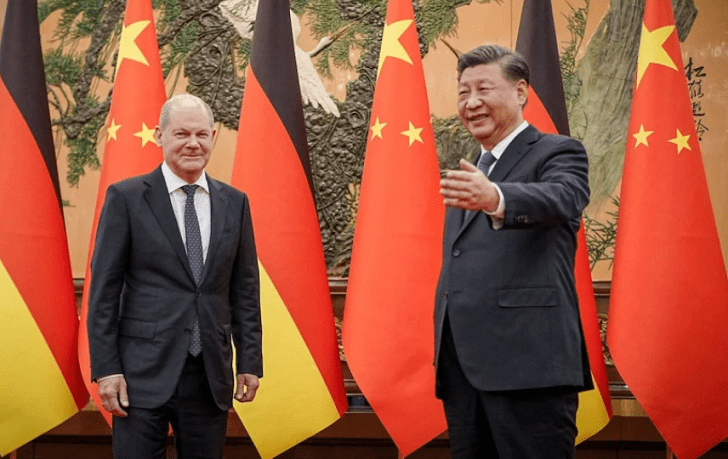
Olaf Scholz Is Undermining Western Unity on China – The German chancellor’s go-it-alone approach has alienated domestic, EU, and international partners.
The German chancellor sought to get ahead of the pack. Scholz argued it was time to speak directly with Xi after a three-year hiatus in such bilateral meetings due to the COVID-19 pandemic. The chancellor said he sought to confront issues in the Germany-China relationship precisely because it isn’t business as usual. In an op-ed in the Frankfurter Allgemeine Zeitung, Scholz wrote that “as China changes, so must our approach to the country.”
Some say it means “ring exchange” (not the wedding kind). Others say it means being chicken shit.
With Slovakian deal, Germany expands three-way ‘Ringtausch’ dance to arm Ukraine – Under the Ringtausch program, Germany has sent newer equipment to Slovakia, Greece, Slovenia and the Czech Republic, with those countries shifting older gear to Ukraine.
The Germans have a specific word for an exchange between at least three parties: “Ringtausch.” So it makes sense that is what the German government has named its procedure to gift modern military equipment to former Soviet-bloc countries who, in turn, gift their Soviet-era equipment to Ukraine.
That’s a very popular political mantra here. You normally hear it right before Germany goes it alone again.
France and Germany’s relationship questioned as Scholz goes alone on policy – Germany has been criticized for approving a 200 billion euro ($200.2 billion) rescue package.
Fresh tensions between France and Germany are challenging their relationship at a time when their unity is critical for broader European policy in tackling the energy crisis.
The leaders of the two nations will meet in Paris on Wednesday, but this encounter almost got canceled.
Ausgeschlossen (no way)! German authorities would never allow such a thing.
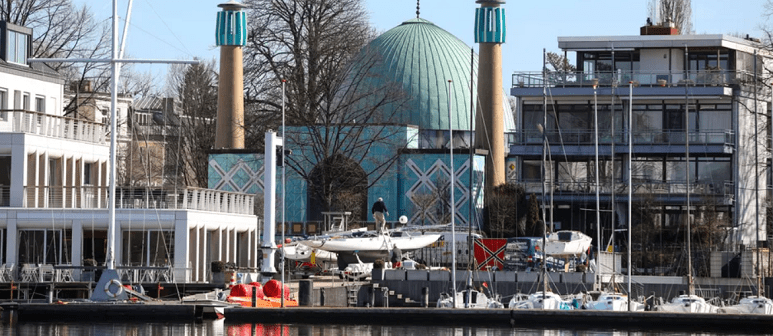
Hamburg Mosque Reportedly a Hotbed for Iranian Propaganda – The Hamburg Islamic Center is considered the most important outpost of the Iranian regime in Germany. But since it is also reportedly used to spread the mullahs’ propaganda across Europe, calls are growing for its work to be restricted.
Germany’s domestic intelligence agency, the Office for the Protection of the Constitution, which is charged with keeping tabs on all forms of extremism, has been observing the IZH community for many years and describes it, besides the Iranian Embassy, as “Iran’s most important representation in Germany and a significant center of propaganda” in Europe.
Energy crisis: Quarter of German companies ‘plan to cut jobs’ – In order to tackle rising energy prices, a quarter of German companies revealed in a new survey that they planned to cut jobs, among other cost saving measures.
Around 25 percent of German companies plan to axe jobs as a cost saving measure, according to a survey of 1,080 German firms led by the Munich-based Stiftung Familienunternehmen released on Monday.






 Observing Hermann