Six candidates from Germany’s rightwing AfD party die 13 days apart in lead up to local elections: reports – Four candidates and two reserves from the right-wing AfD political party in Germany have dropped dead within 13 days of each other — just before elections, according to reports.
The Alternative for Deutschland candidates were set to appear on ballots in North Rhine-Westphalia on September 14.
Officials said no foul play is currently suspected in any of their deaths, the BBC reported.
Gee, I wonder why? German voters seem to be much less concerned.
Poll: Germans largely reject ban on far-right AfD – Germans reject a ban on the far-right Alternative for Germany (AfD) by a majority of 52% to 27% in favour, according to a new representative survey published by the Allensbach Institute polling organization on Saturday.
The proportion opposed to a ban rises to 65% in the east of the country, according to the poll published by the Frankfurter Allgemeine Zeitung daily newspaper, while it falls to 49% in the western states. The AfD enjoys widespread support in the formerly communist eastern states.
“Germany’s incoming government might be better advised to consider why the AfD continues to gain electoral ground and how Germany’s government can address the reasonable concerns of its citizens.”
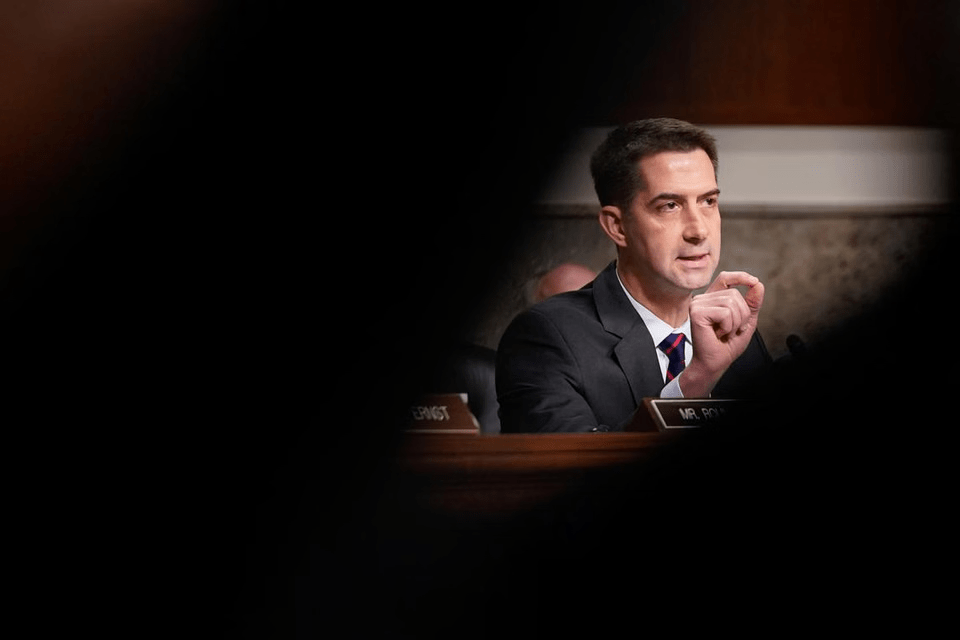
Cotton asks Gabbard not to share intel with Germany that can be used against far-right party – Sen. Tom Cotton (R-Ark.) asked Director of National Intelligence Tulsi Gabbard to refrain from sharing intelligence with Germany’s domestic intelligence agency days after the country’s spy arm labeled the far-right Alternative for Germany, or AfD, as an “extremist” political party.
Cotton requested that, until Germany treats the AfD as a “legitimate opposition party” and not as a “right-wing extremist organization,” Gabbard should direct the U.S. intelligence agencies to halt sharing intelligence with the Federal Office for the Protection of the Constitution (BfV).
He also asked that Gabbard deny Berlin’s potential requests to assist in surveilling the AfD and review if intelligence agencies during former President Biden’s administration “cooperated with German requests to surveil the AfD or other opposition parties.”
And this one was hard to believe. And hard to follow.
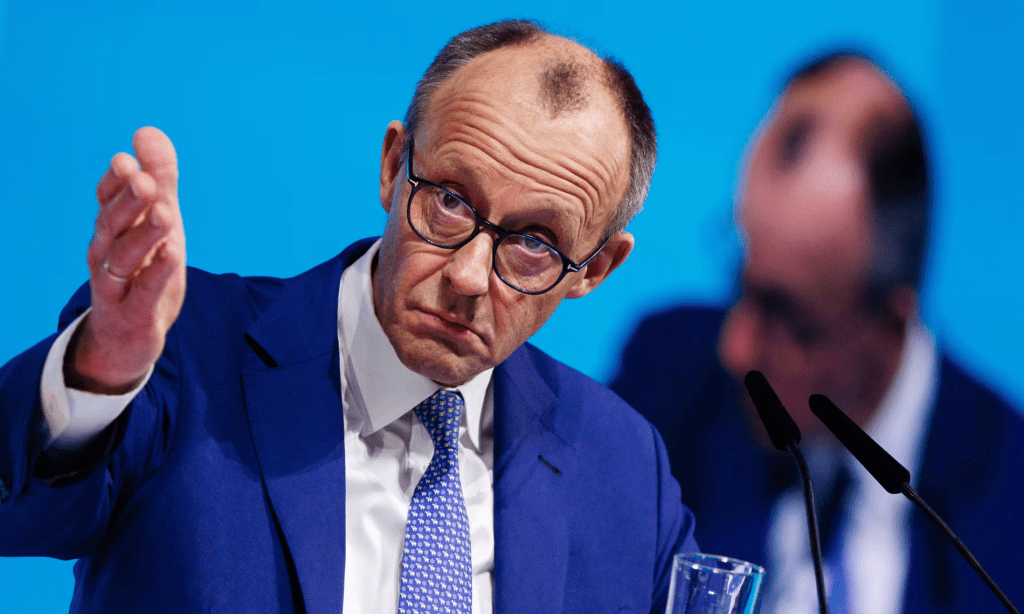
Germany’s Merz becomes chancellor after surviving historic vote failure – Conservative leader Friedrich Merz has won a parliament vote to become Germany’s next chancellor at the second attempt.
Merz had initially fallen six votes short of the absolute majority he needed on Tuesday morning – a significant blow to his prestige and an unprecedented failure in post-war German history.
As it was a secret ballot in the 630-seat Bundestag, there was no indication who had refused to back him – whether MPs from his centre-left coalition partner or his own conservatives.
As in “almost half of Germans are in favor of banning the AfD, according to a survey.” And this means, of course, that the majority of Germans are against banning the AfD.
Almost half of Germans in favor of banning the AfD, according to survey – 61% of Germans consider the AfD to be a right-wing extremist party. According to a representative survey, 48% want it to be banned.
Following the classification of the AfD as “verified right-wing extremist” by the Federal Office for the Protection of the Constitution, US Secretary of State Rubio has described the classification as “covert tyranny,” while US Vice President Vance even draws historical comparisons.
Both US Secretary of State Marco Rubio and US Vice President J.D. Vance have criticized the new classification of the AfD by the Federal Office for the Protection of the Constitution with vigorous words. The Federal Foreign Office responded to the X-word battle and countered: “That’s democracy.”
“Germany just gave its spy agency new powers to surveil the opposition. That’s not democracy — it’s tyranny. What is truly extremist is not the popular AfD, but rather the establishment’s deadly open border immigration policies that the AfD opposes.”
Most Germans Have Had Enough of the Firewall Against AfD – While establishment parties continue to ostracize the party, only a third of the country supports the cordon sanitaire, with half wanting AfD to be treated as any other democratic party.
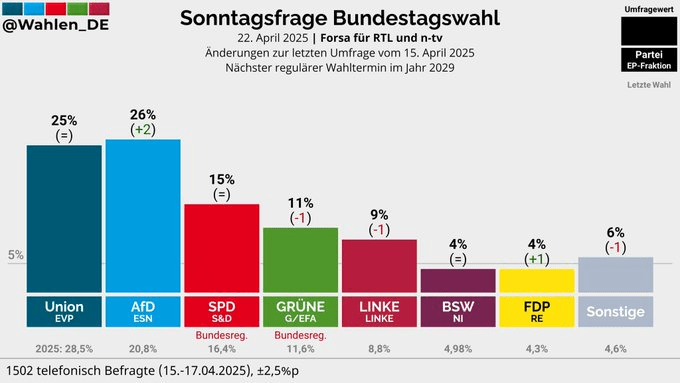
After a turbulent election season dominated by the establishment’s demonization of the national conservative AfD—now Germany’s most popular party—the plurality of Germans believe that ending the undemocratic cordon sanitaire against them is long overdue, regardless of who they vote for.
And funded by a government under the control of the opposing party?
This somehow sounds vaguely familiar.
Germany’s conservatives scrutinize state support for NGOs – Germany’s conservative CDU/CSU bloc is questioning the political neutrality of some NGOs. That could weigh on relations with its potential Social Democrat coalition partners…
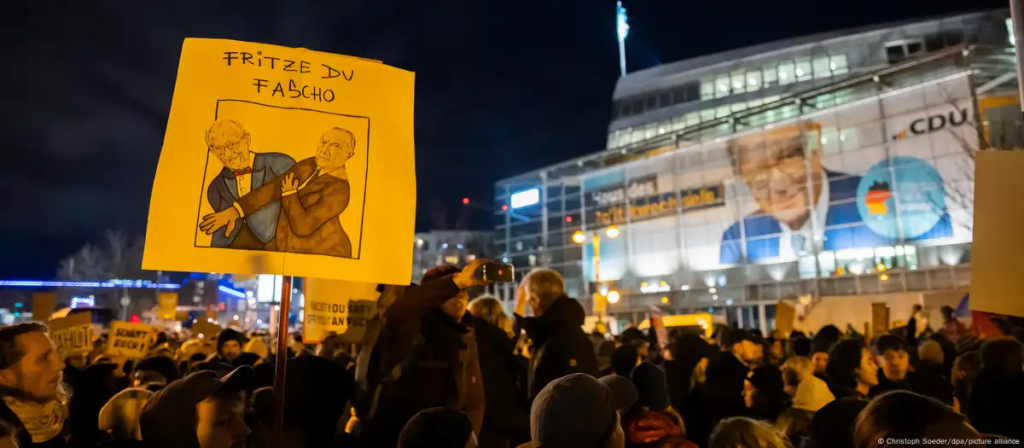
In its inquiry, the CDU/CSU parliamentary group refers to an article in the conservative-leaning German daily Welt in which several experts on constitutional law expressed very critical views about the demonstrations.
“Associations that helped organize ‘firewall’ demonstrations did not act on a charitable basis,” argued Volker Boehme-Nessler from Oldenburg University. “The demonstrations were one-sidedly political. They were directed concretely against one party, the CDU.”
Germany’s established “democratic” political parties are turning Germany “far-right” by not addressing the migrant madness.
And not addressing the Green energy madness. And not addressing the taxation madness. And not addressing the bureaucracy madness. And that’s not all of the madness that’s not being addressed, either. All this madness, you see, is what’s making everybody so mad.
In other words: Fix it already. Or go “far-right.”
Is Germany turning to the far-right? Inside the country’s battle for power – Germany heads to the polls this week facing a challenge for power from the far-right. In the run-up to the historic vote, Siobhan Robbins heads to the country’s right-wing heartland.
Merz doubles down on gambit with German far right in combative speech – Prospective chancellor takes startlingly aggressive line against those protesting against gamble with AfD.
The German conservative opposition leader, Friedrich Merz, whose party is widely tipped to win this month’s general election, defended his hardline migration proposals after a wave of protests accused him of breaching the time-honoured “firewall” between the far right and centrists.
In an uncompromising speech to a party congress of his Christian Democratic Union (CDU) in Berlin, Merz said he was confident they would win the 23 February vote “with a very good result”, well ahead of the anti-immigration, anti-Islam Alternative für Deutschland (AfD), which has been consistently placing second in the polls.
Five days after passing a non-binding resolution on border policy with the votes of the far right – marking a historic breach of a taboo – Merz renewed a promise to bar any formal cooperation with the AfD in future.
“We will not work with the Alternative für Deutschland – not before [the election], not after – never,” he said to a lengthy standing ovation from delegates.