Germany Confused About Japan’s “Retreat” From A Nuclear-Free Future

And here we thought that Germans were good at math.

Until Fukushima, Japan satisfied about 30 percent of its electricity demands with nuclear power, while renewable energy made up about 10 percent of the power supply. If one leaves out hydroelectric power, renewables hardly make up more than 1 percent.

“Japan needs a vision.”

We Must Save The World But It Must Be Affordable

Cheap, in other words.

Germans everywhere are slowly waking up to the fact that their revolutionary switch to renewable energy sources is going to cost way too way much more than they ever thought they would ever have to pay – and the German government has now woken up to this.

That is why they have now begun a quiet backpedaling policy designed to prepare the German population for a slow turnaround from the energy turnaround that hasn’t even begun to turn around yet.

“For me it’s a priority that electricity remains affordable,” Germany’s new Environment Minister Peter Altmaier says, for instance.

He also says he doubts that Germany will be able to reach its goal of introducing one million electric cars by 2020.

Nor does he think that Germany will be able to cut its energy consumption by 10 percent that year, a precondition for reaching the illusory goal of 35 percent renewables the government is still aiming for, sort of.

This is the German Environment Minister talking here, folks. So you get the message, don’t you? And if you don’t get it now, you’ll get it later.

Regierung fürchtet die Strompreis-Wut der Wähler

What’s 20 (30? 40?) Billion Euros These Days?

It’s peanuts, man. Renewable peanuts.

Damn. This gives power madness a whole new meaning.

Germany mapped out a 20 billion euro ($25 billion) plan on Tuesday to expand its power grid and avoid a “power gap” as Europe’s largest economy switches away from nuclear to renewable energy.

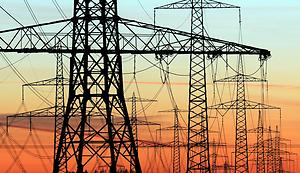
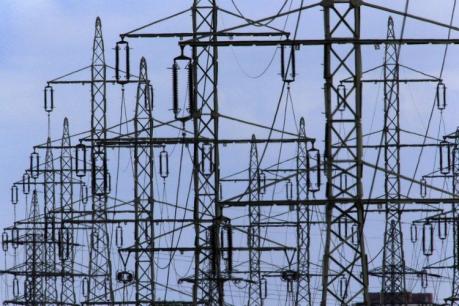
Germany’s government, the federal energy network regulator and transmission grid firms unveiled joint plans for thousands of kilometres of new electricity lines to 2022, to help distribute volatile renewable energy.

Operators say some 3,800 kilometers of new power lines needed through 2022.

Germany’s Energy Turnaround Rocks

They never promised you a rose garden (actually, they did). It looks like Germany’s Energiewende (the energy turnaround = shutting down nuclear power and waiting for solar and wind energy to pick up slack) is going to have its price, too.

And it looks likes the first installment will by about a seven percent increase in energy costs for private housholds. But Germans pay these increases gladly, I think. At least for now (seven percent is just the start, of course). It’s back to the future. It’s for the common good. Or it’s for saving the planet or something.

Uh, like why don’t they just have “the state” pay for it. Oh, that’s right. They already are (the taxpayers are, that is).

Stromtrassen, Umschlagwerke oder intelligente Stromzähler kosten den Staat Milliarden. Draufzahlen muss am Ende oft der Verbraucher – offenbar bis zu sieben Prozent in den kommenden Jahren.

We’ll Import Power From Anywhere

Even from Austria, if need be. And need there be.

“Missing power lines” are the cause behind the missing energy being missed in Southern Germany these days, we are told. That’s why Austria is being asked to help big buddy Germany out with a little “emergency energy,” pretty please.

But Austrians do this gladly, I think, because they know that if those missing German power lines weren’t missing than those missing power lines would be transporting tons of wonderful wind energy from the high German north to those energy-hungry factories in the south (and beyond to Austria?) where it’s missing at the moment, the energy. Like I said. Or so the theory.

The missing German nuclear power plants that were shut off after Fukushima (that’s in Japan) aren’t being missed by anybody here, though. Forget about them. It’s not the missing German nuclear power plants. It’s the missing power lines that are missing, I mean messing everything up around here.

Die Bundesnetzagentur hatte vor langfristigen Engpässen bei der Stromversorgung gewarnt. Die Versorgungssicherheit bleibe durch den Atomausstieg für eine Reihe von Jahren angespannt.

Our Wind Farms Would Work Just Great

It’s just that we don’t have the cables to bring the energy to shore (nor the money to lay them).
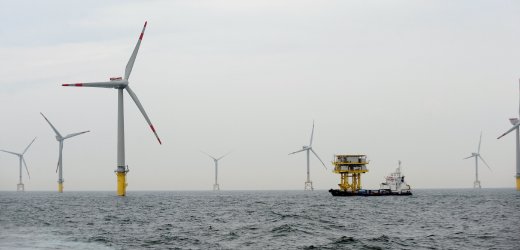
The network operator building those giant offshore wind farms planned to be a “supporting column” in Germany’s coming-one-day-but-not-in-any-way-near-there-yet energy turnaround, is no longer able to continue “work as usual.”

Like the Dutch government before them, having learned that offshore wind power is too expensive and that it cannot afford to subsidize the entire cost, the good folks at TenneT TSO GmbH are now about to throw in the towel, seemingly unable to find financing in the private sector that would allow them to continue their over cost and behind schedule project (it’s probably them damned durn banks doing this again, or that 1%).

The connection from Water World (Wind World?) back to Planet Earth has turned out to be more complicated and expensive than politically correct planners had originally thought, in other words, provided they had even thought about it at all.

But don’t worry, Green Shirt ideologues have already assured us that “If Tennent can’t swing the offshore development, somebody else can.” Money seems to be no object here, you see. When it’s not yours, I mean.

“Wenn Tennet den Offshore-Ausbau nicht schultern kann, müssen andere ran.”