Wake Me When The Revolution Is over

Der Spiegel itself is asking these days: Are we having a successful green energy plan yet?

Uh, let me think. Nope.

Why is it that whenever Germany’s Environment Minster “explains to foreign politicians that his highly industrialized country aims to decommission all of its nuclear power plants by 2022 and obtain at least 80 percent of its energy from renewable sources by 2050, he is only rarely met with utter denial — at least not among his fellow environment ministers?”

I’ll tell you why. It is either because a) they are in denial themselves or b) they are too polite to laugh in his face.

A Bad Beginning – Broken Promises – Unanswered Questions

Not A Speck Of Animal!

Not in this cola.

Unlike western or occidental cola types that apparently have all kinds of animal rests floating around in them (gelatine is used), new and improved (and oriental) Haji Cola is made in compliance with Islamic hygiene regulations and guaranteed halal, albeit admittedly “less tingling” than what you might be used to.

And the stuff is selling like halal hotcakes in Hamburg too, or might one day. But don’t worry, religion does not play a role here, folks (that’s why they call it halal?). Love does. The love of money. Geez, talk about your occidental attitude.

“Religion spielt keine Rolle.“

Google Still Evil

But at least it saves German companies tons of money.

Something called the Institute for German Economy has just found out that fast research (and other services) carried out using Google saves German companies some 6.84 euros per employee per year. And how did they find this stuff out? I dunno. I guess they googled it or something.

Unfortunately, Google doesn’t seem to be helping the German national debt very much these days. In absolute terms, every German citizen carries 24,904 euros worth of public debt, whatever public debt is worth these days. Are we having a Greece here yet?

„Wirkungsvolle Online-Tools sind heute entscheidend für Umsatz, Produktivität und Innovationsfähigkeit vieler Unternehmen.“ 

What Identity Do I Wear Today?

So what do you want, Germany? The Germans don’t even know themselves what they want with Europe and/or Germany: In a survey this September by Der Spiegel, clear majorities of Germans said that it wasn’t right to help Greece and other countries with the bailout fund and that Germany was not benefiting from the euro zone. But a clear majority also believed that European institutions should be given more power in a crisis. Classic German schizophrenia again or what?
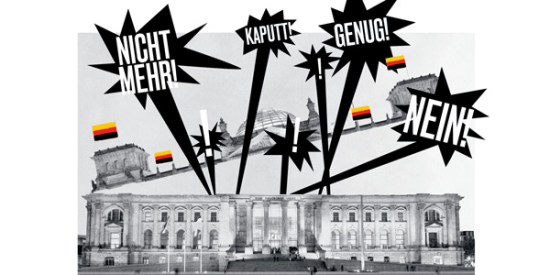
Not that it matters or anything. In the final analysis nobody is asking you what you want: The European Union is a union not of peoples but of heads of state. “General Franco was a head of state, too.”

Nope, I still don’t know what “Europe” is supposed to mean here, but I keep getting the sneaking suspicion that I’m not the only one living in Europe who feels that way. It’s just that I, as a non-European, have the luxury of being able to admit that I don’t get it and that I don’t really care.

But as this latest crisis develops, one thing seems certain. Whatever Europe may be, it clearly has something to do with illusion.  Illusion with an s on the end. With lots of illusions. One illusion after the next. Here’s one, for example:

Europe is founded on the illusion of German money without German control. And that bargain has worked, until now, because of the way Germany sees itself within Europe (which itself, as the polls suggest, is an illusion).

“As a good German one has to be a good European.”

Phase-Out Gentrification Now!

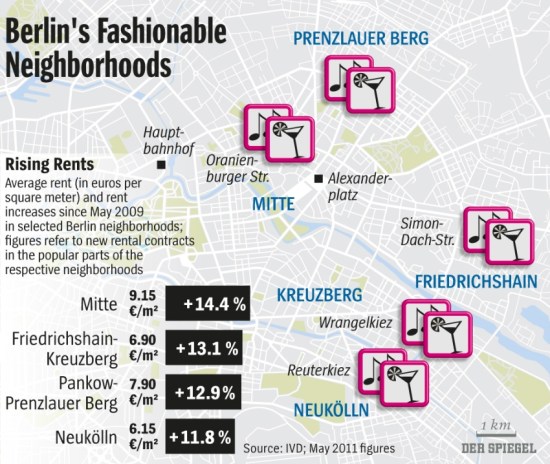
Other cities would love to have a problem like this. Berlin takes in 20 million tourist overnight stays a year, and the number keeps rising. Investors and property owners keep rolling into the Stadt like, well, investors and property owners.

But for many Berliners, this is a crisis or something. This means that their city is in the process of becoming something called bürgerlich (a German cuss word meaning middle-class or bourgeois). Berlin is becoming gentrified (meaning upgraded, by the way), which is absolutely unacceptable because, well, many Berliners don’t want to upgraded, thank you.

You see, bourgeois gentrification ist deshalb (is on these grounds) unacceptable because it is a sign of economic dynamism in a city that has long been thought not to have any. Gentrification means that money is coming into town, that Berlin is becoming more attractive for that tasteless middle-class ambience so dreaded here, that the self-contained and highly subsidized island of Berlin is suddenly becoming a place of social mobility where middle-class lifestyle visions (which none of you out there share) are now apparently easier to realize here than elsewhere in the country.

German Gentrification is bad for Berlin, in other words. It has to be phased-out, just like German nuclear energy was. And don’t get them wrong or anything, it’s not because these Berliners are being intolerant here or anything. It’s just that they are being intolerant here – and acting more bourgeois than the bourgeoisie they despise.

Wer hätte sich träumen lassen, dass ausgerechnet das arme Berlin einmal ein Gentrifizierungsproblem haben würde? Es könnte schlimmere Nachrichten geben.

Do as I say, not as I do

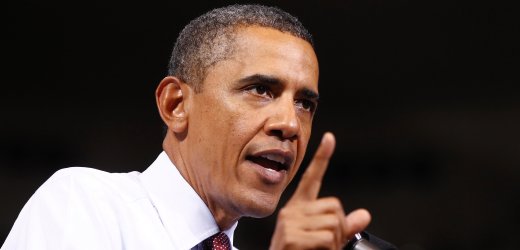
Believe you me, Europe, President Barack Obama knows what he’s talking about when he’s talking about debt.

And that is why he wants YOU to solve your eurozone debt crisis pronto. He is, after all, “deeply engaged” with European nations about solving the eurozone debt crisis, if less so about solving the American one, and is deeply convinced that European countries need to coordinate fiscal policies just like the American administration and Congress have not.

“Right now you have a single currency but you don’t have a single set of economic policies, and that’s created great difficulty,” the President said. “Like duh, we know all about that. Just look at us if you want to see what that kind of clueless leadership gets you.”

“Europa hat derzeit zwar eine geeinte Währung, aber es verfügt über keine gemeinsame Wirtschaftspolitik. Und das schafft große Probleme.”

My Big Fat Greek Divorce

“To stabilize the euro, there can no longer be any taboos. That includes, if necessary, an orderly bankruptcy of Greece.”

You know, like an “orderly” divorce? Only this time nobody is getting the house because there’s no house to get (unless a house of cards counts).

It is not clear who is in the stronger position in the latest round of brinkmanship between Greece and the German bloc. If pushed too far, Greece can set off a powderkeg. The International Monetary Fund says European banks are highly vulnerable and need to raise their capital by €200bn. Many of the weakest are in Germany.

New Angst Study Producing More New Angst

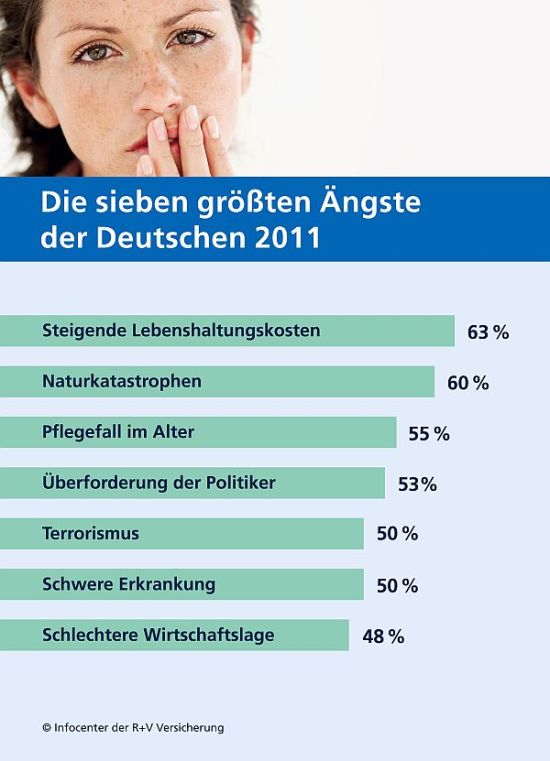
A new study from the R+V Insurance Company (hmmm, an insurance company) indicates that Germans have a whole new list of things to scare the Hosen off them that they didn’t have last year. Is there a pattern developing here or something?

Some of this year’s top favorites (so far) are ecological catastrophes (a perennial hit), the “super worst case scenario” that took place after the earthquake in Japan, the so-called EHEC scandal (go organic sprouts!) and those bloody and yucky revolts still going on down there in the Arabian World.

But what really scares them most is, well, their money. Or the thought of losing it, I should say. Along with their fear of rising energy costs (hmmm, where might those rising energy costs be coming from?), over 70 percent of Germans asked are scared to death of the imminent bankruptcy of a few of them there EU countries down south which will cost the German taxpayer dearly.

Hey. No angst, no fun.

70 Prozent der Deutschen befürchten, dass die drohende Pleite einiger EU-Länder den deutschen Steuerzahler teuer zu stehen kommt – keine Angst erreichte 2011 höhere Werte.

Two Speeds for Saving Europe: Slow and Slower

Breaking up is hard to do. But it’s about freakin’ time already, don’t you think?

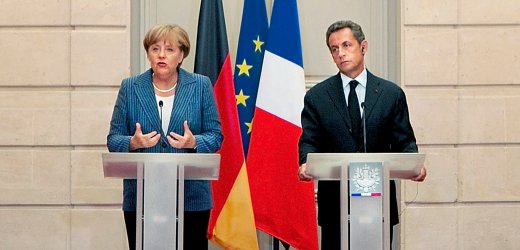
Now that it is becoming clearer and clearer that the euro crisis is not going to get fixed with the institutions at hand and the will that isn’t, Chancellor Merkel HERSELF has finally had enough and appears ready to do the one thing that will finally make everyone out there happy: Create new institutions and a “two-speed Europe” that won’t work either, but still.

What this means is, uh, I’m not sure really (can someone out there please explain this plan to me?), but I think it means creating something called a “core Europe” (the countries that haven’t filed for bankruptcy yet) run by Germany and then a “rotten to the core Europe” (all the other loser countries that nobody wants anymore) run by nobody. I mean, running on empty.

This won’t really solve anything, of course, but it’s an elegant European way of tossing in the towel and passing the buck on to someone else, in this case someone with absolutely no accountability who nobody out there has ever even heard of before: European Council President Herman Van Rompuy.

Are we having late Roman decadence yet? This divide and conquer stuff, I mean divide and save, makes me wonder sometime.

Van Rompuy doesn’t seek the limelight and enjoys writing haikus about nature in his free time.

Pacifism Pays

It appears that Germany took a more active part in the Libyan uprising than believed.

Tons and tons of high-powered German assault rifles have been rescued by Libyan rebels from Muammar Gaddafi’s arsenals, weapons that “weren’t supposed to be there” (funny how German weapons always turn up where they are not supposed to be).

“The German government does not know how weapons of this type could have possibly ended up in Libya.” So they are not really there, in other words. The German government has the German weapons industry (shhh, not so loud) completely under control, you see. Right? Ja oder nein? Good. No abstentions here.

Geez. Haven’t them there crazy Libyans ever heard of gun control or nothin’?